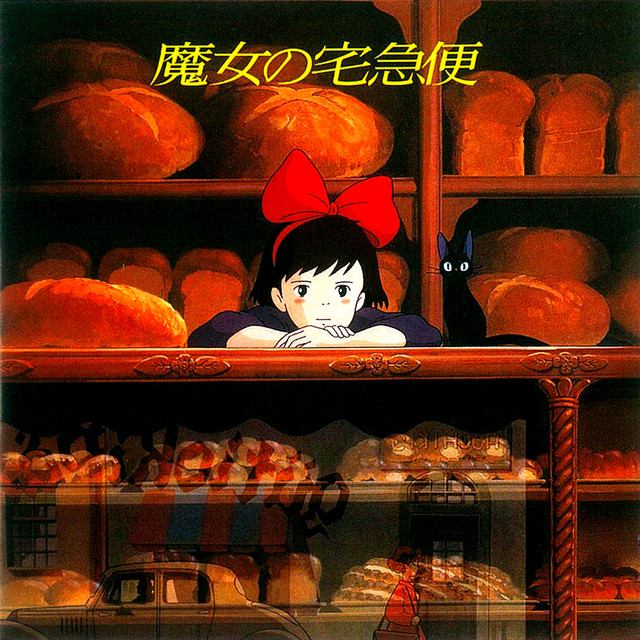
Album: 魔女の宅急便 イメージアルバム
Picture this: Joe Hisaishi sitting at his synthesizer in the late 1980s, crafting melodies that would need to capture the essence of a young witch learning to fly. Among the tracks he composed for the Kiki’s Delivery Service image album was “Tonbo-san” (Mr. Dragonfly), a piece that perfectly encapsulates the collaborative magic between composer and director that would define one of Studio Ghibli’s most beloved soundtracks.
The creation of “Tonbo-san” represents a fascinating glimpse into Hisaishi’s compositional process during a particularly challenging period. While juggling the pressures of recording his solo album in New York, Hisaishi was simultaneously working on what would become the musical foundation for Hayao Miyazaki’s enchanting tale. This dual commitment forced an innovative approach to film scoring that would prove remarkably effective.
Rather than the traditional method of composing to finished animation, Hisaishi worked closely with both Miyazaki and producer Isao Takahata to map out specific scenes that would require musical accompaniment. This collaborative planning session resulted in the image album—a collection of musical sketches that served as the blueprint for the final soundtrack. “Tonbo-san” emerged from this process as one of the most charming pieces, eventually finding its way almost unchanged into the film itself.
The track embodies Hisaishi’s vision of “somewhere vaguely European, perhaps around the Mediterranean,” which guided the entire album’s creation. Built around a simple synthesizer arrangement in a bright major key, “Tonbo-san” moves at a gentle, walking tempo that suggests the unhurried pace of Kiki’s new coastal town. The melody dances playfully above a steady rhythmic foundation, much like a dragonfly hovering over summer water.
What makes “Tonbo-san” particularly significant is how it demonstrates Hisaishi’s philosophy of letting melody take center stage. Without the elaborate orchestrations that would characterize the final soundtrack, this image album version allows the essential musical ideas to shine through with crystalline clarity. The synthesized strings and gentle percussion create a Mediterranean warmth, while subtle guitar touches add European folk influences that would become central to the film’s musical identity.
The piece also showcases Hisaishi’s early experimentation with what would become a crucial element of the final score: the symbolic use of wind instruments. While “Tonbo-san” primarily features synthesized sounds, its melodic lines seem to breathe and flow like wind through the coastal town. This musical representation of air and breath would later evolve into the prominent use of ocarina, accordion, and woodwinds throughout the soundtrack—instruments that literally require breath to create sound, symbolizing both Kiki’s ability to fly and her essential life force.
The remarkable aspect of the image album is how closely it aligned with Miyazaki’s vision. Of the album’s tracks, only two would ultimately go unused in the film, demonstrating the extraordinary telepathic understanding between composer and director. “Tonbo-san” made the transition seamlessly, requiring minimal adjustments to fit its designated scene—a testament to the thoroughness of their initial planning sessions.
This collaborative approach revealed Hisaishi’s ability to think cinematically even when working with rough musical sketches. “Tonbo-san” captures not just a mood or atmosphere, but a specific sense of place and character. The piece evokes the curiosity and wonder of exploring a new town, the gentle friendliness of coastal communities, and the magical possibility that exists in everyday moments.
The synthesizer-based arrangement, while simple, demonstrates Hisaishi’s gift for melodic invention. Each phrase of “Tonbo-san” feels inevitable yet surprising, with small harmonic turns that add sophistication without complexity. The track’s European influences—subtle accordion-like timbres and folk-inspired melodic patterns—create an immediate sense of the old-world charm that would define Kiki’s fictional town of Koriko.
Looking back, “Tonbo-san” represents a crucial step in Hisaishi’s artistic evolution. Working under time constraints with limited resources, he created music that was both expedient and inspired. The track’s success in translating from image album to final film proved that great film music begins with strong melodic ideas, regardless of orchestration or production values.
For contemporary listeners, “Tonbo-san” offers a unique window into the creative process behind one of cinema’s most beloved scores. It’s a reminder that some of the most effective film music comes not from grand orchestral gestures, but from simple melodies that capture the heart of a story. Like the dragonfly for which it’s named, the piece hovers gracefully between earth and sky, grounded in emotion yet touched by magic.
- かあさんのホウキRead Review
- ナンパ通りRead Review
- 町の夜Read Review
- 元気になれそうRead Review
- 渚のデイトRead Review
- 風の丘Read Review
- トンボさんNow Playing
- リリーとジジRead Review
- 世界って広いわRead Review
- パン屋さんの窓Read Review
- 突風Read Review
- 木洩れ陽の路地Read Review