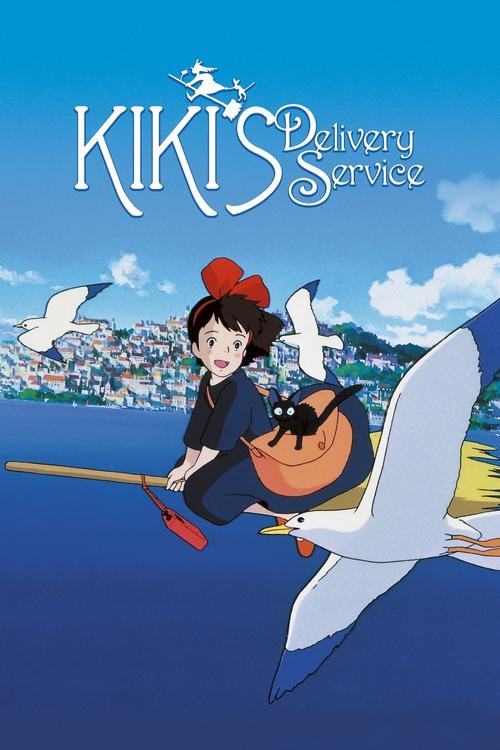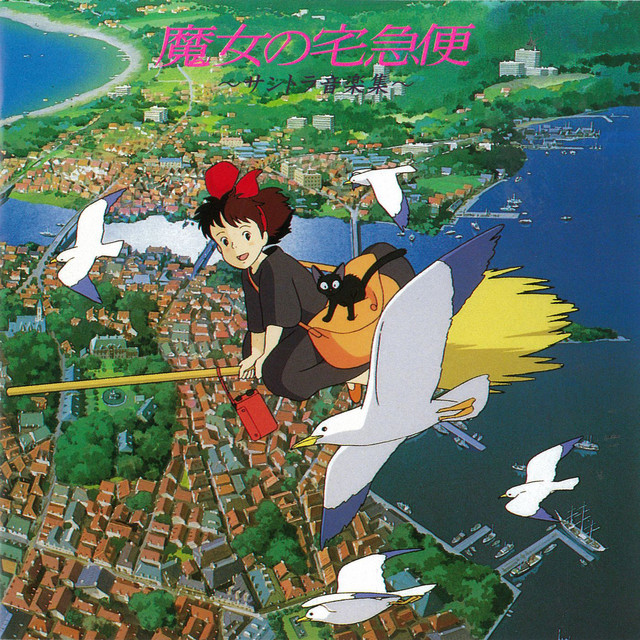
Album: 魔女の宅急便 サントラ音楽集
Picture this: a composer returns from New York recording sessions, jet-lagged and exhausted, only to discover he has mere weeks to complete an entire film score. For most musicians, this would spell disaster. For Joe Hisaishi in 1989, it became the catalyst for one of his most beloved soundtracks – the music for Kiki’s Delivery Service, featuring the enchanting waltz “Hare-ta Hi ni…” (On a Clear Day).
The story behind this music reads like a thriller. Hisaishi’s New York sessions had created a month-long gap in his schedule, leaving him with an impossibly tight deadline. After landing in Japan in June, he had just days to compose additional pieces and arrange the entire score before July’s full orchestra recording. The film’s nationwide release on July 29th loomed like an unforgiving deadline. Yet from this pressure-cooker situation emerged some of Hisaishi’s most organic and emotionally resonant work.
“Hare-ta Hi ni…” serves as the perfect window into Hisaishi’s creative philosophy during this period. Rather than reaching for his usual arsenal of synthesizers, he made a deliberate choice to strip away electronic elements in favor of acoustic instruments. The piece opens with the gentle, breathy tones of an ocarina – that ancient ceramic wind instrument whose voice carries an almost mystical quality. This choice wasn’t arbitrary; it was deeply symbolic.
Every breath-powered instrument in the score tells a story. The ocarina’s whispered introduction gives way to the warm embrace of an oboe, while accordion and mandolin weave Mediterranean textures throughout the piece. These aren’t just pretty sounds – they’re musical metaphors for life itself. The breath that powers these instruments mirrors the wind beneath Kiki’s wings, the fresh air of Koriko town, and the young witch’s own vital energy as she discovers her place in the world.
Hisaishi’s approach to “Hare-ta Hi ni…” reveals his fascination with European folk traditions. He deliberately incorporated instruments like the dulcimer – a hammered string instrument that served as a predecessor to the modern piano – alongside guitars and accordions to create what he called a “European ethnic” atmosphere. The waltz structure itself, with its lilting three-beat pattern, evokes the dancehalls and town squares of Mediterranean Europe.
This wasn’t mere musical tourism, however. Hisaishi understood that Miyazaki’s vision of Koriko required more than surface-level European flavor. The composer spoke of wanting to match the film’s increasingly realistic tone with equally authentic musical textures. Where previous Studio Ghibli scores might have relied heavily on synthesized orchestration, “Hare-ta Hi ni…” and its companion pieces embrace the imperfections and warmth of live performance.
The waltz’s instrumentation creates layers of meaning that reveal themselves on repeated listening. The accordion’s wheeze and sigh mirrors human breathing, while the mandolin’s rapid tremolo suggests the flutter of a young heart discovering independence. When the cimbalom – a Hungarian hammered dulcimer – enters with its distinctive metallic shimmer, it adds an Eastern European folk element that makes Koriko feel like a crossroads of cultures.
Listening to “Hare-ta Hi ni…” today, it’s remarkable to consider the rushed circumstances of its creation. The piece flows with an unhurried grace, its melodies unfolding like a lazy afternoon stroll through cobblestone streets. The main theme, carried alternately by wind instruments and strings, has an almost conversational quality – instruments seem to respond to each other rather than simply playing their parts.
This conversational approach reflects Hisaishi’s broader musical philosophy during this period. He was moving away from the more structured, classical approach of his earlier film work toward something more intuitive and organic. The Mediterranean influences weren’t just about creating atmosphere; they represented a more relaxed, improvisational approach to melody and rhythm.
The technical execution of “Hare-ta Hi ni…” demonstrates how constraints can fuel creativity. Working with a full orchestra in those final July sessions, Hisaishi had to make every moment count. The piece’s approximately four-minute runtime contains no wasted notes – every phrase serves both the emotional arc of the film and the internal logic of the music itself.
What makes “Hare-ta Hi ni…” particularly special within Hisaishi’s catalog is how it balances sophistication with accessibility. The harmonic progressions are complex enough to reward careful listening, yet the main melody is simple enough that a child could hum along. This duality perfectly mirrors Kiki herself – a young person navigating adult responsibilities while maintaining her sense of wonder.
Thirty-five years later, “Hare-ta Hi ni…” continues to enchant listeners precisely because it captures something essential about the human experience. In its gentle waltz rhythm and breathing instruments, we hear not just the story of a flying witch, but our own dreams of freedom, belonging, and the courage to spread our wings.
- 晴れた日に…Now Playing
- 旅立ち
- 海の見える街Read Review
- 空とぶ宅急便Read Review
- パン屋の手伝いRead Review
- 仕事はじめRead Review
- 身代わりジジRead Review
- ジェフRead Review
- 大忙しのキキRead Review
- パーティーに間に合わないRead Review
- オソノさんのたのみ事…Read Review
- プロペラ自転車Read Review
- とべない!Read Review
- 傷心のキキRead Review
- ウルスラの小屋へRead Review
- 神秘なる絵Read Review
- 暴飛行の自由の冒険号Read Review
- おじいさんのデッキブラシRead Review
- デッキブラシでランデブーRead Review