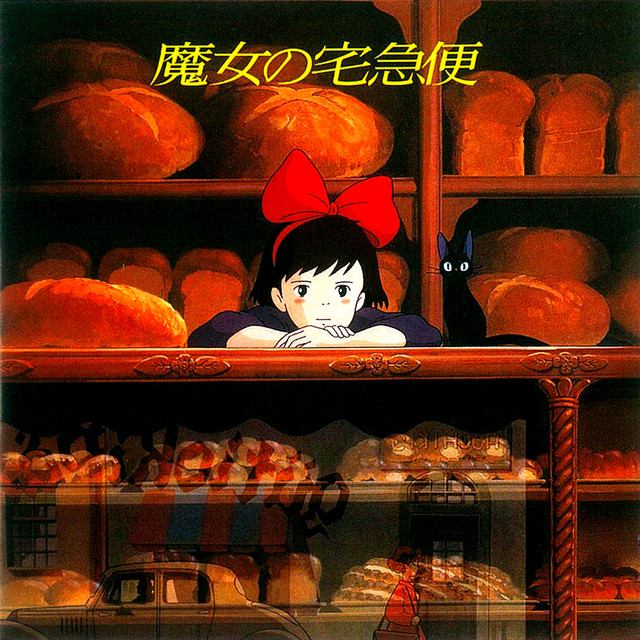
Album: 魔女の宅急便 イメージアルバム
When Joe Hisaishi sat down to compose the image album for Kiki’s Delivery Service, he wasn’t crafting a traditional soundtrack. Instead, he was creating what he called musical sketches—raw, unpolished gems that would later transform into the beloved orchestral scores we know today. Among these sonic blueprints lies “Nagisa no Date” (Beach Date), a track that tells a fascinating story about the collaborative process between composer and director, and the delicate balance between creative vision and final execution.
The image album represents something unique in film music history: a collection of musical rough drafts that capture the pure essence of melody before the weight of orchestration and cinematic demands take hold. Hisaishi approached this project with a specific geographical inspiration in mind—”somewhere vaguely European, perhaps around the Mediterranean.” This wasn’t about precise location mapping, but rather about capturing a feeling, an atmosphere that would eventually breathe life into Miyazaki’s fictional European town of Koriko.
“Nagisa no Date” exemplifies this Mediterranean dreaming perfectly. Built around synthesizer foundations with gentle violin flourishes and subtle guitar textures, the track evokes lazy afternoons by azure waters, where time moves at the pace of gentle waves. The composition sits in a warm major key, its moderate tempo suggesting unhurried romance and the kind of seaside encounters that live forever in memory. Yet despite its beauty and careful craftsmanship, this particular sketch would never make it into the final film.
The relationship between Hisaishi and director Hayao Miyazaki during this period reveals the depth of their collaborative understanding. Of the entire image album, only two tracks—”Nagisa no Date” and “Toppu” (Sudden Wind)—failed to find corresponding scenes in the finished movie. This remarkable one-to-one correspondence wasn’t accidental; it demonstrated the intensive consultation process between composer and director during the album’s creation. They weren’t just making music; they were building a sonic world together, piece by piece.
What makes “Nagisa no Date” particularly intriguing is how it represents the road not taken in Kiki’s story. The title suggests romantic possibilities, beach encounters, and the kind of coming-of-age experiences that might have colored the young witch’s journey differently. In Hisaishi’s synthesizer-driven arrangement, we hear echoes of what could have been—perhaps quieter moments of discovery, seaside reflections, or encounters with local youth that would have added different emotional textures to Kiki’s adventure.
The image album’s aesthetic philosophy centered on simplicity and melodic clarity. Without the full orchestral treatments that would later define the soundtrack, these synthesizer-based arrangements allowed Hisaishi’s melodic genius to shine in its purest form. “Nagisa no Date” demonstrates this approach beautifully—the melody breathes freely without orchestral complexity, each phrase clear and memorable, unencumbered by the demands of specific scene timing or emotional manipulation.
Hisaishi’s choice of instrumentation for the image album also reflected his understanding of the film’s deeper themes. Throughout the eventual soundtrack, instruments that require breath—ocarinas, accordions, woodwinds—would become central to representing Kiki’s life force and connection to the wind that carries her. Even in “Nagisa no Date,” we hear hints of this philosophy through the breathing quality of the synthesized arrangements and the way melodies seem to float and drift like coastal breezes.
The European atmosphere that Hisaishi cultivated wasn’t about tourist-postcard imagery but about capturing something more essential—a sense of history, romance, and the kind of old-world charm that would make Kiki’s magical abilities seem natural rather than fantastical. “Nagisa no Date” achieves this through its use of classical guitar textures and violin lines that suggest folk traditions and street musicians, creating an musical environment where magic and reality could coexist.
Interestingly, while Hisaishi was crafting these Mediterranean-inspired instrumentals, the production team was simultaneously considering how modern popular music would enter their period-ambiguous world. High Takahata’s decision to include Yumi Matsutoya’s songs, particularly “Wrapped in Tenderness,” was driven by the need for urban, contemporary sounds that would represent radio culture and the broader world beyond Koriko’s cobblestone streets.
“Nagisa no Date” stands as a beautiful reminder that creative processes often generate more material than final works can contain. In film music, this is particularly poignant—melodies that could have accompanied pivotal character moments instead exist only in this preliminary form, like photographs of a journey never taken. Yet their existence enriches our understanding of both the composer’s vision and the careful curation that shapes final artistic statements.
Today, these image album tracks offer listeners something precious: access to the composer’s first instincts, unfiltered by commercial or narrative pressures. In “Nagisa no Date,” we hear Hisaishi’s immediate response to Miyazaki’s world, his intuitive musical reaction to themes of youth, magic, and Mediterranean dreams. It’s a glimpse behind the creative curtain that reveals how musical masterworks begin—not with grand statements, but with simple, honest melodies that capture the heart of an imagined world.
- かあさんのホウキRead Review
- ナンパ通りRead Review
- 町の夜Read Review
- 元気になれそうRead Review
- 渚のデイトNow Playing
- 風の丘Read Review
- トンボさんRead Review
- リリーとジジRead Review
- 世界って広いわRead Review
- パン屋さんの窓Read Review
- 突風Read Review
- 木洩れ陽の路地Read Review