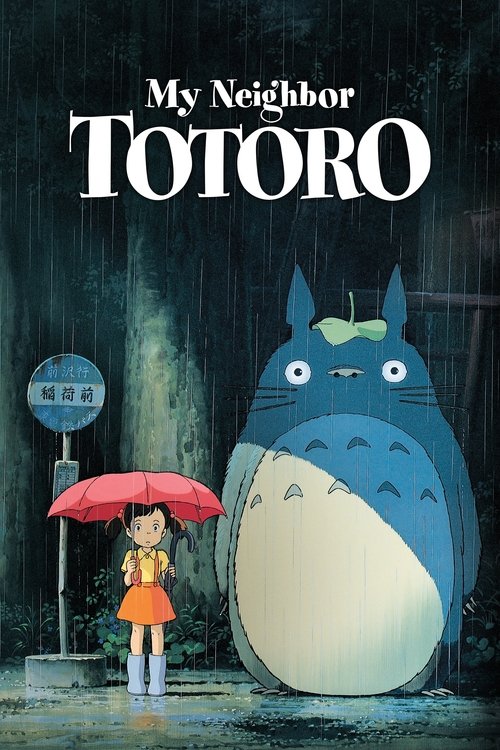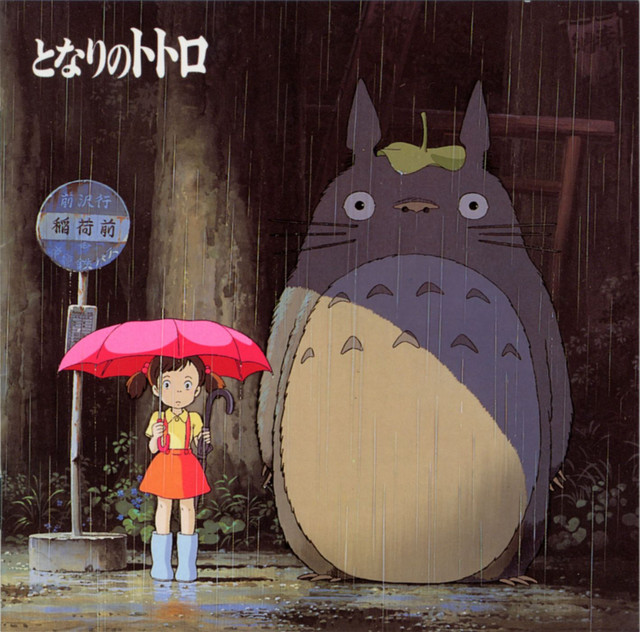
Album: となりのトトロ イメージ・ソング集
What happens when a composer abandons the traditional path of scoring to picture and instead begins with pure song? Joe Hisaishi’s work on “Fushigi Shiritori Uta” (The Mysterious Word-Chain Song) from the My Neighbor Totoro Image Song Collection reveals a radical creative process that would reshape how animated films approach music.
The song emerges from one of the most unconventional projects in film music history. When Hayao Miyazaki expressed his desire to emphasize songs in his upcoming film, Hisaishi proposed something unprecedented: creating an entire album of vocal pieces before touching a single frame of animation. This wasn’t just unusual—it was revolutionary. Rather than music serving the image, songs would help define the very soul of the world they were creating.
At the heart of this experiment lay Hisaishi’s collaboration with lyricist Rieko Nakagawa, whose children’s book “Iya Iya En” had so profoundly moved Miyazaki that he insisted she write the lyrics. Nakagawa crafted ten poems, which through careful discussion were refined into six songs that would capture the essence of childhood wonder. “Fushigi Shiritori Uta” stands as a perfect example of this process—a playful exploration of language that mirrors how children discover the world through words and sounds.
The musical arrangement of “Fushigi Shiritori Uta” reflects Hisaishi’s broader philosophy during this period. Originally conceived with a heavier synthesizer presence, the final recording shifted toward orchestral instruments when Hisaishi fell ill during production. What could have been a setback became a creative breakthrough. The song’s gentle acoustic guitar arpeggios in G major, supported by warm strings and woodwinds, create an intimacy that purely electronic sounds might have missed. The 4/4 tempo moves with the unhurried pace of childhood exploration, each phrase building like links in the word-chain game the song celebrates.
This shift from synthetic to organic mirrors the film’s own aesthetic journey. Hisaishi later reflected that while the original plan called for a 60-40 split favoring synthesizers, the illness-forced change to a 60-40 orchestral split may have made the music more accessible. In “Fushigi Shiritori Uta,” this balance creates a perfect fusion—modern enough to speak to contemporary audiences, yet rooted in acoustic traditions that feel timeless.
The creative process wasn’t without its surreal moments. While crafting these innocent songs about forest spirits and childhood games, Hisaishi was simultaneously composing music for “ANZUCHI,” a dark theatrical production starring Kenji Sawada and Koji Yakusho. The contrast was jarring. “One was a pure, demonic world, the other this innocent realm,” Hisaishi recalled, “Working on both simultaneously nearly drove me mad.” Yet this tension may have sharpened his focus on Totoro’s emotional clarity. Every note in “Fushigi Shiritori Uta” carries the weight of conscious simplicity, as if Hisaishi was deliberately cleansing his musical palette.
Miyazaki’s hands-on approach to the music sessions marked another first in their collaboration. Previously content to let Isao Takahata handle musical discussions, Miyazaki took direct control for Totoro, joking that Takahata’s methods were “unfair.” This direct involvement shaped songs like “Fushigi Shiritori Uta,” where every melodic choice reflects not just Hisaishi’s compositional instincts but Miyazaki’s deep understanding of how children experience music.
The song’s structure embodies the shiritori word game itself—each musical phrase connects to the next like linked syllables, creating an endless chain of melody that could theoretically continue forever. The vocal line dances between major and relative minor passages, suggesting both the security of familiar patterns and the excitement of discovering something new. It’s a musical representation of how learning works in childhood: building on the known to reach the unknown.
Perhaps most significantly, “Fushigi Shiritori Uta” demonstrates how the Image Song Collection project liberated Hisaishi from conventional film scoring constraints. Without images to serve, he could focus purely on emotional truth. The result is music that doesn’t just accompany a story—it embodies the very spirit of curiosity and wonder that makes Totoro’s world so compelling.
This approach would influence Hisaishi’s later work, establishing a template where songs don’t merely support narrative but help define the emotional geography of entire films. In “Fushigi Shiritori Uta,” we hear the sound of a composer discovering that sometimes the most profound musical statements come not from complex orchestration or innovative harmony, but from the simple act of capturing pure joy in song form.
The legacy of this experimental approach extends far beyond one film. By proving that music could lead rather than follow in animation, Hisaishi opened new possibilities for how composers and directors collaborate. Every time a filmmaker now begins a project by exploring its musical soul, they’re following the path that songs like “Fushigi Shiritori Uta” first carved through the creative wilderness.
- となりのトトロRead Review
- 風のとおり道Read Review
- さんぽRead Review
- まいごRead Review
- すすわたりRead Review
- ねこバスRead Review
- ふしぎしりとりうたNow Playing
- おかあさんRead Review
- 小さな写真Read Review
- ドンドコまつりRead Review
- 風のとおり道(インストゥルメンタル)Read Review