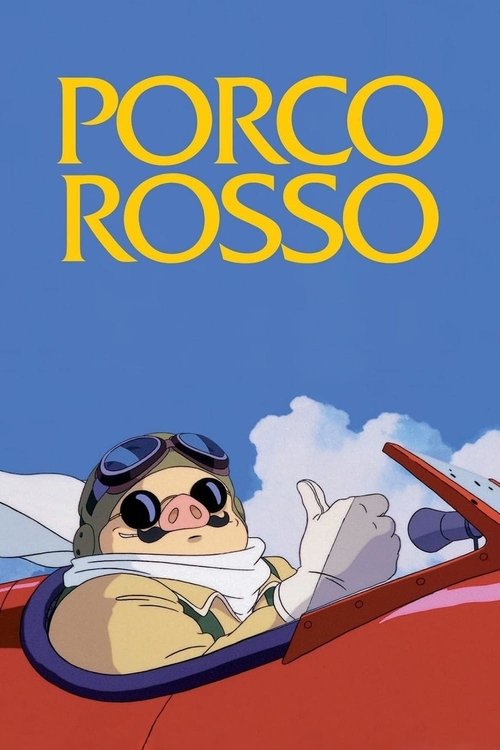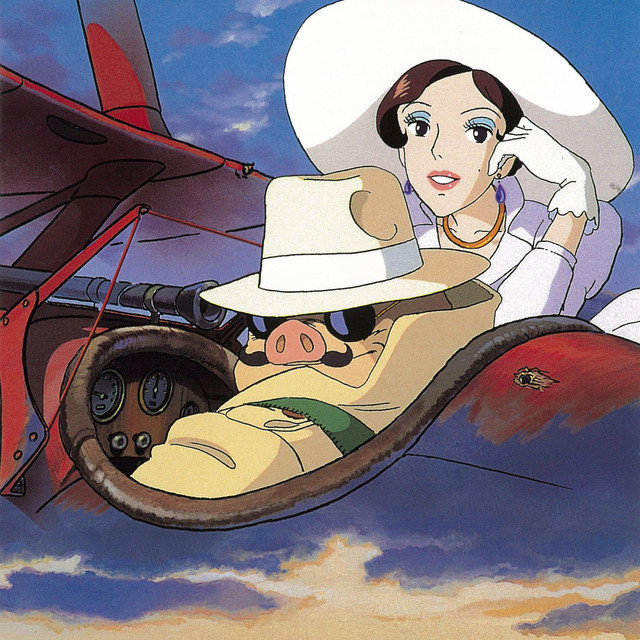
Album: 紅の豚 サウンドトラック
In 1992, Hayao Miyazaki handed Joe Hisaishi six handwritten poems. Among them were verses titled ‘Flying Boat Tango,’ ‘Twilight Adriatic Sea,’ and ‘Secret Garden.’ These weren’t just creative inspiration – they were musical blueprints for what would become one of cinema’s most emotionally complex soundtracks for ‘Porco Rosso’ (Crimson Pig).
The centerpiece of this collaboration, ‘Porco e Bella,’ emerges from a fascinating intersection of historical authenticity and personal artistic vision. Set in 1920s Italy during the height of the Jazz Age, the film demanded music that could capture both the era’s exuberant spirit and the melancholic undertones of its war-weary protagonist Marco.
Hisaishi’s approach to ‘Porco e Bella’ reveals his deep understanding of jazz as both historical context and emotional language. The piece unfolds in B-flat major with a gentle swing rhythm, its melody carried by solo piano in the intimate style of a speakeasy performance. This wasn’t coincidental – Hisaishi conceived the piece as diegetic music, literally emerging from the piano at Gina’s hotel bar where she performs for her guests.
The creative process behind this track illuminates Hisaishi’s broader musical philosophy. Long before ‘Porco Rosso,’ he had been absorbing the works of Miles Davis, John Coltrane, and particularly Mal Waldron, whose introspective piano style left an indelible mark on the young composer. While audiences knew Hisaishi primarily as an orchestral composer and minimalist, his jazz sensibilities ran deep, cultivated during his student years when modern jazz was reshaping musical expression worldwide.
This background proved crucial when Miyazaki’s poems demanded music that could simultaneously evoke 1920s authenticity and timeless romantic longing. ‘Porco e Bella’ achieves this balance through its harmonic sophistication – the piece employs subtle jazz extensions and chromatic voice leading that would have been familiar to period listeners, while its melodic contour speaks to universal themes of love and loss.
The relationship between Miyazaki and Hisaishi during this period reveals fascinating insights into their creative partnership. After hearing Hisaishi’s solo album ‘My Lost City,’ Miyazaki reportedly declared he wanted ‘all of it’ for his film. This wasn’t mere enthusiasm – it represented a recognition that Hisaishi had already been exploring the emotional territory the film would occupy. The jazz influences that permeated ‘My Lost City’ aligned perfectly with Miyazaki’s vision of 1920s Mediterranean romance.
‘Porco e Bella’ exemplifies how this convergence of influences created something unprecedented in Studio Ghibli’s musical catalog. The piece introduces two elements that distinguished ‘Porco Rosso’ from earlier Hisaishi-Miyazaki collaborations: authentic jazz language and the integration of pre-existing solo material. These elements prevented the film from becoming merely an action-adventure story, instead grounding it in genuine emotional complexity.
Listening to ‘Porco e Bella,’ one can hear Mal Waldron’s influence in the piece’s contemplative phrasing and harmonic sophistication. The melody moves with the kind of measured introspection that characterized Waldron’s ballad playing, while the underlying harmonies suggest the complex emotional landscape of someone haunted by past choices. This musical characterization perfectly captures Marco’s internal struggle between his human past and his cursed present.
The historical accuracy of Hisaishi’s jazz writing shouldn’t be overlooked. The 1920s were indeed the Jazz Age, when American musical innovations were spreading across European cultural centers. A piano player in an Italian coastal hotel would certainly have been familiar with jazz standards and improvisation techniques. By grounding ‘Porco e Bella’ in authentic period style, Hisaishi created music that feels naturally integrated into the film’s world rather than imposed upon it.
Yet the piece transcends mere historical recreation. In the film’s narrative, when Gina plays piano in her hotel, the music becomes a bridge between past and present, between the carefree 1920s and the weight of personal history. ‘Porco e Bella’ carries this thematic burden through its structure – beginning with simple melodic statements that gradually accumulate harmonic complexity, mirroring how simple romantic feelings become complicated by time and circumstance.
The six poems Miyazaki provided weren’t just starting points; they were emotional coordinates for a musical journey that would span an entire film. ‘Porco e Bella’ represents the heart of this journey, where jazz becomes not just period color but a language for expressing the inexpressible – the weight of transformation, the persistence of love, and the bittersweet nature of memory. In Hisaishi’s hands, a simple piano melody becomes a window into the soul of a character who has forgotten how to be human but hasn’t forgotten how to feel.
- 時代の風-人が人でいられた時-Read Review
- MAMMAIUTORead Review
- Addio!Read Review
- 帰らざる日々Read Review
- セピア色の写真Read Review
- セリビア行進曲Read Review
- Flying boatmenRead Review
- Doom-雲の罠-Read Review
- Porco e BellaNow Playing
- Fio-SeventeenRead Review
- ピッコロの女たちRead Review
- FriendRead Review
- Partner shipRead Review
- アドリアの海へRead Review
- 遠き時代を求めてRead Review
- 荒野の一目惚れRead Review
- 夏の終わりにRead Review
- 失われた魂-LOST SPIRIT-Read Review
- Dog fightRead Review
- Porco e Bella-Ending-Read Review