
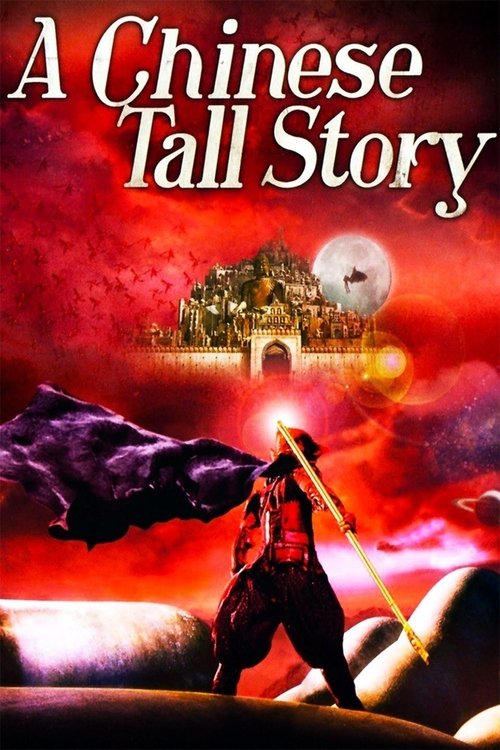
Jeffrey Lau Chun-Wai’s 2005 fantasy film “A Chinese Tall Story” presents a whimsical journey through a magical realm where the young monk Taka embarks on an epic quest to rescue his three captured disciples from the clutches of a demonic tree. Armed with the legendary magic stick of the Monkey King, Taka encounters Meiyan, a mysterious half-human, half-monster girl who becomes his unlikely companion. Together, they traverse fantastic landscapes, face formidable enemies, and ultimately discover that their adventure holds the very fate of humanity and the universe in balance. This charming blend of action, comedy, and Eastern mysticism creates the perfect canvas for an extraordinary musical experience.
Upon its release, “A Chinese Tall Story” garnered considerable attention within Asian cinema circles, particularly in Hong Kong and China where its blend of traditional mythology and contemporary comedy resonated with audiences. While European viewers may be less familiar with this particular film, its visual spectacle and narrative charm have earned it a devoted cult following. The film’s reception was buoyed by its inventive visual effects and Lau’s signature comedic storytelling, though it remains somewhat overshadowed by other major fantasy releases from the era. Nevertheless, for those who discovered it, the film left an indelible impression, largely due to the magnificence of its accompanying score.
It is Joe Hisaishi’s extraordinary musical composition, however, that elevates “A Chinese Tall Story” into something truly transcendent. The renowned Japanese composer, celebrated for his collaborations with Hayao Miyazaki and his versatile approach to film scoring, brings his characteristic brilliance to this Chinese fantasy epic. Hisaishi’s score is a masterful fusion of Eastern and Western orchestral traditions, creating a soundscape that perfectly complements the film’s fantastical narrative.
The composer employs a rich orchestral palette, weaving traditional Chinese instruments seamlessly alongside Western strings and brass sections. This hybrid approach reflects the film’s own cultural hybridity and creates an immediate sense of otherworldly adventure. The primary theme surrounding Taka’s quest is characterized by soaring melodic lines that convey both heroism and wonder, perfectly capturing the young monk’s determination alongside the magical nature of his journey. When Meiyan is introduced, Hisaishi introduces delicate, ethereal flourishes that underscore her mysterious dual nature, employing gentle woodwinds and shimmering strings to suggest both her humanity and her supernatural essence.
Throughout the film, Hisaishi’s compositional approach reveals a deep understanding of the narrative’s emotional architecture. Action sequences feature dynamic, rhythmically complex arrangements that drive the kinetic energy of combat and adventure without overwhelming the visual spectacle. Conversely, quieter moments of character development are supported by intimate, introspective passages that allow emotional depth to flourish. The demonic tree’s theme employs darker, more dissonant harmonies, creating genuine tension and menace whenever our heroes face this supernatural antagonist.
What makes Hisaishi’s work particularly remarkable is how the music serves as a narrative guide without becoming intrusive. Each thematic element is carefully constructed to evolve alongside the characters and their relationships, with Taka and Meiyan’s friendship theme growing increasingly complex and intertwined as their bond deepens. The score reaches its zenith during the climactic sequences, where Hisaishi orchestrates a magnificent crescendo that fully realizes the cosmic stakes of humanity’s fate, transforming what could have been mere spectacle into something genuinely profound. This is Hisaishi at his finest: creating music that honors its source material while transcending it entirely.