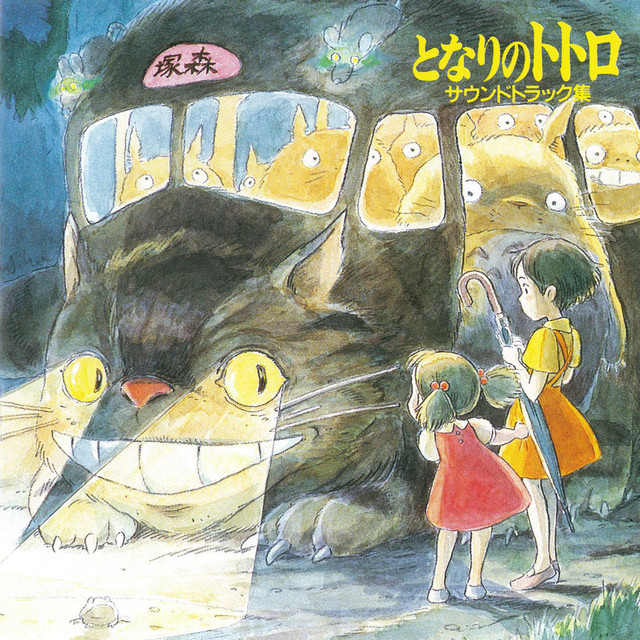
Album: となりのトトロ サウンドトラック集
Picture this: you’re composing a three-minute and fifty-second piece of music that must sync perfectly with over fifty specific visual moments. Not approximately. Perfectly. Down to fractions of a second. This was the challenge Joe Hisaishi faced when creating the score for the pivotal scene where young Mei discovers Totoro in Miyazaki’s beloved animated film.
The track “Chiisana Obake” (Little Ghost) from the My Neighbor Totoro soundtrack represents something extraordinary in film scoring – a composer’s obsessive dedication to achieving perfect synchronization between music and image. Hisaishi has described this particular piece as taking longer than any other composition in his career, requiring him to conduct what he calls “zero-point-something-second cues” to match the animation’s timing.
But why such meticulous attention to detail? The answer lies in Hisaishi’s broader musical philosophy for the Totoro project. He recognized early on that a conventional orchestral approach would reduce the film to what he termed “an ordinary children’s movie.” Instead, he sought to create something more sophisticated – a musical landscape that could speak to both children and adults.
This philosophy manifested in Hisaishi’s innovative structural approach to the entire soundtrack. Rather than relying solely on traditional orchestral arrangements, he deliberately balanced what he calls “ethnic elements” with conventional orchestration. This wasn’t merely an aesthetic choice; it was a strategic decision to avoid the musical clichés typically associated with children’s cinema.
The ethnic influences weren’t just conceptual – they were deeply personal. Hisaishi actually performed many of the percussive elements himself, including the distinctive tabla sounds that pepper the soundtrack. This hands-on approach reflects his commitment to authenticity and his belief that the composer should be intimately involved in every aspect of the musical creation.
For the Totoro theme specifically, Hisaishi drew inspiration from minimalist music traditions, incorporating repetitive patterns and gradually evolving textures that create an almost hypnotic quality. This minimalist foundation, combined with ethnic percussion and subtle orchestral coloring, produces a sound that feels both familiar and otherworldly – perfectly matching Totoro’s character as a benevolent forest spirit.
The scene where Mei encounters the tadpoles and subsequently discovers Totoro presented unique compositional challenges. The music needed to capture a child’s wonder at discovering small creatures in a stream while simultaneously building toward the magical moment of meeting Totoro himself. Hisaishi achieved this through careful dynamic control and rhythmic manipulation, including what he describes as “double-speed rhythms” that required split-second timing cues.
Interestingly, Hisaishi’s approach to this project was influenced by his decision to create an image album filled with songs rather than purely instrumental pieces. He believed that the film’s focus on everyday sequences would benefit more from vocal melodies that could clearly convey scene-specific imagery. This insight into the relationship between narrative structure and musical approach reveals Hisaishi’s sophisticated understanding of film as a medium.
The composer has admitted that the story’s episodic nature – its focus on small, daily moments rather than grand dramatic arcs – presented significant creative challenges. Where traditional film scoring might rely on obvious emotional peaks and valleys, Totoro required subtlety and suggestion. The music needed to enhance mundane activities like walking through forests or playing in gardens while remaining engaging enough to support the film’s more magical moments.
This balancing act is perhaps most evident in pieces like “Chiisana Obake,” where Hisaishi must support both the realistic elements of a child’s outdoor exploration and the fantastical discovery of a mythical creature. The composition begins with playful, light textures that mirror Mei’s curiosity about the tadpoles, then gradually introduces more mysterious harmonic elements as she ventures deeper into the forest.
The track’s instrumentation reflects Hisaishi’s broader aesthetic vision for the project. Traditional Western orchestral instruments blend seamlessly with ethnic percussion and minimalist piano patterns, creating a sound palette that feels both rooted in familiar musical traditions and refreshingly unique. This fusion prevents the music from falling into either the overly precious territory of typical children’s film scores or the alienating complexity of avant-garde composition.
Hisaishi’s meticulous attention to timing in this piece – those fifty-plus synchronization points – demonstrates how he views music not as a separate artistic element but as an integral part of the storytelling mechanism. Each musical gesture serves a specific narrative function, whether highlighting Mei’s facial expressions, emphasizing her physical movements, or underlining the magical transformation of an ordinary forest into something extraordinary.
This level of precision and thoughtfulness has contributed to the enduring appeal of the Totoro soundtrack. Decades after its creation, these compositions continue to resonate with listeners who may never have seen the film, suggesting that Hisaishi’s careful balance of accessibility and sophistication has created music that transcends its original context while remaining perfectly suited to it.
- さんぽ-オープニング主題歌-Read Review
- 五月の村Read Review
- オバケやしき!Read Review
- メイとすすわたりRead Review
- 夕暮れの風Read Review
- こわくないRead Review
- おみまいにいこうRead Review
- おかあさんRead Review
- 小さなオバケNow Playing
- トトロRead Review
- 塚森の大樹Read Review
- まいごRead Review
- 風のとおり道(インストゥルメンタンル)Read Review
- ずぶぬれオバケRead Review
- 月夜の飛行Read Review
- メイがいないRead Review
- ねこバスRead Review
- よかったねRead Review
- となりのトトロ-エンディング主題歌-Read Review
- さんぽ(合唱つき)Read Review