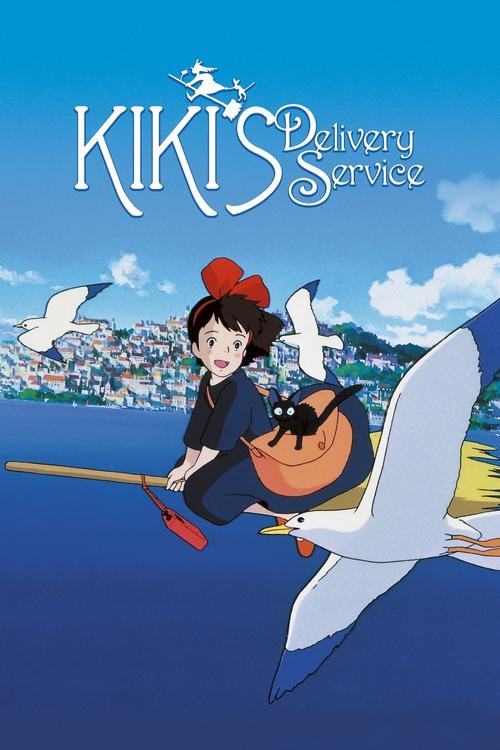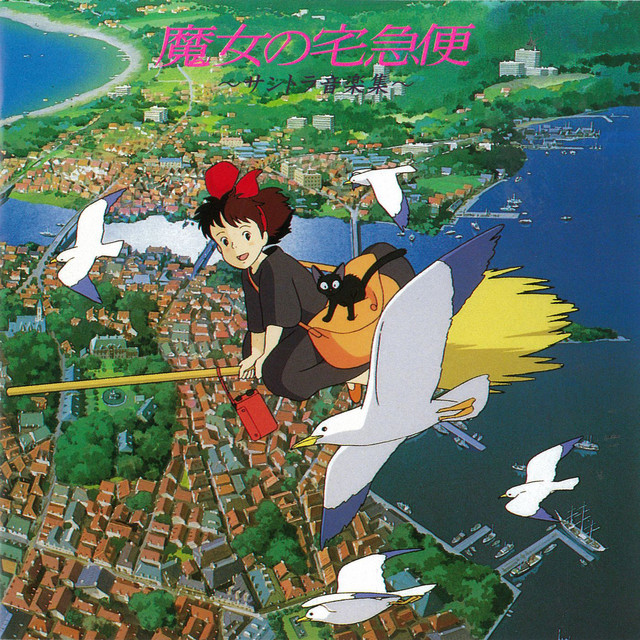
Album: 魔女の宅急便 サントラ音楽集
Picture this: a young witch soaring through the sky on a deck brush, rescuing the boy she’s fallen for while an entire city watches in awe. It’s the triumphant finale of Studio Ghibli’s “Kiki’s Delivery Service,” and the music swelling beneath this magical moment is Joe Hisaishi’s “Deck Brush Rendezvous” (デッキブラシでランデブー). This waltz doesn’t just accompany the scene—it crystallizes everything Hisaishi believed about bringing European soul to Japanese animation.
The track serves as the film’s grand finale, a magnificent waltz in three-quarter time that reprises the main theme as Kiki successfully saves Tombo from his precarious situation. But to understand why this particular piece feels so emotionally satisfying, we need to dive into Hisaishi’s creative philosophy for the entire score—and the almost impossibly tight deadline that nearly derailed everything.
“This time, I significantly reduced the use of synthesizers,” Hisaishi explained about his approach to Kiki’s soundtrack. “Since the content of this work is more realistic, I brought the overall sound closer to live instruments.” This decision wasn’t merely aesthetic—it reflected his desire to ground Kiki’s magical world in something tangible and human.
The composer’s European sensibilities shine throughout “Deck Brush Rendezvous.” Drawing inspiration from Mediterranean melodies and traditional dance forms, Hisaishi incorporated instruments like the dulcimer (a folk instrument that served as a predecessor to the piano), guitar, and accordion. These choices weren’t random—they were carefully selected to evoke what he called “European ethnic, dance-like elements” that would transport listeners to Kiki’s fictional European town of Koriko.
What makes “Deck Brush Rendezvous” particularly compelling is how it represents the culmination of Hisaishi’s broader musical strategy for the film. Throughout the score, he deliberately emphasized wind instruments—ocarinas, accordions, and various woodwinds. This wasn’t just orchestrational preference; it was philosophical. Wind represents breath, life force, and most importantly for Kiki’s story, the very air that carries her through the sky. Every time we hear these breathy, organic sounds, we’re reminded of Kiki’s vitality and her connection to the natural world.
The three-quarter waltz time of “Deck Brush Rendezvous” serves multiple purposes. Rhythmically, it provides the lilting, dance-like quality that Hisaishi favored throughout the score. Emotionally, it transforms a rescue scene into something almost celebratory—a dance in the sky. The waltz rhythm also echoes European ballroom traditions, reinforcing the Old World atmosphere that Hisaishi worked so hard to create.
Behind this musical triumph lies one of the most stressful production stories in animation history. Hisaishi had traveled to New York for recording sessions on another project, forcing a month-long interruption in his work on Kiki. When he returned to Japan in June 1989, he faced an almost impossible task: compose additional music, complete all arrangements, and record with a full orchestra—all to meet the film’s July 29th nationwide release date.
“The day after returning to Japan, we had meetings, and two days later, we were recording,” recalls music supervisor Hidekuni Maejima. It was the kind of pressure-cooker situation that would be unthinkable by today’s production standards. Yet somehow, Hisaishi managed to complete the score, including “Deck Brush Rendezvous,” in just a few weeks of intensive work.
This breakneck pace might explain why “Deck Brush Rendezvous” feels so immediate and emotionally direct. There was no time for overthinking or elaborate revisions—Hisaishi had to trust his instincts and deliver music that would serve the story’s emotional peaks. The result is a piece that feels both carefully crafted and spontaneous, much like Kiki’s own magical flight.
Listening to “Deck Brush Rendezvous” today, it’s remarkable how effectively it balances grandeur with intimacy. The full orchestration provides the sweeping emotion appropriate for the film’s climax, while the European folk instruments maintain the human scale that makes Kiki’s world feel lived-in rather than fantastical. The waltz rhythm keeps everything buoyant, ensuring that even this moment of high drama maintains the joy and wonder that defines Kiki’s character.
In many ways, “Deck Brush Rendezvous” represents everything Hisaishi achieved with the Kiki soundtrack: European sophistication filtered through Japanese storytelling sensibilities, organic instrumentation serving magical narrative purposes, and traditional musical forms breathing new life into animated cinema. It’s a three-minute encapsulation of why Hisaishi became one of the most influential film composers of his generation—and why, decades later, we still find ourselves humming along to Kiki’s triumphant waltz in the sky.
- 晴れた日に…Read Review
- 旅立ち
- 海の見える街Read Review
- 空とぶ宅急便Read Review
- パン屋の手伝いRead Review
- 仕事はじめRead Review
- 身代わりジジRead Review
- ジェフRead Review
- 大忙しのキキRead Review
- パーティーに間に合わないRead Review
- オソノさんのたのみ事…Read Review
- プロペラ自転車Read Review
- とべない!Read Review
- 傷心のキキRead Review
- ウルスラの小屋へRead Review
- 神秘なる絵Read Review
- 暴飛行の自由の冒険号Read Review
- おじいさんのデッキブラシRead Review
- デッキブラシでランデブーNow Playing