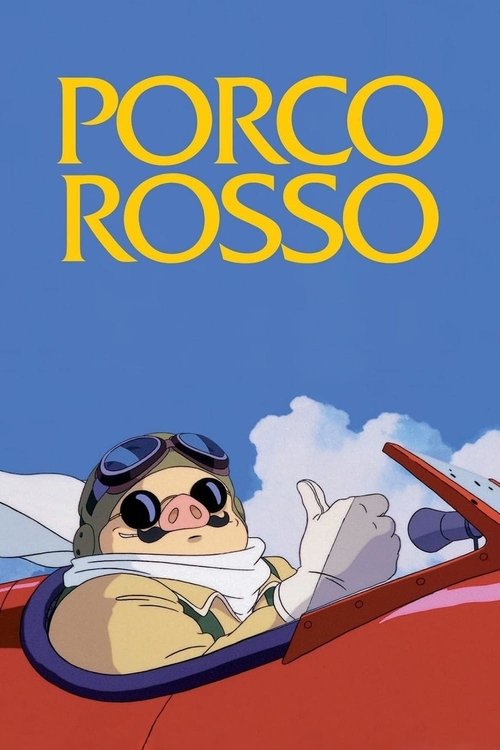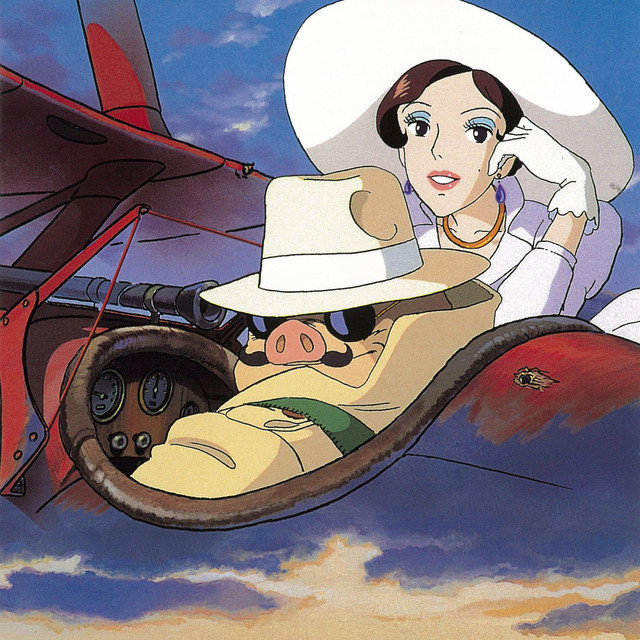
Album: 紅の豚 サウンドトラック
Sometimes the most beautiful music emerges from pure coincidence—or perhaps what we call destiny. Joe Hisaishi’s “Fio—Seventeen” from the Porco Rosso soundtrack exists at the intersection of two artistic visions that found each other through an almost mystical alignment of timing and inspiration.
While Hayao Miyazaki was developing his tale of a pig-faced pilot navigating the Adriatic skies of the 1920s, Hisaishi was simultaneously crafting his solo album ‘My Lost City,’ inspired by F. Scott Fitzgerald’s writings about that same Jazz Age era. Neither artist knew of the other’s temporal fascination until their paths converged in what Hisaishi later described as feeling “very fateful, as artists living in the same era.”
This serendipitous alignment fundamentally shaped how “Fio—Seventeen” came to life. The track, written in a warm G major that captures both innocence and longing, represents seventeen-year-old Fio Piccolo’s spirited determination through a delicate piano melody that dances between childhood wonder and emerging adulthood. But understanding its creation requires diving deeper into the collaborative process that birthed it.
When Miyazaki first heard ‘My Lost City,’ his response was immediate and enthusiastic: “I want all of those songs, all of them for Porco Rosso.” This wasn’t merely about borrowing musical pieces—it was recognition that Hisaishi had already captured the emotional essence of the world Miyazaki was building. The Jazz Age wasn’t just a time period for either artist; it was a feeling, a sense of possibility tinged with melancholy that both men instinctively understood.
The 1920s provided the perfect sonic palette for Porco Rosso’s complex emotional landscape. Jazz piano, which features prominently in “Fio—Seventeen,” wasn’t just historically accurate—it was emotionally necessary. The era’s music embodied the same contradictions as Miyazaki’s characters: sophisticated yet playful, romantic yet realistic. When Marco and Gina’s themes first emerge through jazz piano in the film’s bar scenes, they establish a musical language that “Fio—Seventeen” would later speak fluently.
To help Hisaishi navigate the film’s emotional terrain, Miyazaki provided six poems as creative guideposts: “Flying Boat Pilot’s Tango,” “Ascent,” “Twilight Adriatic Sea,” “Night Flight,” “Secret Garden,” and “Merry-go-round.” These weren’t literal instructions but atmospheric sketches that allowed both artists to inhabit the same imaginative space. “Fio—Seventeen” emerges from this shared vocabulary, particularly drawing from the youthful energy suggested by “Merry-go-round” while maintaining the nostalgic undertones of “Secret Garden.”
Yet for all its beauty, Hisaishi later expressed reservations about his approach to the entire score. He felt he had pushed too hard toward “action movie style” when Miyazaki’s deeply personal vision called for more restraint. This self-criticism reveals something crucial about “Fio—Seventeen”—it succeeds precisely because it avoids bombast. The piece unfolds at a gentle tempo of around 90 BPM, allowing space for contemplation rather than rushing toward dramatic peaks.
The track’s instrumentation reflects this restraint beautifully. Built around a simple piano melody supported by strings and subtle woodwind colors, “Fio—Seventeen” never overwhelms Fio’s character development on screen. Instead, it provides an emotional foundation that lets her actions speak louder than the music itself. This approach aligns with Hisaishi’s later reflection that he should have “pulled back more” to serve Miyazaki’s intimate storytelling.
Listening to “Fio—Seventeen” today, one can hear the collision of two artistic sensibilities—Hisaishi’s sophisticated harmonic language meeting Miyazaki’s character-driven narrative needs. The result is music that feels both of its time and timeless, capturing the specific experience of being seventeen in 1920s Italy while speaking to anyone who has ever felt caught between childhood and adulthood.
The true magic lies in how this piece emerged from parallel creative journeys that somehow found each other. Hisaishi’s exploration of Fitzgerald’s Lost Generation and Miyazaki’s vision of Mediterranean adventure pilots created a musical moment that neither could have achieved alone. “Fio—Seventeen” stands as proof that sometimes the most meaningful collaborations happen when artists discover they’ve been walking the same path without knowing it.
In the end, destiny might be too grand a word for what brought these elements together. But listening to “Fio—Seventeen,” with its perfect balance of Jazz Age sophistication and youthful determination, it’s hard not to believe that some musical meetings are simply meant to be.
- 時代の風-人が人でいられた時-Read Review
- MAMMAIUTORead Review
- Addio!Read Review
- 帰らざる日々Read Review
- セピア色の写真Read Review
- セリビア行進曲Read Review
- Flying boatmenRead Review
- Doom-雲の罠-Read Review
- Porco e BellaRead Review
- Fio-SeventeenNow Playing
- ピッコロの女たちRead Review
- FriendRead Review
- Partner shipRead Review
- アドリアの海へRead Review
- 遠き時代を求めてRead Review
- 荒野の一目惚れRead Review
- 夏の終わりにRead Review
- 失われた魂-LOST SPIRIT-Read Review
- Dog fightRead Review
- Porco e Bella-Ending-Read Review