
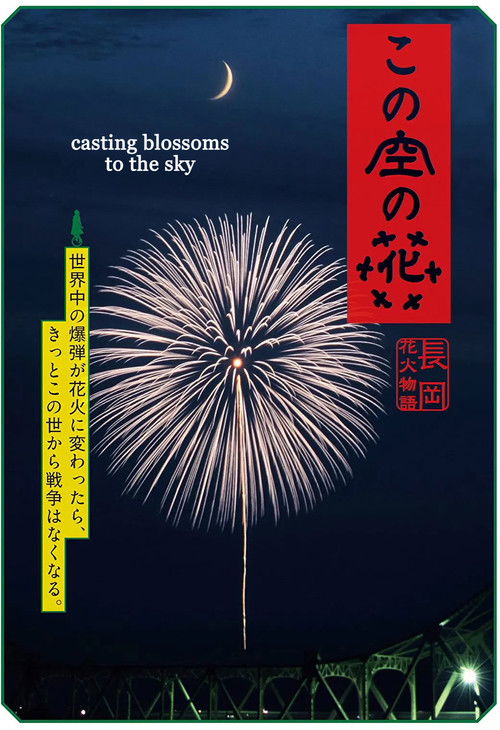
Nobuhiko Obayashi’s 2012 film ‘Casting Blossoms to the Sky’ stands as a poignant meditation on disaster, memory, and human resilience. Following the catastrophic 2011 Tōhoku earthquake and tsunami that devastated Japan’s northeast coast, the film traces a journalist’s journey to Nagaoka, a city bearing its own scars from historical tragedy. Already ravaged by American bombing raids during World War II and struck by the devastating 2004 Chūetsu earthquakes, Nagaoka becomes the symbolic heart of this narrative. There, the journalist encounters a local student’s theatrical production, discovering within its pages a reflection of collective trauma and the persistent human spirit that refuses to be entirely extinguished by catastrophe.
The film’s release and reception marked a significant moment in post-disaster Japanese cinema. Rather than sensationalizing the tragedy, Obayashi crafted a contemplative work that resonated deeply with Japanese audiences still processing their grief. The film garnered critical acclaim at international film festivals, appreciated by European audiences for its nuanced approach to trauma and its refusal to offer easy emotional catharsis. Critics praised Obayashi’s elegant visual composition and his ability to weave together multiple historical threads without succumbing to melodrama. The work became emblematic of a certain strain of Japanese filmmaking that finds profound beauty in acknowledging pain rather than denying it.
At the emotional and structural core of this extraordinary film lies Joe Hisaishi’s meticulously crafted score, a masterwork that functions as far more than mere accompaniment. Hisaishi, renowned for his collaborations with Hayao Miyazaki and his distinctive compositional voice, brings here an almost crystalline clarity to the film’s thematic concerns. His approach demonstrates remarkable restraint—a quality that becomes increasingly powerful within the context of disaster narratives prone to orchestral excess.
The score employs a distinctive instrumental palette centered on piano, strings, and subtle wind instruments, creating a sonic space that feels both intimate and expansive. This orchestration mirrors the film’s dual narrative structure, moving between personal testimony and collective experience. Hisaishi’s themes possess an understated dignity that honors the real suffering depicted on screen without exploiting it. The main theme, introduced early in the film, carries a gentle melodic line that recurs throughout like a form of musical prayer—not demanding catharsis but offering quiet acknowledgment.
What proves particularly masterful is how Hisaishi’s music interacts with silence and visual space. Rather than filling every moment with sound, the composer allows pauses that give weight to image and dialogue. When characters recall their experiences of earthquake and displacement, the music often retreats into delicate ambient textures, permitting human voices and environmental sound to carry emotional truth. This compositional maturity demonstrates Hisaishi’s deep understanding that sometimes the most powerful musical statement involves knowing when not to compose.
The score also captures Nagaoka’s layered history through subtle musical references and modal variations that suggest different temporal registers. Japanese instrumental traditions blend with Western classical forms, reflecting the film’s exploration of how historical trauma accumulates across generations. Hisaishi’s music becomes a mirror of this cultural palimpsest, creating something that feels simultaneously rooted in Japanese musical sensibilities and universally accessible to European listeners.
Ultimately, ‘Casting Blossoms to the Sky’ and its remarkable score represent Joe Hisaishi at his most philosophically engaged. The music embodies the film’s central conviction: that facing disaster collectively, through art and remembrance, constitutes its own form of resilience.