
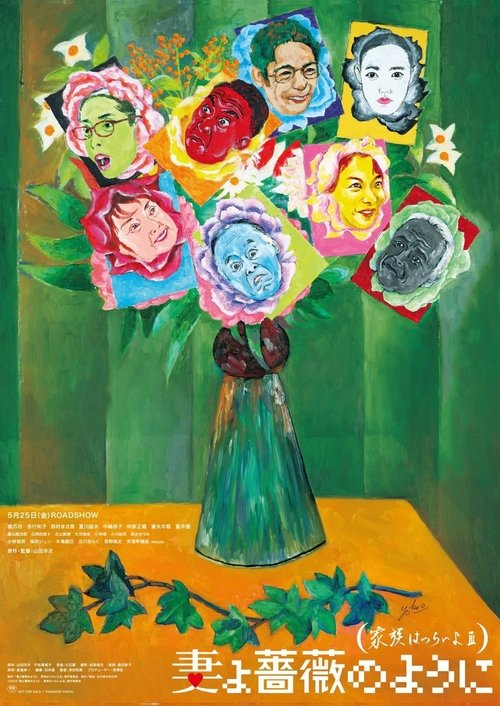
Yoji Yamada’s “What a Wonderful Family! 3” (2018) represents the third installment in the beloved comedy-drama series that captures the warmth and occasional chaos of multigenerational Japanese household life. The film follows the Hirata family as they navigate an unexpected crisis when housewife Fumie awakens from an afternoon nap to discover that a thief has made off with her carefully hidden savings—money she’d been keeping secret in the refrigerator. What could have been a straightforward crime narrative instead becomes an intimate exploration of family bonds, trust, and the small sacrifices that define domestic life in contemporary Japan.
The film was met with considerable enthusiasm from Japanese audiences and critics alike, who appreciated Yamada’s signature blend of humor and emotional depth. The “What a Wonderful Family!” series has proven remarkably durable, resonating with viewers across generations through its honest portrayal of intergenerational living and its refusal to reduce family dynamics to either sentimentality or cynicism. The third film’s reception confirmed that audiences continued to find genuine delight in the Hirata family’s small tribulations and triumphs, making it a commercial and critical success that further solidified the franchise’s place in contemporary Japanese cinema.
Yet it is Joe Hisaishi’s masterful score that provides the emotional scaffolding upon which the entire narrative rests. Hisaishi brings to “What a Wonderful Family! 3” the same compositional sophistication he has demonstrated across decades of film scoring, crafting a musical landscape that honors both the comedy and the underlying tenderness of Yamada’s vision. The score eschews bombast in favor of nuance, employing acoustic instrumentation and folk-influenced melodies that mirror the film’s celebration of everyday life. Hisaishi understands that the most profound emotional moments in family dramas often emerge from seemingly trivial incidents—a stolen stash of money becomes, through his musical lens, a meditation on sacrifice and maternal devotion.
Hisaishi’s approach to the film’s thematic material reveals his sophisticated understanding of Japanese cultural values. The composer weaves traditional Japanese musical elements alongside contemporary orchestral textures, creating a score that feels both timeless and rooted in the present moment. When Fumie’s theft is discovered, Hisaishi’s music doesn’t exploit the moment for dramatic effect; instead, it gently acknowledges the quiet disappointment while maintaining the film’s fundamentally humanistic perspective. The music suggests understanding and forgiveness rather than judgment, mirroring the family’s own response to their misfortune.
Throughout the film, Hisaishi employs recurring musical motifs that become increasingly meaningful as the narrative unfolds. A gentle piano melody associated with Fumie gains poignancy as we understand the deeper significance of her hidden savings. The composer’s use of silence proves equally important—moments of musical restraint allow the audience to absorb the human dimensions of the story without emotional manipulation. This restraint reflects Yamada’s directorial philosophy and demonstrates Hisaishi’s rare ability to serve the narrative rather than overshadow it.
The genius of Hisaishi’s work in “What a Wonderful Family! 3” lies in its absolute fidelity to the film’s core message: that families endure not through dramatic gestures but through accumulated moments of understanding, forgiveness, and quiet love. His score becomes the voice of that endurance, speaking directly to viewers’ hearts about what makes family life genuinely wonderful.