
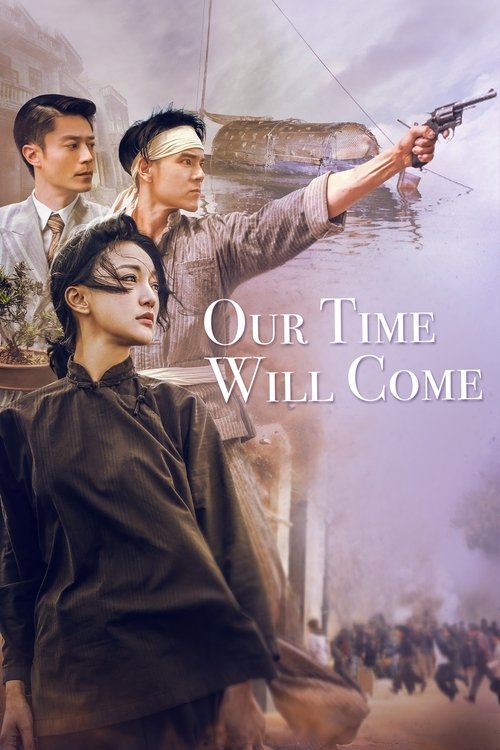
Ann Hui’s 2017 film “Our Time Will Come” stands as a powerful historical drama set during the Japanese occupation of Hong Kong. The narrative follows a school teacher and her would-be fiancé as they become entangled with Chinese guerrilla fighters, ultimately forging their own uncertain path toward freedom. This intimate yet sweeping story of resistance, sacrifice, and hope provides the emotional foundation for one of Joe Hisaishi’s most poignant and historically conscious film scores.
Upon its release, “Our Time Will Come” received significant critical acclaim across Asia and Europe, with particular praise for its nuanced portrayal of civilian resistance during wartime. The film resonated deeply with audiences in Hong Kong, where it sparked renewed conversations about the city’s complex colonial and wartime history. European audiences, often less familiar with this particular historical chapter, discovered in Hui’s film a deeply human exploration of occupation and resistance that transcended geographical boundaries. The film’s success further cemented Ann Hui’s reputation as one of Asia’s most significant contemporary filmmakers, and it demonstrated cinema’s power to illuminate forgotten or overlooked historical moments.
Yet perhaps the film’s most transcendent element lies in Joe Hisaishi’s remarkable musical score, which functions not merely as accompaniment but as a narrative voice in itself. Hisaishi, renowned for his collaborations with Hayao Miyazaki and his distinctive compositional voice, approaches “Our Time Will Come” with a restraint and gravity befitting its historical subject matter. Rather than employing the lush orchestration and whimsy characteristic of some of his fantasy work, Hisaishi crafts a score rooted in melancholy and resilience, using selective instrumentation to maximum emotional effect.
The composer employs traditional Chinese instruments alongside Western orchestral elements, creating a sonic landscape that reflects Hong Kong’s hybridized cultural identity and the collision of occupying and occupied forces. Delicate string arrangements interweave with subtle woodwind passages, while carefully placed piano motifs echo the film’s intimate moments between characters. Hisaishi’s thematic approach centers on a haunting primary melody that emerges at crucial narrative junctures, serving as the emotional anchor for the protagonists’ journey. This theme embodies both the fragility of hope and the quiet determination of those who resist oppression.
What distinguishes Hisaishi’s work here is his compositional restraint. Rather than overwhelming scenes with grandiose orchestrations, he frequently opts for silence and sparse instrumentation, allowing dialogue and ambient sound to carry significant dramatic weight. This minimalist approach proves devastatingly effective during scenes of tension and loss, where the absence of music becomes as eloquent as its presence. When the score does swell, particularly during moments depicting solidarity and human connection, the emotional impact becomes overwhelming.
The music’s relationship to the film’s visual narrative deserves particular attention. Hisaishi synchronizes his score with Ann Hui’s deliberately paced cinematography, creating a unified artistic vision where image and sound reinforce thematic concerns about freedom, sacrifice, and the passage of time. The composer’s understanding of the film’s historical significance informs every compositional choice, resulting in a score that honors both the cinematic medium and the real historical figures whose experiences inspired the narrative.
For European fans of Hisaishi’s work, “Our Time Will Come” offers a compelling demonstration of the composer’s versatility and emotional depth, proving that his genius extends far beyond animated worlds into the complex terrain of historical drama.