
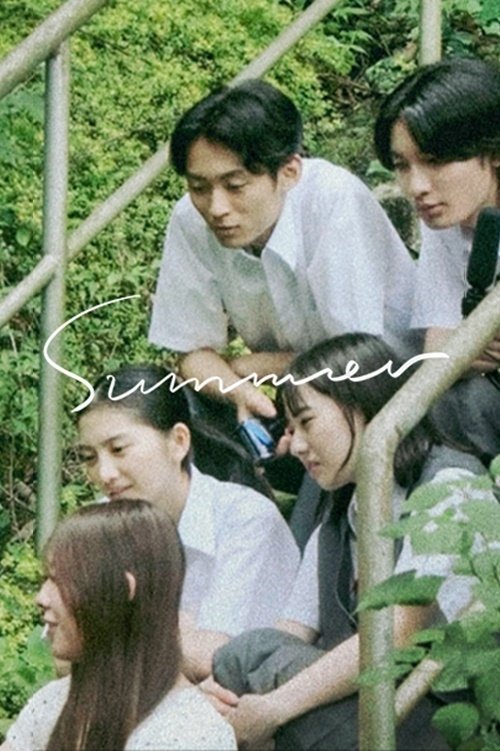
Director Yu Sanbonsuge’s 2025 film “Summer” represents a poignant meditation on youth, memory, and the passage of time. The narrative centres on a high school broadcasting club in Nishi-Izu, a region facing the quiet melancholy of institutional closure. As the school prepares to shut its doors next spring, the club members navigate what becomes their final summer together, capturing fleeting moments that will soon exist only in memory. Rather than dramatic plot turns or grand gestures, the film embraces subtlety, allowing viewers to discover meaning in the everyday interactions, stolen glances, and silent understandings between characters. This approach transforms “Summer” into something far more resonant than a typical coming-of-age narrative—it becomes a reflection on how we attempt to preserve youth itself, to leave an indelible mark before time carries us forward.
The film’s reception in Japan has been notably warm, with audiences recognising something deeply authentic in its portrayal of adolescent emotion and institutional finality. There is a particularly Japanese sensibility at play here, one that finds profound beauty in transience and impermanence. European viewers encountering the film will likely find themselves similarly moved, as these themes transcend cultural boundaries. The film’s quiet power has resonated particularly strongly among those who appreciate cinema that trusts its audience to feel rather than be explicitly told what to feel.
What makes “Summer” truly extraordinary is its relationship to Joe Hisaishi’s iconic score. Originally composed as the main theme for Takeshi Kitano’s “Kikujiro” in 1999, Hisaishi’s “Summer” has achieved an almost mythical status in Japanese popular culture. For over two decades, this deceptively simple yet emotionally complex piece has served as the unofficial soundtrack to countless summer memories across Japan. The composition’s genius lies in its accessible melody paired with sophisticated harmonic depth—it feels immediately familiar and achingly nostalgic despite its relatively recent creation. Hisaishi understood that summer, particularly in Japanese cultural memory, carries a specific emotional weight: the bittersweet knowledge that childhood is finite, that friendships will inevitably change, and that these golden moments cannot be preserved, only remembered.
Hisaishi’s compositional approach in “Summer” demonstrates his mastery of emotional restraint. Rather than overwhelming the listener with orchestral grandeur, the piece uses sparse piano, delicate strings, and subtle wind arrangements to create an almost fragile soundscape. This minimalist philosophy proves remarkably effective when paired with Sanbonsuge’s visual narrative. The music never competes with the on-screen action; instead, it elevates mundane moments—students walking to school, late-night broadcasting sessions, quiet conversations in empty classrooms—into scenes of quiet transcendence. The score recognises what the film itself celebrates: that the most meaningful moments of youth often pass unnoticed in their occurring.
The relationship between Hisaishi’s melody and the film’s visual storytelling is symbiotic. The music provides emotional context that the sparse narrative intentionally withholds, allowing the composer to express what the characters themselves struggle to articulate. Yet the film, in turn, grants Hisaishi’s existing composition new dimensions. What began as accompaniment to a middle-aged man’s nostalgic quest in “Kikujiro” now frames the actual experience of youth slipping away. For European audiences unfamiliar with the “Summer” theme’s cultural significance, the film offers a complete artistic statement—music and image united to capture something universal about growing up and letting go.