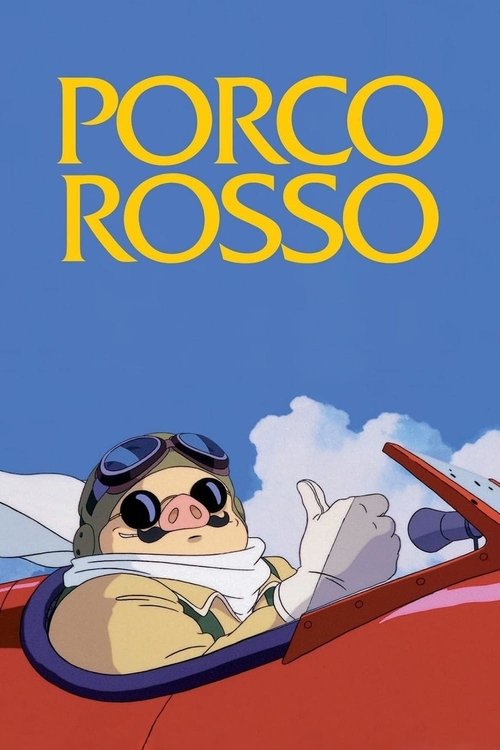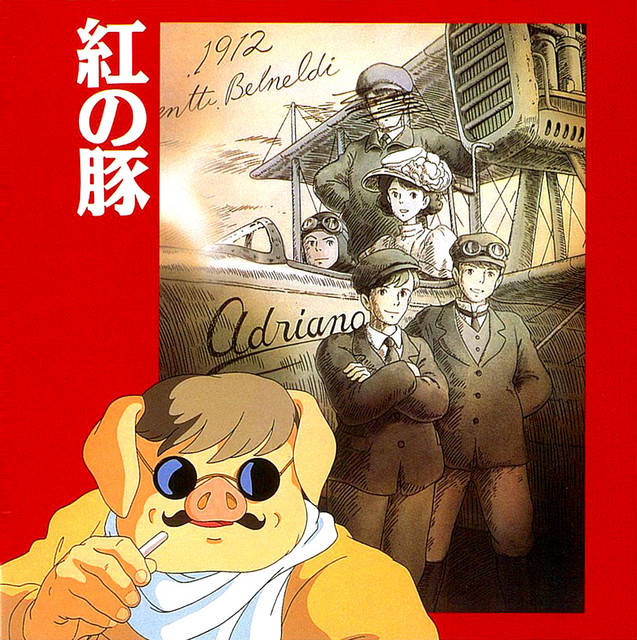
Album: 紅の豚 イメージアルバム
The year was 1991, and Joe Hisaishi found himself living in two worlds simultaneously. While composing for Hayao Miyazaki’s upcoming film ‘Porco Rosso’, he was also deep into creating his personal album ‘My Lost City’, inspired by F. Scott Fitzgerald’s works and set in the roaring twenties. Little did he know that these parallel creative journeys would converge in the most unexpected way, fundamentally changing how animated films could sound.
‘War Games’ (戦争ゴッコ) from the ‘Porco Rosso Image Album’ represents a fascinating glimpse into Hisaishi’s experimental workshop during this pivotal period. The track captures the playful yet dangerous nature of aerial combat that would become central to Miyazaki’s vision, but more importantly, it showcases how a composer’s personal artistic exploration can unexpectedly align with collaborative demands.
The serendipity began when Hisaishi discovered that his 1920s-themed solo project perfectly matched Miyazaki’s chosen time period for ‘Porco Rosso’. As Hisaishi later reflected, this coincidence felt deeply ‘fateful’ – two artists unknowingly channeling the same era’s spirit. This wasn’t mere coincidence; it was creative synchronicity at its finest.
When Miyazaki first heard ‘My Lost City’, his reaction was immediate and unambiguous: ‘I want all of those songs, all of them for Porco Rosso.’ This enthusiastic response reveals something crucial about their collaborative process. Miyazaki wasn’t just commissioning functional background music; he was recognizing kindred artistic vision and embracing it wholesale.
‘War Games’ exemplifies this fusion beautifully. Built around a moderate 4/4 tempo with prominent brass sections that evoke both military marches and jazz ensemble arrangements, the piece walks a tightrope between whimsy and menace. The composition features layered woodwinds that dance around a steady rhythmic foundation, creating an atmosphere where childhood imagination meets adult consequence – perfectly capturing the film’s central tension.
The creative process behind such pieces reveals Hisaishi’s unique approach to collaborative composition. Rather than working from detailed scene breakdowns, Miyazaki provided him with six evocative poems: ‘Flying Boat Tango’, ‘Ascent’, ‘Adriatic Twilight’, ‘Night Flight’, ‘Secret Garden’, and ‘Merry-Go-Round’. These weren’t literal instructions but atmospheric blueprints, allowing Hisaishi to interpret the film’s emotional landscape through his own musical language.
This method proved revolutionary for both artists. The image album format – creating music before final animation – gave Hisaishi unprecedented creative freedom. Three major themes from this experimental phase (‘Marco and Gina’s Theme’, ‘Dabohaze’, and ‘Piccolo Company’) would eventually evolve into the film’s core musical identity, including the beloved ‘Bygone Days’, ‘Flying Boatmen’, and ‘The Piccolo Girls’.
What made ‘War Games’ and its companion pieces so distinctive was the introduction of two elements previously absent from Hisaishi’s Ghibli work: authentic jazz influences and the incorporation of his personal compositions into the film score. These weren’t superficial stylistic choices but fundamental shifts that gave ‘Porco Rosso’ its unique sonic personality.
The jazz element wasn’t mere period decoration. Hisaishi understood that jazz represented freedom, spontaneity, and a certain romantic rebellion against convention – qualities that perfectly matched both the 1920s setting and Porco’s character arc. ‘War Games’ demonstrates this understanding through its loose, improvisational feel within structured harmonic progressions.
More significantly, the integration of ‘My Lost City’ material into the film score established a new template for artistic collaboration. Miyazaki’s openness to incorporating Hisaishi’s personal work showed remarkable trust and artistic vision. The opening sequence would eventually use ‘1920 ~ Age of Illusion’ as its foundation, while the canal takeoff scene directly employed ‘Madness’ from the solo album.
This creative approach transformed what could have been standard adventure film scoring into something far more sophisticated. The music didn’t just accompany the action; it inhabited the same nostalgic, bittersweet world as the characters. ‘War Games’ captures this perfectly – there’s genuine affection for the ‘game’ of aerial combat, but also awareness of its darker implications.
The success of this experimental approach would influence Hisaishi’s future collaborations with Miyazaki and other directors. By starting with image albums that prioritized musical storytelling over literal scene-matching, he discovered a more organic way to create film music that serves both narrative function and standalone artistic merit.
Listening to ‘War Games’ today, one hears not just a compelling piece of film music, but a document of creative risk-taking that paid off magnificently. It represents the moment when Hisaishi’s personal artistic journey merged with collaborative storytelling, creating something neither could have achieved alone. The playful brass fanfares and sophisticated harmonic structures remind us that the best film music emerges not from following formulas, but from authentic artistic expression finding its perfect narrative home.
- アドリア海の青い空Read Review
- 冒険飛行家の時代Read Review
- 真紅の翼Read Review
- 雲海のサボイアRead Review
- ピッコロ社Read Review
- 戦争ゴッコNow Playing
- ダボハゼRead Review
- アドリアーノの窓Read Review
- 世界恐慌Read Review
- マルコとジーナのテーマRead Review