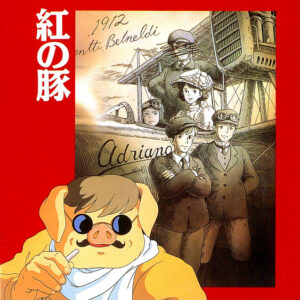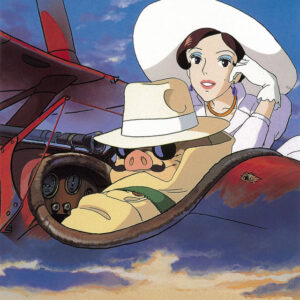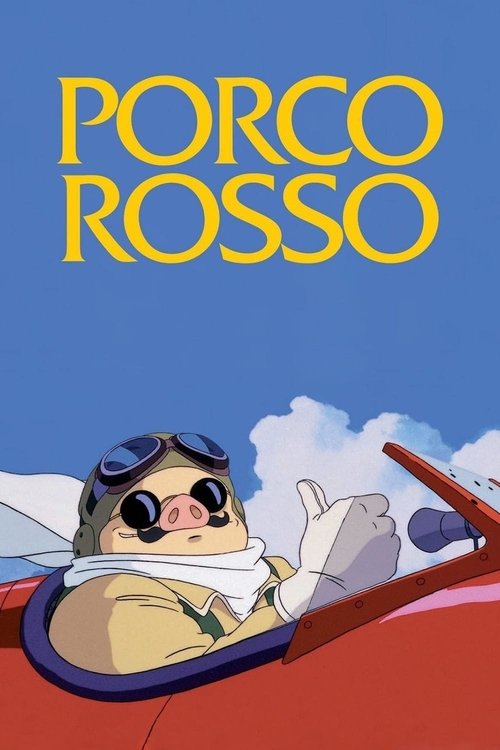
Hayao Miyazaki’s 1992 film Porco Rosso stands as one of Studio Ghibli’s most beloved and distinctive works, transporting audiences to a romanticized 1930s Mediterranean setting where sky pirates terrorize the Adriatic aboard vintage biplanes. The narrative centres on the mysterious Porco Rosso, a cursed former World War I flying ace transformed into a pig, who becomes the region’s unlikely saviour against the pirate menace. With support from the spirited young mechanic Fio Piccolo and his old flame Madame Gina, Porco prepares for a climactic aerial duel against the American pilot Curtis, leader of the pirate squadron. This whimsical yet melancholic premise serves as the perfect canvas for Miyazaki’s visual poetry and, crucially, for composer Joe Hisaishi’s masterful orchestral work.
The film achieved considerable success both within Japan and internationally, earning particular appreciation from European audiences who recognized the nostalgic charm of its interwar European setting. Porco Rosso has endured as a cult favourite, celebrated for its tonal sophistication—blending adventure, romance, and philosophical reflection in ways that appeal to both children and adults. The film’s meditation on aging, love, and redemption resonated deeply with viewers, while its stunning aerial sequences and meticulous attention to aircraft design captivated aviation enthusiasts. This critical and popular success owes much to Hisaishi’s evocative musical accompaniment, which elevates every scene with remarkable emotional intelligence.
Joe Hisaishi’s score for Porco Rosso represents perhaps his finest achievement in film music, demonstrating an unparalleled ability to enhance visual storytelling through orchestral composition. The soundtrack brims with thematic richness, featuring memorable melodies that capture the film’s multifaceted emotional landscape. The main theme, a soaring, bittersweet composition, perfectly encapsulates Porco’s contradictory nature—part adventurer, part fugitive, part romantic idealist. Hisaishi employs sweeping string arrangements and elegant brass work that evoke the golden age of European cinema whilst maintaining a distinctly Japanese sensibility in harmonic construction.
The composer’s approach throughout the film demonstrates remarkable restraint and sophistication. Rather than overwhelming scenes with constant musical commentary, Hisaishi strategically deploys music to underscore Miyazaki’s visual storytelling, allowing both mediums to breathe. During the magnificent aerial sequences—the film’s undisputed highlights—the orchestra surges with triumphant vitality, with soaring violin melodies accompanying Porco’s graceful manoeuvres through the Mediterranean skies. These passages showcase Hisaishi’s gift for matching musical energy to kinetic cinema.
Equally impressive are the quieter moments. Scenes with Madame Gina are accompanied by tender, nostalgic piano passages that speak of lost love and the passage of time. The mechanics’ workshop scenes feature lighter, more playful orchestration that captures Fio’s youthful enthusiasm and resourcefulness. Hisaishi masterfully shifts between these moods, creating a score that feels organically connected to the narrative’s emotional trajectory.
Ultimately, Hisaishi’s contribution to Porco Rosso demonstrates why he has become Studio Ghibli’s preferred composer. His ability to create sophisticated, emotionally resonant orchestral music that enhances without overshadowing remains unmatched. The score stands as a testament to film music’s power to transport audiences, transforming a fantastical premise into something profoundly human and universally moving.