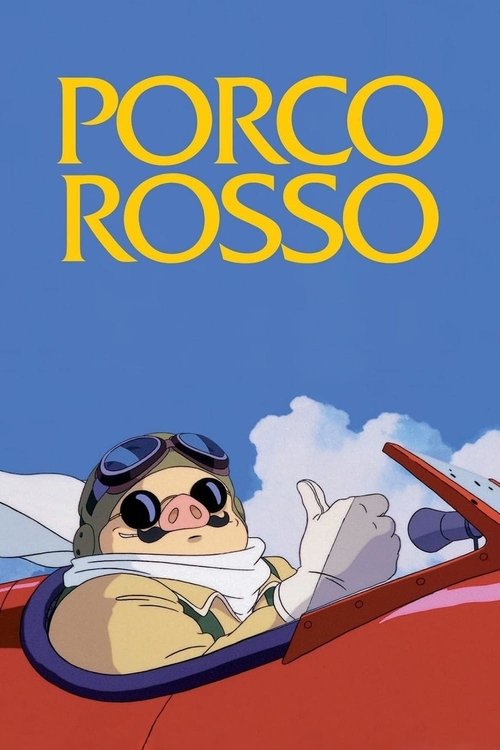
Album: 紅の豚 サウンドトラック
Picture this: you’re in an intimate jazz club in 1920s Adriatic coast, where cigarette smoke mingles with the salty sea air and a lone piano carries stories of lost love and faded dreams. This is exactly the atmosphere Joe Hisaishi conjured when he composed “MAMMAIUTO” for Studio Ghibli’s Porco Rosso, a piece that would become one of his most emotionally complex works.
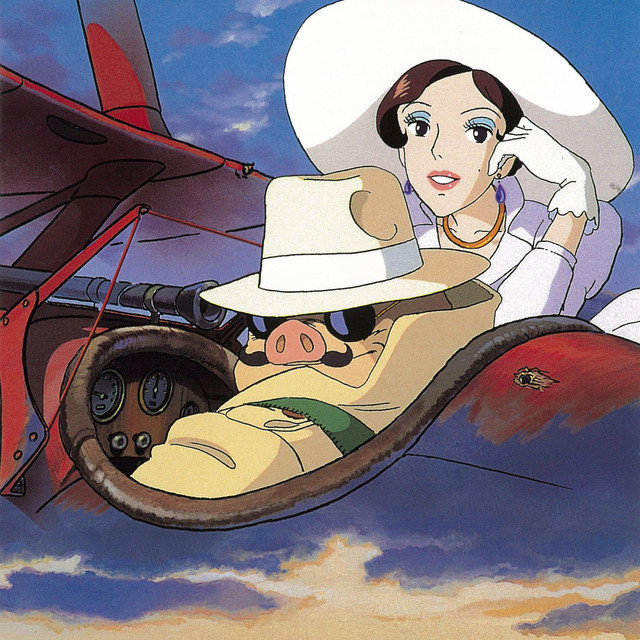
The song emerges during a pivotal moment in the film – inside a dimly lit tavern where the piano becomes a storyteller, weaving together the complicated relationship between the world-weary pilot Marco and the enigmatic Gina. What makes this composition remarkable isn’t just its haunting melody, but the extraordinary creative process that brought it to life.
Hisaishi’s journey into jazz for Porco Rosso began when director Hayao Miyazaki handed him six poems as creative inspiration. These weren’t typical film notes – they were visceral, poetic sketches titled “Seaplane Pilot’s Tango,” “Ascension,” “Twilight of the Adriatic Sea,” “Night Flight,” “Secret Garden,” and “Merry-Go-Round.” This unconventional approach allowed both artists to share a common emotional vocabulary before a single note was composed.
The choice to embrace jazz wasn’t merely aesthetic – it was historically grounded. The 1920s Jazz Age provided the perfect musical backdrop for Marco and Gina’s story, and Hisaishi’s decision to express their themes through jazz piano demonstrated both historical accuracy and emotional intelligence. “MAMMAIUTO” specifically captures this era’s sophisticated melancholy, with its minor key progressions and syncopated rhythms that speak to the characters’ complex past.
What many don’t realize is that Hisaishi’s jazz sensibilities run much deeper than this single film score. During his student years, he immersed himself in the works of Miles Davis, John Coltrane, and particularly Mal Waldron, whose piano style profoundly influenced his harmonic approach. While the world knows Hisaishi primarily as an orchestral composer and minimalist, his jazz vocabulary proves equally sophisticated – a fact that “MAMMAIUTO” demonstrates beautifully.
The composition’s creation was also influenced by Hisaishi’s solo album “My Lost City,” which explored similar themes of nostalgia and urban romance. When Miyazaki heard this album, he reportedly declared he wanted “all of it” for Porco Rosso. This cross-pollination between Hisaishi’s personal artistic projects and his film work created something unprecedented in their collaboration – a score that felt both cinematic and deeply personal.
“MAMMAIUTO” showcases Hisaishi’s ability to compress an entire emotional arc into a few minutes of music. The piece opens with a contemplative piano melody in B-flat minor, its tempo deliberately relaxed at around 80 BPM, allowing each note to breathe and resonate. The harmony incorporates extended jazz chords – ninths and elevenths that create that distinctly melancholic color associated with late-night jazz clubs. As the melody develops, subtle string accompaniment enters, but the piano remains the emotional center, just as Gina’s piano playing serves as the heart of her relationship with Marco.
The genius of this approach lies in how it transformed what could have been a simple aviation adventure into something far more nuanced. The jazz elements and integration of personal musical material gave Porco Rosso a unique sonic signature that distinguished it from other Ghibli films. Where previous collaborations between Hisaishi and Miyazaki focused on orchestral grandeur or folk-inspired melodies, this score embraced urban sophistication and adult themes.
Listening to “MAMMAIUTO” today, you can hear how Hisaishi bridged multiple musical worlds – the improvisational spirit of jazz, the structural precision of film scoring, and the emotional honesty of his solo work. The piece doesn’t simply accompany the film’s action; it becomes a character itself, revealing layers of meaning about love, loss, and the passage of time.
This creative process reveals something essential about Hisaishi’s artistic philosophy: his willingness to step outside established formulas when the story demands it. Rather than defaulting to the sweeping orchestral style that made him famous, he allowed the 1920s setting and mature themes to guide his musical choices. “MAMMAIUTO” stands as evidence that great film music happens when composers remain open to unexpected influences, whether they come from poetry, personal albums, or decades-old jazz recordings.
The result is a composition that works on multiple levels – as atmospheric film music, as a standalone jazz piece, and as a bridge between Hisaishi’s various musical identities. In just a few minutes, “MAMMAIUTO” captures everything that made Porco Rosso special: its historical authenticity, emotional complexity, and refusal to treat adult themes with anything less than complete artistic seriousness.
- 時代の風-人が人でいられた時-Read Review
- MAMMAIUTONow Playing
- Addio!Read Review
- 帰らざる日々Read Review
- セピア色の写真Read Review
- セリビア行進曲Read Review
- Flying boatmenRead Review
- Doom-雲の罠-Read Review
- Porco e BellaRead Review
- Fio-SeventeenRead Review
- ピッコロの女たちRead Review
- FriendRead Review
- Partner shipRead Review
- アドリアの海へRead Review
- 遠き時代を求めてRead Review
- 荒野の一目惚れRead Review
- 夏の終わりにRead Review
- 失われた魂-LOST SPIRIT-Read Review
- Dog fightRead Review
- Porco e Bella-Ending-Read Review