Album: 紅の豚 サウンドトラック
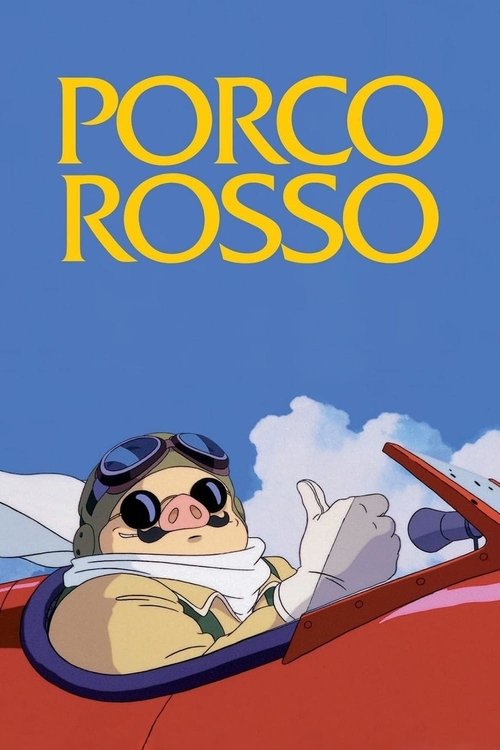
Sometimes the most profound artistic collaborations emerge not from careful planning, but from serendipitous alignment of creative minds. This is precisely what happened when Joe Hisaishi composed ‘Friend’ for Hayao Miyazaki’s Porco Rosso, a piece that would become emblematic of their extraordinary partnership and the mystical intersection of music and cinema.
The story begins with what Hisaishi himself described as a ‘fateful coincidence.’ While Miyazaki was developing Porco Rosso, set against the backdrop of 1920s Adriatic Sea, Hisaishi was simultaneously working on his solo album ‘My Lost City,’ inspired by F. Scott Fitzgerald’s writings about the Jazz Age. When the composer learned that Miyazaki had chosen the exact same historical period for his film, he felt ‘something very destined about living in the same era as an artist.’
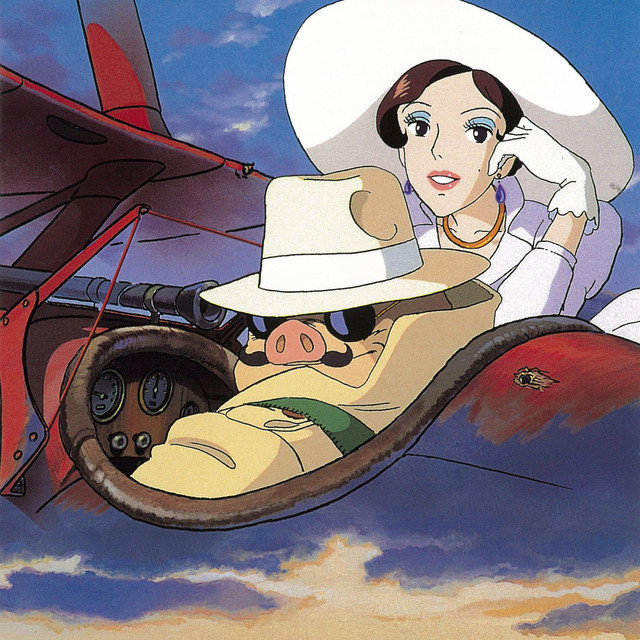
This synchronicity would prove foundational to the creation of ‘Friend,’ a piece that captures the melancholic sophistication of Jazz Age piano music. Written in a contemplative minor key with a relaxed swing tempo, the composition perfectly embodies the relationship between Marco and Gina, two characters bound by shared history and unspoken understanding. The choice of jazz piano as the primary vehicle for their emotional theme was both artistically inspired and historically accurate – the 1920s were, after all, the Jazz Age, when piano-driven jazz flourished in European salons and American speakeasies alike.
Miyazaki’s reaction to Hisaishi’s ‘My Lost City’ album reveals the depth of their creative connection. Upon hearing the completed work, the director declared, ‘I want all those songs, all of them for Porco Rosso.’ This wasn’t mere enthusiasm – it was recognition of a shared artistic vision. Several pieces from the album found their way into the film, with the opening sequence drawing directly from ‘1920~Age of Illusion’ and the canal takeoff scene incorporating ‘Madness’ unchanged.
To guide the musical creation process, Miyazaki provided Hisaishi with six evocative poems: ‘Flying Boat Pilot’s Tango,’ ‘Ascent,’ ‘Adriatic Sea at Twilight,’ ‘Night Flight,’ ‘Secret Garden,’ and ‘Merry-Go-Round.’ These weren’t mere suggestions but emotional blueprints, helping Hisaishi understand the internal landscape of characters and scenes. ‘Friend’ emerged from this collaborative framework, capturing the essence of ‘Secret Garden’ – that intimate space where two souls recognize each other across time and circumstance.
The composition itself unfolds like a conversation between old friends. Beginning with a simple melodic statement in the piano’s middle register, ‘Friend’ gradually builds layers of harmonic complexity while maintaining an air of casual intimacy. The left hand maintains a gentle stride pattern characteristic of 1920s jazz, while the right hand weaves melodic lines that speak of both nostalgia and acceptance. It’s music designed to underscore dialogue and emotion rather than dominate them – a perfect example of Hisaishi’s understanding that film music serves the story, not itself.
This philosophy became particularly important given the personal nature of Miyazaki’s vision for Porco Rosso. Hisaishi later reflected that he didn’t fully grasp the director’s deeply personal investment in the project. ‘Miyazaki’s personal feelings came out strongly in this film,’ he admitted. ‘I should have been more restrained, but there were parts where I almost made it too action-oriented. I still regret that.’ This self-criticism reveals Hisaishi’s growth as a composer – his recognition that the most powerful film music often lies in what it doesn’t do rather than what it does.
‘Friend’ exemplifies this restraint. Rather than overwhelming the audience with emotional manipulation, it creates space for reflection. The piece functions like the jazz piano in Gina’s hotel – present but unobtrusive, sophisticated but accessible, melancholic but not tragic. It’s music that understands the weight of unfinished conversations and the beauty of connections that transcend circumstance.
The historical setting provided more than just aesthetic inspiration; it offered a musical language perfectly suited to the film’s themes. Jazz, with its improvisational nature and blues-inflected harmonies, could express the complexity of adult relationships in ways that more traditional orchestral approaches might not. ‘Friend’ captures this through its use of extended chords and subtle rhythmic variations that suggest both structure and freedom – much like the relationship between Marco and Gina themselves.
Looking back, ‘Friend’ stands as evidence of what happens when artistic fate intervenes. Two creators, working independently on projects inspired by the same historical moment, discovered their visions were not just compatible but complementary. The result was music that feels both inevitable and surprising, rooted in historical authenticity yet thoroughly contemporary in its emotional honesty. In this convergence of jazz, animation, and pure creative serendipity, Hisaishi crafted not just a beautiful piece of music, but a perfect example of collaborative artistry at its finest.
- 時代の風-人が人でいられた時-Read Review
- MAMMAIUTORead Review
- Addio!Read Review
- 帰らざる日々Read Review
- セピア色の写真Read Review
- セリビア行進曲Read Review
- Flying boatmenRead Review
- Doom-雲の罠-Read Review
- Porco e BellaRead Review
- Fio-SeventeenRead Review
- ピッコロの女たちRead Review
- FriendNow Playing
- Partner shipRead Review
- アドリアの海へRead Review
- 遠き時代を求めてRead Review
- 荒野の一目惚れRead Review
- 夏の終わりにRead Review
- 失われた魂-LOST SPIRIT-Read Review
- Dog fightRead Review
- Porco e Bella-Ending-Read Review