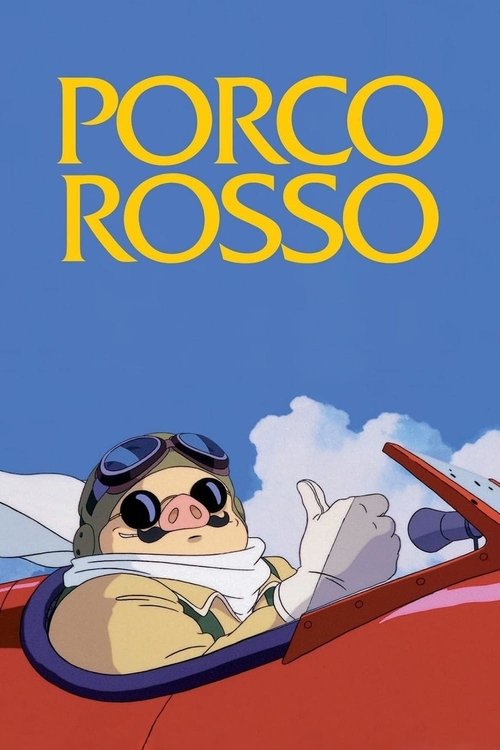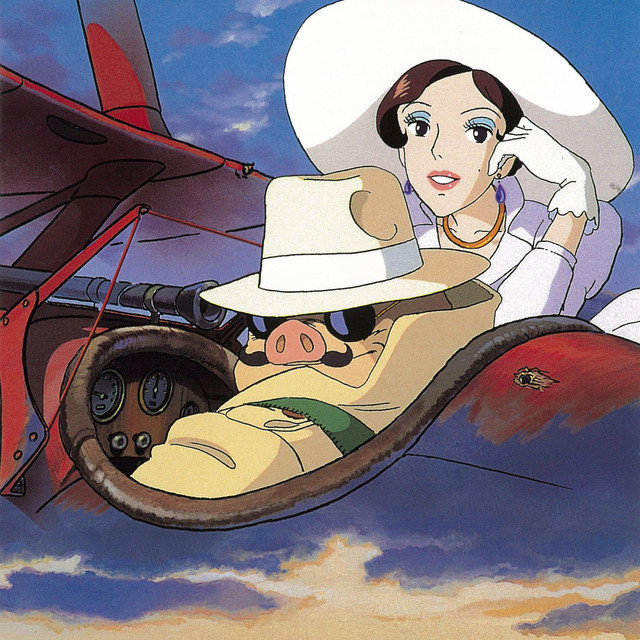
Album: 紅の豚 サウンドトラック
In the smoky atmosphere of an Adriatic seaplane bar, where jazz piano mingles with the clink of glasses and distant propeller hums, Joe Hisaishi found the perfect musical language for one of Studio Ghibli’s most sophisticated films. “Doom-雲の罠-” (Doom – Cloud Trap) from the Porco Rosso soundtrack represents more than just another film cue; it embodies a unique creative process where poetry, jazz heritage, and cinematic storytelling converged to create something unprecedented in anime scoring.
The genesis of this musical approach began with an unusual gift from director Hayao Miyazaki. Rather than the typical storyboards or character descriptions, Miyazaki handed Hisaishi six poems: “Flying Boat Pilot’s Tango,” “Ascension,” “Twilight of the Adriatic Sea,” “Night Flight,” “Secret Garden,” and “Merry-Go-Round.” These weren’t mere suggestions but primary source material designed to share the film’s emotional landscape. For Hisaishi, this poetic foundation opened doors to musical territories he hadn’t explored in his previous four Ghibli collaborations.
“Doom-雲の罠-” emerges from this poetry-driven creative process, capturing the ominous beauty that permeates Porco Rosso’s narrative. The piece showcases Hisaishi’s jazz sensibilities, rooted in his student years spent absorbing the works of Miles Davis, John Coltrane, and particularly Mal Waldron. While audiences knew Hisaishi primarily as an orchestral composer and minimalist, his deep jazz vocabulary had been quietly developing, waiting for the right project to emerge.
The choice to incorporate jazz wasn’t arbitrary but historically grounded. Set in the 1920s Jazz Age, when the genre reached its cultural peak, the film demanded musical authenticity. Hisaishi’s decision to represent the main characters Marco and Gina through jazz piano felt both dramatically appropriate and historically accurate. This attention to period detail reflects the composer’s commitment to serving the story rather than imposing his musical preferences.
The creative process took an unexpected turn when Hisaishi completed his solo album “My Lost City” during the film’s production. When Miyazaki heard the finished album, his response was immediate and enthusiastic: “I want all of those songs, all of them for Porco Rosso.” This wasn’t mere approval but recognition that Hisaishi had tapped into something essential about the film’s spirit. The album’s “1920~Age of Illusion” would inspire the opening sequence, while “Madness” was used directly for the canal takeoff scene.
This integration of pre-existing solo work into the film score created something unique in Hisaishi’s catalog. “Doom-雲の罠-” benefits from this dual approach, where jazz elements and personal artistic expression merge within the film’s narrative framework. The piece demonstrates how two major elements – jazz language and the incorporation of solo album material – gave the entire Porco Rosso score its distinctive character.
Musically, “Doom-雲の罠-” unfolds in a minor key with deliberate pacing that suggests both menace and melancholy. The instrumentation centers on piano, but unlike Hisaishi’s typically orchestral approach, the arrangement feels intimate, as if performed in that fictional Adriatic bar. The jazz harmonies reflect Waldron’s influence, particularly in their sophisticated yet accessible harmonic progressions that never alienate listeners unfamiliar with jazz conventions.
What makes this piece particularly fascinating is how it functions within the film’s broader musical architecture. The jazz elements aren’t simply atmospheric decoration but integral to character development and narrative progression. When the piano jazz first appears in the bar setting within the film, it establishes a musical language that will recur throughout, creating thematic continuity while respecting the 1920s period authenticity.
Hisaishi’s approach to “Doom-雲の罠-” reveals his philosophy about film music: serve the story first, but don’t abandon personal artistic vision. The piece works because it emerged from genuine creative inspiration – those six poems, the jazz influences he’d absorbed over decades, and the freedom to incorporate his concurrent solo work. This wasn’t calculated commercial film scoring but organic artistic development.
The success of this approach elevated Porco Rosso beyond typical aircraft adventure into something more psychologically complex. The music, exemplified by pieces like “Doom-雲の罠-,” provides emotional depth that transforms action sequences into character studies. Hisaishi proved that anime scoring could accommodate sophisticated musical languages without losing accessibility.
Looking back, “Doom-雲の罠-” represents a pivotal moment in Hisaishi’s evolution as a composer. It demonstrated his ability to synthesize diverse influences – poetry, jazz history, personal artistic expression, and cinematic storytelling – into cohesive musical statements. The piece stands as evidence that the most compelling film music often emerges when composers embrace both their artistic instincts and their collaborative responsibilities, creating something that serves the film while advancing their own musical journey.
- 時代の風-人が人でいられた時-Read Review
- MAMMAIUTORead Review
- Addio!Read Review
- 帰らざる日々Read Review
- セピア色の写真Read Review
- セリビア行進曲Read Review
- Flying boatmenRead Review
- Doom-雲の罠-Now Playing
- Porco e BellaRead Review
- Fio-SeventeenRead Review
- ピッコロの女たちRead Review
- FriendRead Review
- Partner shipRead Review
- アドリアの海へRead Review
- 遠き時代を求めてRead Review
- 荒野の一目惚れRead Review
- 夏の終わりにRead Review
- 失われた魂-LOST SPIRIT-Read Review
- Dog fightRead Review
- Porco e Bella-Ending-Read Review