
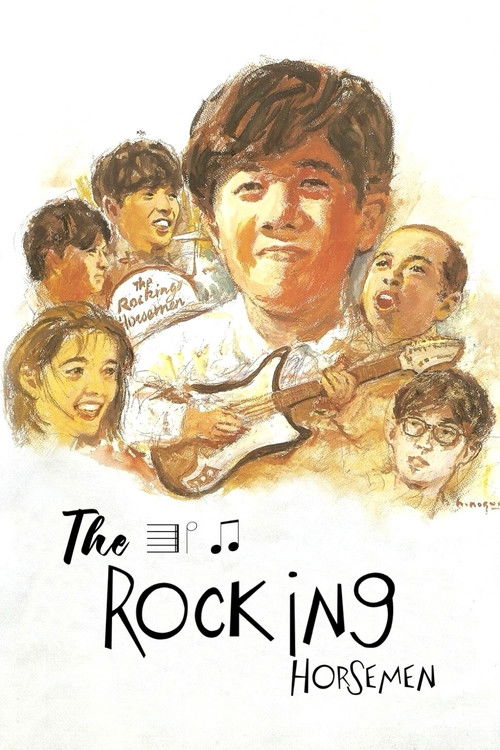
Nobuhiko Obayashi’s ‘The Rocking Horsemen’ stands as a delightful chronicle of youth, ambition, and musical discovery in 1960s Japan. The film follows Takeyoshi Fujiwara, a high school student whose life changes when he discovers the infectious instrumental sound of the Ventures. Inspired by their innovative guitar work, Takeyoshi and three friends form a band called The Rocking Horsemen, embarking on a journey that captures the warmth, humor, and innocent charm of teenage life in a small Japanese town during the vibrant 1960s. It’s a film that celebrates not just the power of music to transform lives, but the bonds formed between friends pursuing a shared dream.
The film enjoyed considerable success within Japan, resonating deeply with audiences who either lived through that era or cherished its cultural memory. ‘The Rocking Horsemen’ became recognized as an earnest, affectionate portrait of a specific moment in Japanese history—a time when Western popular music was beginning to captivate young hearts across Asia. The film’s genuine warmth and comic sensibility earned it a loyal following, establishing it as a cherished entry in Obayashi’s filmography. While international recognition remained modest, the film has gradually gained appreciation among cinephiles and music lovers who recognize its unique charm and cultural significance.
At the heart of ‘The Rocking Horsemen’ lies Joe Hisaishi’s exceptional score, which serves as far more than mere accompaniment. Hisaishi understood the film’s fundamental emotional DNA—a bittersweet nostalgia intertwined with youthful exuberance—and crafted a score that perfectly encapsulates this duality. Rather than simply imitating the surf rock and instrumental pop that inspired the narrative, Hisaishi created an original orchestral tapestry that honors the spirit of that era while maintaining a distinctly Japanese sensibility.
Hisaishi’s compositional approach blends accessible melodicism with sophisticated orchestration. The score incorporates elements reminiscent of 1960s popular music—bright horns, buoyant rhythms, and memorable themes—but arranges them with the refinement and emotional depth characteristic of his finest work. This fusion allows the music to simultaneously celebrate the infectious optimism of the Ventures’ influence while providing commentary on the passage of time and the inevitable maturation that awaits these teenage dreamers.
The relationship between Hisaishi’s music and Obayashi’s visual storytelling is particularly masterful. When the film captures the boys’ innocent joy during rehearsals or their determination to perfect their craft, the score swells with genuine warmth and encouragement. Conversely, quieter moments—reflections on friendship, glimpses of teenage uncertainty, and the weight of ambition—are met with Hisaishi’s tender, introspective themes. His use of leitmotifs ensures that each band member’s personality and emotional journey receives musical consideration, deepening our connection to these characters.
What makes Hisaishi’s contribution essential is his ability to evoke the poignancy inherent in viewing youth from a distance. The score subtly reminds viewers that this golden moment, so vividly alive on screen, is forever past—yet precious precisely because of its transience. Through lush arrangements and memorable melodies, Hisaishi transforms ‘The Rocking Horsemen’ into something more than a period piece; it becomes a meditation on dreams, friendship, and the universal experience of discovering one’s artistic voice. For European fans discovering Hisaishi’s diverse catalog, this score exemplifies his remarkable gift for emotional storytelling through music.