
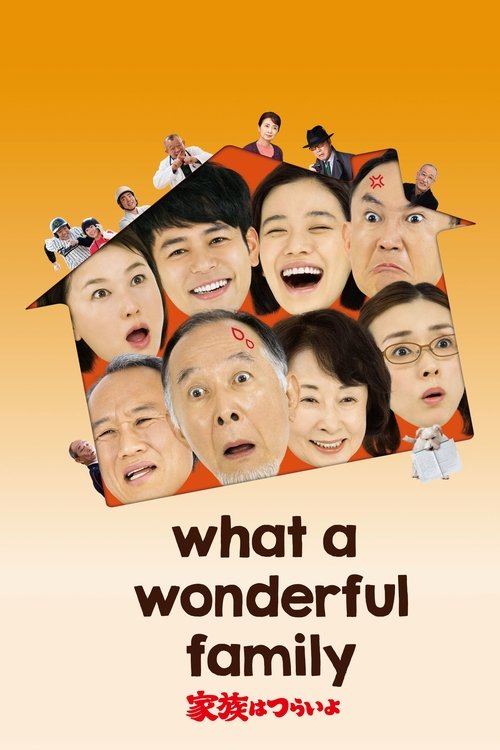
Yoji Yamada’s 2016 film “What a Wonderful Family!” presents a deceptively simple premise that belies its emotional depth and narrative complexity. The story follows a couple celebrating fifty years of marriage when the wife drops a bombshell: she wants a divorce. This unexpected announcement shatters the family’s equilibrium, forcing each member to confront their assumptions about love, commitment, and what it truly means to be a family. What could have been a melodramatic tearjerker instead becomes a nuanced exploration of human relationships, anchored by Yamada’s characteristic warmth and humor.
The film resonated deeply with audiences across Asia and Europe, becoming one of the highest-grossing Japanese films of 2016. Critics praised Yamada’s ability to balance comedy with genuine pathos, and the ensemble cast’s naturalistic performances. The film’s success demonstrated that stories about aging, family dysfunction, and emotional estrangement could find mainstream appeal without sacrificing authenticity. For European viewers particularly, the film offered a refreshing alternative to Hollywood narratives, presenting a distinctly Japanese sensibility toward family dynamics and aging with remarkable universality.
Central to the film’s emotional resonance is Joe Hisaishi’s masterful score, which functions far beyond mere accompaniment. Hisaishi, renowned for his work with Hayao Miyazaki and his prolific career in film music, brings his characteristic sophistication to Yamada’s intimate family drama. Rather than employing sweeping orchestral gestures, Hisaishi opts for a chamber music approach that mirrors the film’s focus on individual relationships and quiet moments of revelation.
The composer’s thematic work is particularly noteworthy. Rather than assigning singular, memorable melodies to characters, Hisaishi develops a palette of musical motifs that represent emotional states and relational dynamics. A gently lilting piano theme captures the bittersweet nostalgia of the couple’s long marriage, while variations of this melody transform throughout the film—sometimes becoming more discordant as tensions rise, other times softening into wistful resignation. This flexible approach allows the music to breathe alongside the narrative, reflecting the fluid nature of family emotions.
Hisaishi’s orchestration choices reveal his deep understanding of Yamada’s visual language. Where the director employs long, contemplative shots of domestic spaces and subtle character reactions, the composer responds with sparse, delicate arrangements. Strings often play a central role, their warmth suggesting both comfort and melancholy. Yet Hisaishi never allows sentimentality to overwhelm the score; unexpected moments of gentle humor arrive through clever use of woodwinds and light piano passages, mirroring the film’s own tonal balance.
The interaction between music and visuals becomes particularly poignant during scenes exploring the family members’ individual struggles. As each character grapples with the implications of the divorce announcement, Hisaishi’s score fractures subtly, with different instrumental voices representing conflicting emotions. The music becomes a vehicle for expressing what characters cannot articulate, adding a layer of psychological depth to their interactions.
Ultimately, Hisaishi’s contribution to “What a Wonderful Family!” exemplifies how a composer can elevate intimate storytelling through restraint and emotional intelligence. His score doesn’t demand attention; instead, it enriches our understanding of these characters’ inner lives, proving once again why Hisaishi remains one of cinema’s greatest contemporary composers.