
The Composer of the City, Revisited
In the previous essay in this series, we traced the arc of Joe Hisaishi’s early career — from his beginnings as a minimalist composer working in relative obscurity, through the discovery of Terry Riley and the revelation of A Rainbow in Curved Air, to the conscious decision to become what he called a composer of the city (machi, 街): a musician whose work would belong to everyday life rather than the concert hall.
That decision shaped three decades of music. The Ghibli films. The Kitano films. The television scores and commercial work. Through the 1980s and 90s and into the early 2000s, Hisaishi built one of the most recognisable bodies of work in Japanese popular culture — all of it shaped by the discipline of accessibility, the commitment to write music that ordinary people could hear in the spaces of their daily lives.
But the minimalist composer had never gone away. He had simply been waiting for the right moment — and the right form — to return.
A Record That Broke the Rules
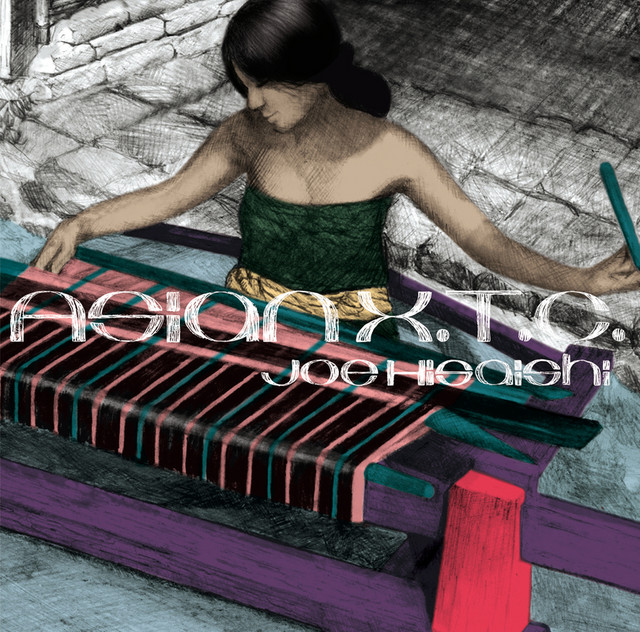
In 2006, Hisaishi released an album called Asian X.T.C. To anyone paying close attention, it was an unusual object.
Commercial albums — particularly albums by composers associated with popular film and television — are expected to deliver what their audience already loves. They are, almost by definition, extensions of a known brand. You release what sells. You give people the melodies they came for.
Asian X.T.C. did not follow this logic. The album was structured in two distinct halves: one side — what Hisaishi called the light side — devoted to film music and commercial work, the accessible melodic writing that audiences recognised and loved. The other side, the dark side, was given over entirely to minimalist composition. The two sat together on the same disc without apology, without compromise, without any attempt to smooth the contrast between them.
Hisaishi described the thinking behind this in a 2006 concert programme interview:
It’s not so much returning to my origins as encountering them again — like a spiral that loops outward and then meets the same point at a higher level. The experience of building on minimalism, combined with the sense of rhythm, the groove, that I developed through working in popular music. A music that only I could write, where both of those things are genuinely alive. Asian X.T.C. was the first album where I felt certain enough to commit to that.
Joe Hisaishi, Piano Stories 2006 Joe Hisaishi Asian X.T.C. concert programme (2006)
The spiral image is precise and important. This was not a return to what Hisaishi had been doing in 1980. It was an encounter with those origins at a different point in the arc — enriched by everything that had come between, shaped by decades of writing for audiences and orchestras and film directors, carrying the rhythmic intuitions that popular music had given him alongside the structural rigour that minimalism demanded.
The album’s two-sided structure reflected a broader philosophy. Hisaishi spoke of Asian thought — the idea that light and dark, good and difficult, are not opposites to be resolved but twin aspects of a single reality. You do not have to choose. You hold both, and call it yourself.
For a composer who had spent decades being known primarily for one side of his work, this was a significant declaration. The minimalist was back — not as a young man finding his voice, but as a mature composer who knew exactly what he was doing and why.
Small Forces, Big Statement
The minimalist works on Asian X.T.C. were performed by a small ensemble rather than a full orchestra. This was not a limitation — it was a deliberate choice that reflected the intimate, structural nature of minimalist music itself. The logic of minimalism does not require a hundred musicians. It requires precision, patience, and the kind of focused attention to pattern and repetition that a smaller group can sustain more cleanly than a large one.
But Hisaishi’s ambitions were not small. The ensemble was a starting point, not an endpoint. If minimalist music was going to be heard — truly heard, on the largest possible stages, by the widest possible audiences — it would eventually need a different kind of vessel.
He was already thinking about what that vessel might be.
The Orchestra as an Instrument
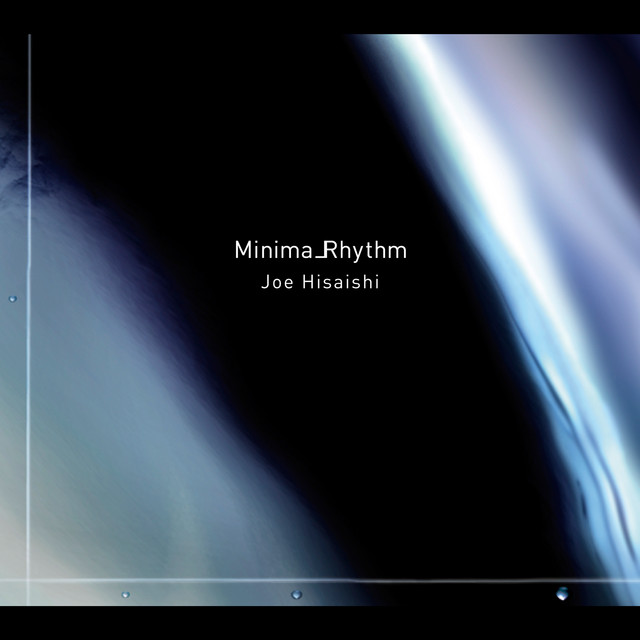
Three years after Asian X.T.C., in 2009, Hisaishi released Minima_Rhythm — the first album in what would become the Minimalism series. The performers were the London Symphony Orchestra.
The significance of this choice is difficult to overstate. The London Symphony Orchestra is one of the great orchestras of the world — an ensemble with a history stretching back to 1904, regularly ranked among the finest in Europe. To bring minimalist music to such an ensemble was not simply a change of scale. It was a statement about the music’s seriousness, its ambition, and its right to occupy the same space as the great works of the Western classical tradition.
And this was not a return to what Hisaishi had been doing in 1980. The minimalist music of MKWAJU had been built from synthesisers and percussion instruments — the available technology and instrumentation of its time. The minimalist music of Minima_Rhythm was written for strings, woodwinds, brass, and the full orchestral palette. The rhythmic patterns and repeating structures of minimalism were now expressed through the richest, most flexible sound-producing instrument that Western music had ever developed.
The moment this shift became audible — not just on record, but in the room — is captured in Hisaishi’s own account of the first recording session. The London Symphony Orchestra musicians knew his film music well. They greeted him warmly, with the familiarity of colleagues who had grown up with Spirited Away and Princess Mononoke. They expected, perhaps, more of the same.
On the first day of recording, we recorded “Links” as the very first piece. The moment I began conducting it, the eyes of the London Symphony Orchestra musicians changed. “This is a challenge! This is a new orchestral work,” said concertmaster Carmina. So it felt natural that the album should open with “Links.”
Joe Hisaishi, Minima_Rhythm booklet (2009)
That change in the musicians’ eyes is the whole story. They had come prepared for one kind of composer. They encountered another — older, stranger, more demanding, and entirely his own. This was not a return. It was an arrival.
In His Own Words
In the booklet accompanying Minima_Rhythm, Hisaishi wrote about what this music meant to him — and what he believed it could do. His words are worth quoting at length, because they make explicit something that the music itself expresses only obliquely:
The title Minima_Rhythm is a compound of “Minimal” from minimalist music and “Rhythm.” It expresses the composer’s desire to create minimalist works that place particular emphasis on rhythm. If what contemporary music had forgotten was rhythm, then it was minimalist music that had retained it. Setting out from minimalist music — my own point of origin — while simultaneously creating new rhythmic structures: this is the path I am convinced I must follow.
Joe Hisaishi, Minima_Rhythm booklet (2009)
The phrase my own point of origin is the key. Hisaishi is not describing a new direction here. He is describing a return to something he never truly left — and a deepening of it, through the resources and experience that forty years of composing had given him. The synthesis he was pursuing was one that only he could have made: the rhythmic rigour of minimalism, the expressive capacity of the symphony orchestra, and the structural thinking of a composer who had spent decades writing for the widest possible audience.
The World Is Listening
The Minimalism series has now reached its fourth volume. Each instalment has been recorded with major orchestras and released to international audiences. The project that began with a quiet, two-sided album in 2006 has grown into one of the most sustained and serious engagements with minimalist music in contemporary classical life.
And Hisaishi is not simply releasing recordings. He is performing this music himself — standing on the podium, conducting the world’s great orchestras through works that began as ideas in his student years and have now found their fullest expression on the stages of Europe and beyond. The composer who once decided to become a composer of the city has not abandoned that identity. But he has added something to it: the composer who brings his own musical roots — the minimalist origins that most of his admirers never knew — to the attention of the world.
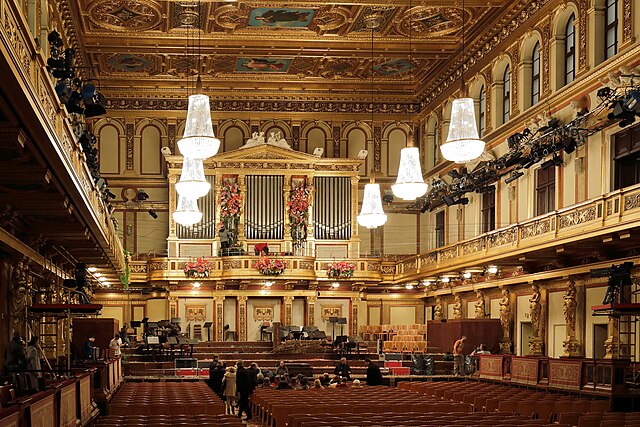
The music that had no social demand, that nobody asked for, that could not be sold — is now being heard at Wembley Arena in London, Madison Square Garden in New York, La Défense Arena in Paris, and the Musikverein in Vienna. Performed by some of the finest orchestras on earth, conducted by the man who wrote it.
The music that could not be sold turned out to be the music that could not be stopped.
Sources: Joe Hisaishi, Minima_Rhythm booklet (2009); Hundred, November 1987