
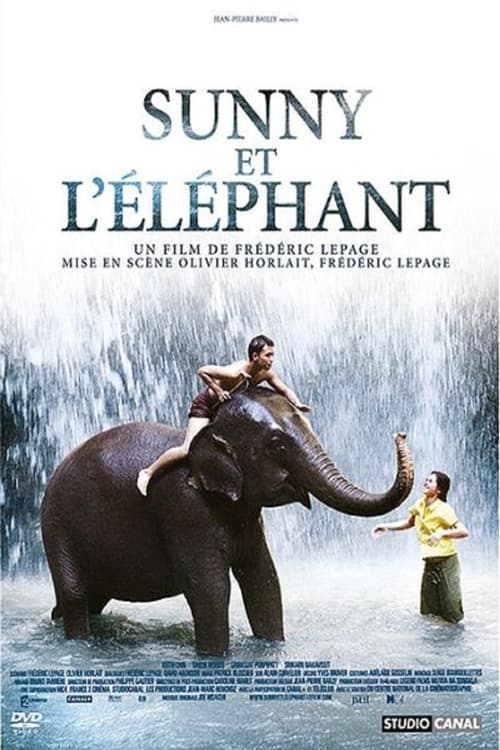
Frédéric Lepage’s 2008 film ‘Sunny and the Elephant’ tells a charming coming-of-age story set against the lush landscapes of Thailand. The narrative follows a determined young city boy who dreams of becoming a mahout—an elephant driver—despite facing considerable skepticism from his prospective master, who believes that only members of the Karen tribe possess the innate ability to bond with these magnificent creatures. Through determination and genuine devotion, the protagonist gradually earns his mentor’s trust and ultimately achieves his aspiration, proving that passion and commitment can transcend cultural boundaries and ingrained traditions.
Upon its release, the film garnered appreciation from international audiences and critics who praised its warm-hearted approach to cross-cultural understanding and personal perseverance. The movie resonated particularly well with viewers interested in authentic portrayals of Southeast Asian life and the profound relationship between humans and animals. Its success helped introduce European audiences to contemporary Thai cinema while exploring universal themes of mentorship, self-discovery, and respect for nature. The film’s gentle storytelling and picturesque cinematography created a welcoming entry point for audiences unfamiliar with the region’s cinematic traditions.
Central to the film’s emotional resonance is Joe Hisaishi’s masterfully crafted musical score, which transforms ‘Sunny and the Elephant’ into a truly immersive experience. The legendary composer, renowned for his work with Hayao Miyazaki and his distinctive approach to film music, brings his characteristic sensitivity and sophistication to this Thai-set narrative. Hisaishi’s compositional strategy for the film demonstrates his remarkable ability to authentically engage with unfamiliar cultural contexts while maintaining his recognizable artistic voice.
The score features a delicate balance between traditional Thai musical elements and Hisaishi’s signature orchestral sensibilities. Rather than simply incorporating Thai instruments as superficial cultural markers, Hisaishi integrates them meaningfully into a broader harmonic landscape that reflects the film’s thematic concerns. The music captures the serene beauty of the Thai countryside, with sweeping string arrangements that evoke both the majesty of the elephants and the innocence of the protagonist’s journey. Piano passages provide intimate moments of introspection, particularly during scenes exploring the boy’s emotional growth and his deepening connection with his animal companion.
Hisaishi’s approach to the elephant-mahout relationship is particularly noteworthy. The composer employs recurring musical motifs that parallel the developing bond between character and creature, with themes that evolve and intertwine as their relationship deepens. The music never condescends to either the human or animal perspectives, instead suggesting a spiritual communion that transcends conventional narrative boundaries. Gentle woodwind sections and subtle percussion create an atmosphere of patience and mutual understanding, musically representing the mentor’s gradual warming toward his unconventional student.
The score’s dynamic range proves equally impressive, moving seamlessly from tender, introspective passages to more energetic sequences that capture the physical challenges of mahout training. Hisaishi’s orchestration ensures that the music always serves the story’s emotional truth rather than overwhelming the narrative. For European fans of Hisaishi’s work, ‘Sunny and the Elephant’ represents a valuable exploration of his versatility, demonstrating how his compositional intelligence can illuminate stories far removed from his better-known projects, while maintaining the warmth and humanity that define his entire body of work.