
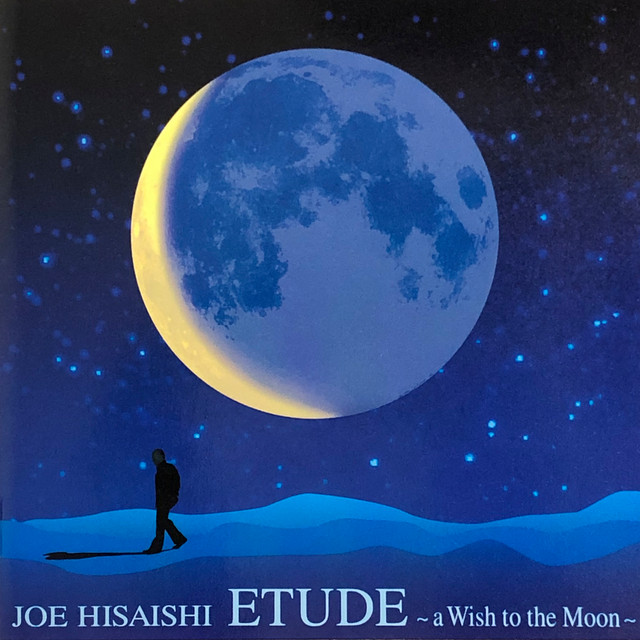
Album: ETUDE ~a Wish to the Moon~
The Success That Left Him Unsatisfied
In the early 2000s, Japan was in the grip of what became known as the iyashi boom — a wave of popular interest in music that soothed, that calmed, that offered a kind of emotional shelter from the noise of everyday life. Instrumental albums, piano records in particular, sold in extraordinary numbers. The market had an appetite for melody without words, for beauty without drama. The boom had a clear starting point: Ryuichi Sakamoto’s “energy flow,” released in 1999, became the first instrumental single in Japanese chart history to sell over one million copies. It opened a door, and the industry walked through it.
Joe Hisaishi was perfectly positioned to benefit from it. His 2001 album ENCORE — a collection of his most beloved pieces arranged for solo piano — arrived at exactly the right moment. It featured “One Summer’s Day,” the theme from Spirited Away, which had by then broken Japanese box office records and become one of the most widely heard pieces of music in the country. It featured “Summer,” which had become familiar to Japanese audiences through years of television advertising. The album sold widely and durably. It remains one of his best-known records.
But when it was finished, Hisaishi found himself sitting with a quiet dissatisfaction he could not shake. He had not written a single new piece for it. Not one. Every track was an arrangement of something that already existed. As a composer — as someone whose entire identity was bound up in the act of creation — this was not a small thing. It was, he later said, a genuine frustration.
ETUDE was his answer to that frustration — and, in a deeper sense, a deliberate turn away from the mass appeal that had made ENCORE such a success. He would write an album of entirely new music. He would spend the time it required. And he would make something that felt, in every sense, like his own.
The Moon and the Other Self
The concept that shaped the album was, from the beginning, unusual. Hisaishi did not want to make music that spoke to a crowd. He wanted, as he explained in the concert programme for the 2003 tour, to speak to each listener individually — to address not the audience as a whole, but each person sitting alone with the music.
The image he kept returning to was the moon.
There is a word in English — lunatic — that carries within it the old belief that the moon has the power to change people, to draw something out of them that ordinary daylight keeps hidden. Hisaishi did not believe in madness as something that visits from outside. He believed it was already there, in all of us — a layer of the self that most people spend their lives keeping carefully suppressed. We negotiate with ourselves, he said. We convince ourselves. We live, in a sense, by deceiving ourselves — by turning away from the part of us that cannot be quieted by reason or social convention.
But that other self exists. And the moon, he felt, has the power to reach it.
The album’s full title — ETUDE ~a Wish to the Moon~ — carries this idea with it. To make a wish to the moon is to direct your deepest hope toward something that offers no guarantees, that cannot promise fulfilment. It is a wish made in the knowledge that it may never come true — and made anyway, because the act of wishing is itself what keeps a person alive.
1632 Empty Seats
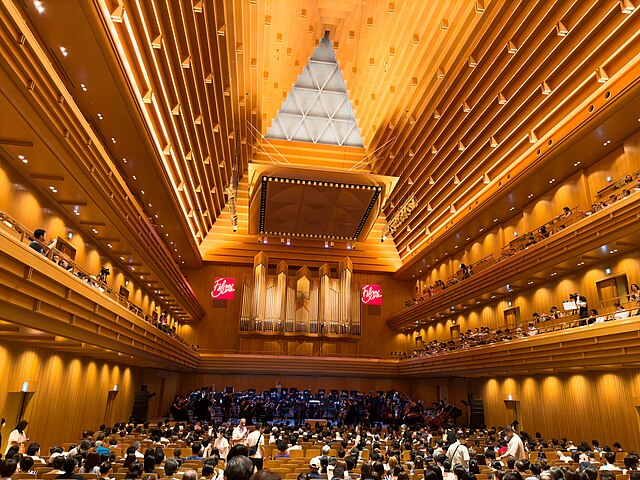
The recording process reflected the ambition of the concept. From the first ideas to the finished album, the project took two years — an unusually generous span of time for a solo piano record. Hisaishi wrote thirteen pieces, then set three aside. The remaining ten were recorded at Tokyo Opera City Concert Hall: Takemitsu Memorial in Hatsudai — a hall he had used the previous year for ENCORE, and which had, by this point, become something close to a home venue for him.
The method was deliberate and unhurried. Once a week, he would go to the hall and record two pieces. The 1,632-seat auditorium was empty each time — just Hisaishi, the piano, and the space. He later admitted that this felt, on one hand, like an extravagance: all those seats, all that resonant air, for a single musician working alone. On the other hand, it produced a specific kind of pressure. There was nowhere to hide. The hall demanded something of him, and he had to find it.
The result of those sessions — week after week, two pieces at a time, in a hall built for orchestras — was an album of unusual depth and concentration.
At the Edge of Pop
In his diary 35mm Nikki, Hisaishi is precise about where ETUDE sits in his catalogue — and where it sits in the wider musical landscape. The album, he writes, is different from the music most people associate with his name: the big melodies, the immediately recognisable themes, the music that arrives fully formed and stays in the memory. ETUDE occupies a position at the very edge of the pop field — so far to the edge, he says, that it is barely inside it at all.
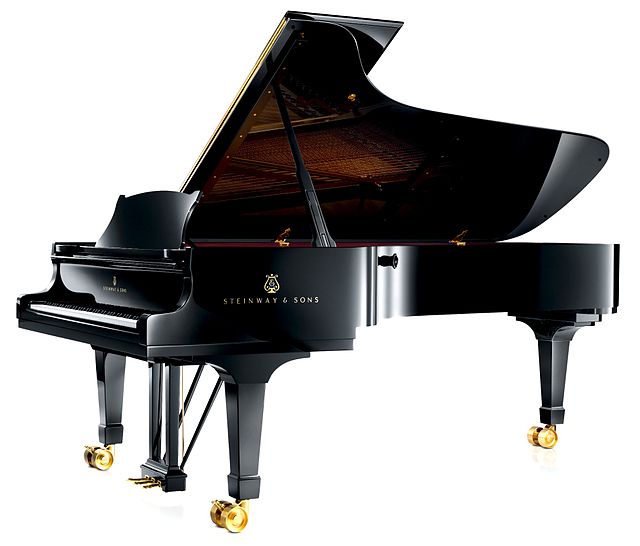
This was not an accident. The solo piano, as Hisaishi understood it, is a paradoxical instrument. It is, on the surface, simple and solitary — one person, one keyboard, no ensemble to fill the space or carry the sound. And yet it is capable of extraordinary range: of suggesting an entire orchestra, of moving from the most intimate whisper to something approaching symphonic force. The piano’s apparent simplicity is a kind of discipline. Everything that is not essential is removed. What remains has to be enough.
For a composer who had spent years writing for film — where music exists in service of image, where its function is always partly defined by something outside itself — the solo piano album represented a different kind of challenge. The music had to stand entirely alone.
A Turning Point
When ETUDE was finished, Hisaishi knew something had shifted. He writes in 35mm Nikki that completing the album brought a new awareness into focus — a conviction, clearer than anything he had felt before, that he wanted to leave work behind. Not commercial work, not film scores, not the music that would be heard and forgotten. He wanted to make things that lasted. He wanted, as he puts it, to leave something behind as a composer.
This is not a small admission. A composer who has built a career on the intersection of art and commerce — who has always worked, as Hisaishi had, within the discipline of popular and cinematic music — does not arrive at that position without some awareness of what it costs. To want to make lasting work, rather than successful work, is to step, as he acknowledges, slightly outside the tracks. It is a different kind of ambition.
ETUDE marks that step. Hisaishi considers it, alongside My Lost City, one of his two essential solo records — the works that most fully represent him as a composer rather than as a film scorer or popular melodist. And its influence, he says, extended directly into the work that followed: the score for Howl’s Moving Castle, and the World Dream Orchestra project that came in its wake. The album was not an ending. It was, quietly and deliberately, a beginning.
The wish was not for the listener. It was for himself — the version of himself he had not yet become.
Sources: Joe Hisaishi, 35mm Nikki (Takarajimasha, 2007); Joe Hisaishi Concert ~a Wish to the Moon~ ETUDE & ENCORE PIANO STORIES 2003 concert programme
Listen to the album below.