
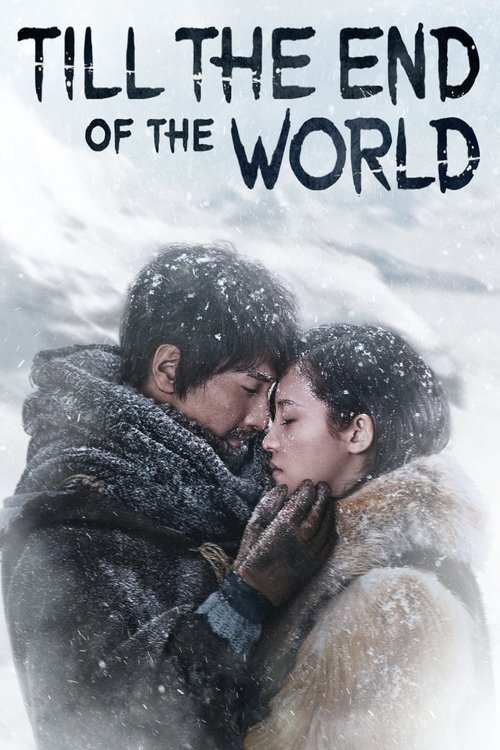
Director Wu Youyin’s 2018 survival drama ‘Till the End of the World’ presents an unexpectedly compelling narrative of human connection forged in the harshest environment on Earth. The film follows an unlikely pair stranded in Antarctica following a catastrophic plane crash: a wealthy, self-absorbed venture capitalist seeking exotic wedding destinations and a dedicated science photographer documenting the Aurora Australis. What begins as a clash of personalities and values becomes a 75-day odyssey of survival and spiritual transformation across the frozen continent’s desolate expanse. The film’s premise, while seemingly formulaic, transcends typical survival cinema through its profound examination of human vulnerability and redemption.
Upon its theatrical release, ‘Till the End of the World’ garnered significant attention from international critics and audiences alike. The film resonated particularly strongly in European markets, where its philosophical underpinnings and character-driven narrative appealed to cinephiles seeking substance beyond mere spectacle. The chemistry between its two leads and the visceral beauty of Antarctic cinematography earned widespread praise, establishing the film as a notable entry in contemporary survival drama. The picture’s exploration of materialism’s hollowness against nature’s indifferent majesty struck a chord with viewers increasingly preoccupied with existential questions in an age of technological excess.
However, it is Joe Hisaishi’s extraordinary musical contribution that elevates ‘Till the End of the World’ from competent drama to genuinely moving cinema. The legendary composer, celebrated for his decades-long collaboration with Hayao Miyazaki and Studio Ghibli, approached this score with characteristic sensitivity to the film’s emotional and thematic depths. Hisaishi’s compositional approach for this project embraces minimalism without sacrificing emotional resonance—a delicate balance he has perfected throughout his illustrious career. The score features expansive orchestral arrangements interspersed with moments of profound silence, mirroring the vast emptiness of Antarctica itself.
Central to Hisaishi’s score is a haunting piano motif that represents the protagonists’ inner journeys. This theme evolves subtly throughout the narrative, growing richer and more complex as the characters shed their psychological armor and embrace vulnerability. The composer employs sparse string arrangements that evoke both beauty and desolation, capturing the Aurora Australis’s ethereal luminescence through shimmering orchestral textures. His use of natural sounds—howling winds, creaking ice, the aurora’s subtle acoustic phenomena—seamlessly integrates with traditional instrumentation, creating an immersive sonic landscape that becomes inseparable from the visual experience.
Where Hisaishi truly demonstrates his mastery is in how the music reflects the narrative’s redemptive arc. Early sequences feature discordant, unsettling arrangements that underscore the characters’ spiritual dissonance and mutual antagonism. As the film progresses and their relationship deepens through shared hardship, the score becomes increasingly consonant and warm, with choir arrangements suggesting transcendence and human connection. The climactic sequences employ full orchestral swells that validate the characters’ transformation without overwhelming the understated power of their emotional journey.
For European audiences discovering Hisaishi’s work beyond his Ghibli associations, ‘Till the End of the World’ reveals the composer’s versatility and profound understanding of how music constructs meaning. The score stands as a testament to his belief that cinema’s power lies not in bombast, but in the intimate spaces where music and human emotion converge. It is, quite simply, Hisaishi at his finest—transcendent, moving, and utterly unforgettable.