
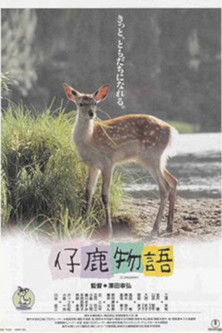
Released in 1991, ‘Deer Friend’ stands as a gentle yet profoundly moving film directed by Yukihiro Sawada. This charming production tells the touching story of a young child’s unexpected friendship with a deer, exploring themes of innocence, connection, and the natural world through a lens of pure wonder. The narrative unfolds with a simplicity that belies its emotional depth, capturing the magic found in the smallest moments of cross-species understanding. It is precisely this delicate balance between whimsy and genuine feeling that makes the film such a compelling vehicle for artistic expression, particularly through its remarkable musical accompaniment.
While ‘Deer Friend’ may not have achieved mainstream international recognition, the film has cultivated a devoted following among those who appreciate thoughtful children’s cinema and character-driven storytelling. Within Japanese animation and live-action hybrid circles, it earned respect for its sincere approach to childhood wonder and its refusal to condescend to its young audience. The film’s reception, though modest in terms of box office performance, demonstrated an appreciation among critics for its artistic integrity and gentle pacing—qualities that allowed its score to flourish rather than being overshadowed by narrative bombast.
The true jewel of ‘Deer Friend’ is undoubtedly Joe Hisaishi’s masterful musical score, which elevates the film into something truly transcendent. Hisaishi, renowned for his collaborations with Studio Ghibli and his distinctive compositional voice, approaches this project with characteristic sensitivity and sophistication. His score functions not merely as accompaniment but as a co-narrator, articulating emotions and sensations that visual storytelling alone cannot capture.
At the heart of Hisaishi’s composition lies a deceptively simple theme that captures the pure, uncomplicated joy of the child-deer relationship. Built upon gentle piano melodies interwoven with delicate orchestral textures, this leitmotif recurs throughout the film in various permutations, each iteration adding layers of meaning and emotional nuance. The composer employs a restrained palette—favoring strings, woodwinds, and piano over more bombastic instrumentation—which perfectly mirrors the film’s intimate scale and emotional honesty.
What distinguishes Hisaishi’s approach here is his masterful integration of silence and space within the composition. Rather than filling every moment with music, he strategically positions his score to punctuate key emotional beats, allowing natural sounds—rustling leaves, gentle breathing, soft hoofsteps—to resonate with equal importance. This compositional restraint demonstrates profound artistry, particularly evident in scenes where the child and deer exist in quiet communion. The music here becomes impressionistic, suggesting rather than stating, inviting viewers into an intimate psychological space.
Hisaishi’s orchestration throughout the film showcases his signature ability to blend Western classical traditions with distinctly Japanese sensibilities. Subtle harmonic ambiguities and modal inflections create an atmosphere of timeless enchantment, while the integration of traditional Japanese instruments adds cultural authenticity without ever feeling forced or artificial. The score builds gradually toward moments of genuine emotional catharsis, with Hisaishi employing full orchestral swells at precisely the right narrative moments to crystallize the depth of feeling between the characters.
Ultimately, ‘Deer Friend’ remains a testament to Joe Hisaishi’s remarkable ability to enhance intimate human stories through music of remarkable emotional intelligence and artistic sophistication.