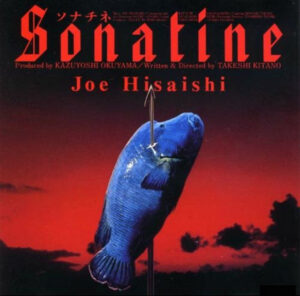
Takeshi Kitano’s 1993 masterpiece ‘Sonatine’ remains one of cinema’s most distinctive meditations on violence, mortality, and the quiet desperation of aging gangsters. The film follows Murakawa, a weary Tokyo yakuza dispatched to Okinawa ostensibly to mediate a territorial dispute between rival clans. What he discovers instead is that his presence serves a far more sinister purpose—he and his men have been sent into a trap. After a devastating ambush, the survivors retreat to an idyllic beach to await further instructions, where the narrative transforms into something far more introspective and existential than any conventional crime thriller.
Upon its release, ‘Sonatine’ quickly established itself as a landmark work in Japanese cinema, earning critical acclaim for Kitano’s distinctive directorial vision and his contemplative approach to yakuza mythology. The film challenged genre conventions by prioritizing philosophical questioning over action spectacle, and its influence would ripple through international cinema for decades. European audiences in particular responded to its measured pace and visual poetry, recognizing in Kitano’s work a kinship with the measured existentialism of European art cinema. The film’s reputation has only grown with time, now widely regarded as among the finest yakuza films ever made.
Yet for all of ‘Sonatine’s’ visual brilliance, it is Joe Hisaishi’s extraordinary score that provides the film’s emotional and spiritual backbone. Working in close collaboration with Kitano, Hisaishi crafted a musical landscape that is simultaneously beautiful and deeply unsettling—a sonic reflection of the film’s thematic preoccupations with mortality, alienation, and the search for meaning in a violent world. The score’s central motif is deceptively simple: a sparse, melancholic piano melody that recurs throughout the film, evolving and fragmenting as Murakawa’s internal state deteriorates.
Hisaishi’s compositional approach eschews the bombastic orchestration often associated with crime cinema. Instead, he employs restraint as his primary tool, using extended silences and minimal instrumentation to create profound emotional resonance. The piano dominates much of the score, its notes often feeling isolated and echoing, as if reverberating through an empty consciousness. When orchestral elements do appear—delicate strings, sparse woodwinds—they seem almost intrusive, emphasizing rather than diminishing the overwhelming sense of loneliness that permeates both image and sound.
The relationship between Hisaishi’s music and Kitano’s visuals is profoundly symbiotic. During the beach sequences, where temporal narrative largely dissolves in favor of psychological exploration, the score becomes increasingly abstract and fragmented. Hisaishi mirrors the film’s visual drift into dreamlike reverie through dissonant harmonies and non-traditional piano techniques, creating soundscapes that feel simultaneously gentle and destabilizing. The music never explains or sentimentalizes; rather, it exists in dialogue with the visuals, each element trusting the other to convey meaning.
What makes Hisaishi’s achievement in ‘Sonatine’ truly remarkable is how completely his score captures the film’s central tragedy—the recognition that Murakawa’s life, spent in service to violence and organizational loyalty, has left him spiritually hollowed. The music doesn’t judge or mourn; it simply witnesses, with the understated dignity of someone watching an old friend fade into shadow. This profound empathy, expressed through compositional restraint and emotional clarity, stands as one of Hisaishi’s finest achievements, a demonstration of how film music can achieve philosophical depth while maintaining intimate human resonance.