
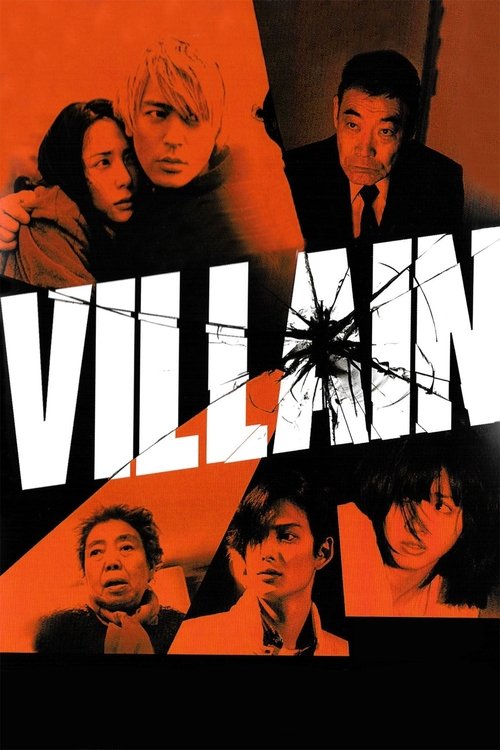
Sang-il Lee’s 2010 film ‘Villain’ presents a haunting exploration of isolation, desperation, and moral corruption set against the urban landscape of contemporary Japan. At its heart lies the story of Shimizu Yuichi, a withdrawn day laborer whose desperate search for human connection through telephone dating services becomes catastrophically entangled with murder. When the sweet-faced Yoshino—whom Yuichi had encountered through these services—is brutally killed after being humiliated by a wealthy playboy named Masuo, Yuichi finds himself inexplicably implicated in her death. The film’s examination of loneliness and societal rejection forms the emotional core that director Lee uses to question notions of guilt, culpability, and the invisible barriers that separate outcasts from society.
Upon its release, ‘Villain’ garnered significant critical acclaim, particularly for its unflinching psychological examination of its protagonist’s fractured psyche. The film resonated strongly with Japanese audiences and international critics alike, who praised Lee’s nuanced direction and the performances that captured the quiet desperation of modern urban alienation. However, beyond the narrative itself, the film’s critical reception was substantially elevated by its extraordinary musical accompaniment—a score composed by the legendary Joe Hisaishi that would prove to be one of his most psychologically complex and thematically sophisticated works.
Hisaishi’s contribution to ‘Villain’ represents a remarkable departure from some of his more whimsical or romantically inclined work, instead channeling his compositional genius toward creating a soundscape that mirrors the protagonist’s fractured emotional landscape. The score functions not merely as accompaniment but as a psychological narrator, reflecting Yuichi’s deteriorating mental state with remarkable precision. Rather than relying on sweeping orchestral gestures, Hisaishi employs a more restrained and introspective approach, utilizing sparse instrumentation and dissonant harmonies to establish an atmosphere of creeping dread and existential unease.
The compositional approach demonstrates Hisaishi’s profound understanding of how music can articulate internal emotional states that dialogue and visual narrative alone cannot fully express. Through the strategic use of repetitive motifs and haunting melodic fragments, the composer creates a sense of obsession and circular thinking that perfectly encapsulates Yuichi’s psychological entrapment. The score employs unexpected instrumental combinations—often blending traditional Japanese instruments with contemporary orchestration—creating a unique sonic identity that reflects both the cultural specificity of the narrative and its universal themes of alienation.
What particularly distinguishes Hisaishi’s work in ‘Villain’ is how the music reacts to narrative developments with sophisticated emotional intelligence. During moments of quiet domesticity or fleeting human connection, the score becomes almost tenderly melancholic, suggesting the character’s yearning for acceptance. Conversely, as the plot darkens and Yuichi’s involvement with the crime deepens, the music grows increasingly discordant and unsettling, employing atonal elements and fragmented rhythms that mirror psychological dissolution. The relationship between image and sound creates a powerful symbiosis—the visuals provide context, but Hisaishi’s composition provides the emotional truth beneath the surface narrative.
For European listeners encountering this score, it represents an accessible yet challenging entry point into Hisaishi’s more experimental work, demonstrating why he remains one of cinema’s most versatile and psychologically acute composers. The music demands active listening while remaining emotionally transparent, inviting audiences into the troubled consciousness of a desperate man navigating an indifferent world.