
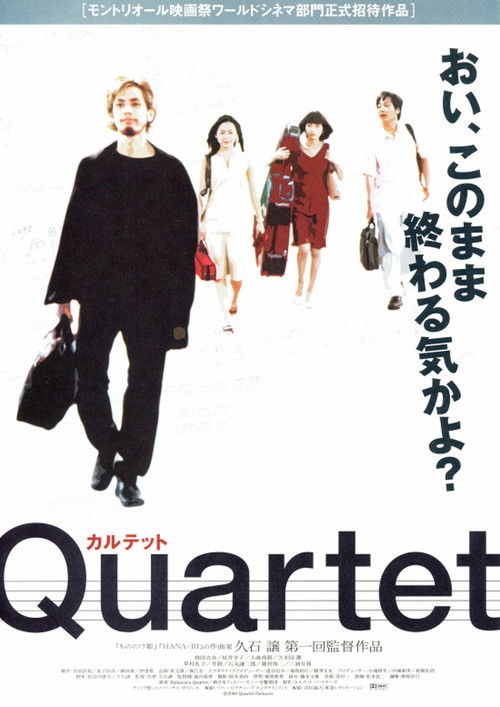
Joe Hisaishi’s directorial venture into live-action cinema, “Quartet” (2001), stands as a fascinating exploration of musical ambition and artistic collaboration. The film follows four talented young musicians as they form a string quartet, navigating the challenging path toward recognition and artistic excellence. Through their journey, Hisaishi captures the delicate balance between individual brilliance and collective harmony, creating a narrative that resonates with anyone who has pursued artistic dreams. The ensemble cast brings authentic energy to their roles as they grapple with competition, personal conflict, and the unwavering dedication required to succeed in Japan’s classical music scene.
While “Quartet” remained somewhat under-the-radar compared to other contemporary Japanese films, it achieved considerable appreciation among dedicated cinema enthusiasts and classical music aficionados. The film demonstrated Hisaishi’s unique ability to bridge the gap between popular entertainment and artistic credibility, earning respect from critics who recognized his thoughtful approach to storytelling. European audiences, in particular, found the film’s examination of classical music culture refreshingly authentic and emotionally resonant. Though it never achieved mainstream blockbuster status, the film has developed a devoted following among those who appreciate chamber music and earnest character-driven narratives.
What truly distinguishes “Quartet” is Hisaishi’s exceptional musical score, which functions as far more than mere accompaniment—it becomes the film’s emotional and thematic heart. Recognizing that a film about musicians demands extraordinary attention to musical detail, Hisaishi crafted a score that celebrates the string quartet’s intimate sonority while exploring the psychological dimensions of musical performance. The composer’s approach demonstrates his profound understanding of both film scoring and classical chamber music traditions.
Hisaishi’s score weaves together original compositions with strategic use of classical repertoire, creating a rich tapestry that mirrors the characters’ musical education and artistic aspirations. His original themes capture the youthful energy and nervous determination of the four protagonists, employing elegant string writing that reflects the quartet’s journey toward cohesion. The music subtly evolves throughout the narrative, growing more sophisticated as the ensemble develops, mirroring the musicians’ artistic maturation.
Particularly masterful is how Hisaishi uses silence and restraint alongside virtuosic passages. Understanding that chamber music’s power lies in intimate dialogue between instruments, he constructs scenes where musical tension and emotional vulnerability become inseparable. The score captures those delicate moments when individual voices must surrender to collective purpose—a theme central to both chamber music and the film’s narrative about ensemble collaboration.
The relationship between Hisaishi’s compositions and the visual storytelling is remarkably sophisticated. Rather than overwhelming dramatic moments with grandiose orchestration, the music often pulls back, allowing the viewer to inhabit the characters’ internal experiences. This restraint reflects genuine chamber music aesthetics, where nuance and emotional intelligence matter more than volume or spectacle.
For European listeners familiar with contemporary classical music, Hisaishi’s score reveals fascinating influences: traces of Minimalism, Post-Romanticism, and distinctly Japanese sensibilities converge in a uniquely personal voice. The composer proves himself not merely as a film composer, but as a serious musician crafting intelligent, emotionally complex music that elevates the entire cinematic experience. “Quartet” ultimately stands as a testament to Hisaishi’s artistry, showcasing his ability to create music that honors both cinema and classical traditions with equal respect.