
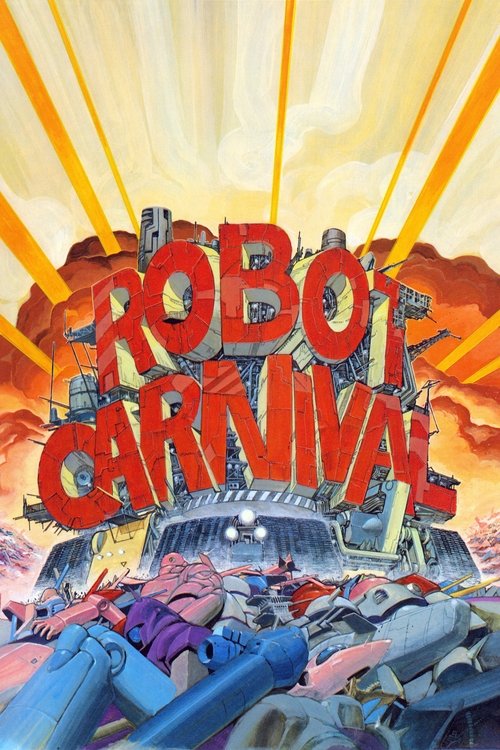
Robot Carnival stands as a remarkable achievement in anime history, presenting viewers with a vibrant anthology that weaves together diverse storytelling styles united by a single, compelling motif: robots. Released in 1987 and directed by Atsuko Fukushima, this experimental feature film comprises eight distinct segments, each crafted by different animators and directors, creating a kaleidoscopic celebration of mechanical wonder and artistic imagination. From whimsical comedies to haunting dramas, the film’s varied narrative approaches showcase the boundless creativity that defined the anime medium during this creative period.
Upon its release, Robot Carnival garnered significant attention within both Japanese and international anime circles, establishing itself as a cult classic that influenced countless creators. European audiences, in particular, embraced the film’s artistic ambition and visual experimentation, recognizing it as a bold departure from conventional narrative cinema. The anthology format allowed each segment to explore different thematic territories while maintaining cohesive artistic vision, and the film’s reputation has only grown among animation enthusiasts and film scholars over the decades. Its influence extended beyond anime, inspiring live-action directors and digital artists who appreciated its fearless approach to visual storytelling.
Central to Robot Carnival’s success is Joe Hisaishi’s extraordinary musical score, which elevates the entire anthology experience to symphonic heights. Rather than treating the diverse segments as disconnected stories requiring separate musical identities, Hisaishi crafted a unified sonic landscape that interconnects the various tales through thematic coherence and instrumental sophistication. His compositional approach demonstrates remarkable versatility, shifting between orchestral grandeur, minimalist elegance, and avant-garde experimentation to match each segment’s unique visual and narrative character.
The opening sequences showcase Hisaishi’s gift for orchestration, where sweeping string arrangements and brass flourishes establish a sense of mechanical majesty and wonder. His music transforms the robot concept from potentially cold and sterile into something deeply human and emotionally resonant. In the more comedic segments, Hisaishi employs playful rhythmic patterns and whimsical instrumentation that complement the visual humor without overwhelming the narrative. Conversely, when darker or more contemplative stories unfold on screen, his score adopts a more introspective palette, utilizing subtle harmonic shifts and sparse orchestration that create profound emotional depth.
What distinguishes Hisaishi’s work here is his sophisticated understanding of how music functions as a narrative device. Rather than simply accompanying visuals, his compositions actively dialogue with the animation, creating moments where sound and image achieve perfect synchronicity. The recurring thematic material that weaves through the different segments creates an architectural unity, suggesting that despite their surface differences, these robot stories share a common emotional core exploring themes of creation, consciousness, and the intersection of technology with human experience.
Hisaishi’s score for Robot Carnival demonstrates his early mastery of film composition—techniques and sensibilities that would flourish in his later, more famous collaborations. The music proves that animation scoring need not be subordinate to visuals but can instead exist as an equal creative partner, enriching and expanding the emotional possibilities of the storytelling. For European fans discovering Hisaishi’s work, Robot Carnival offers a fascinating window into his artistic development and remains essential listening for understanding his profound influence on contemporary film music.