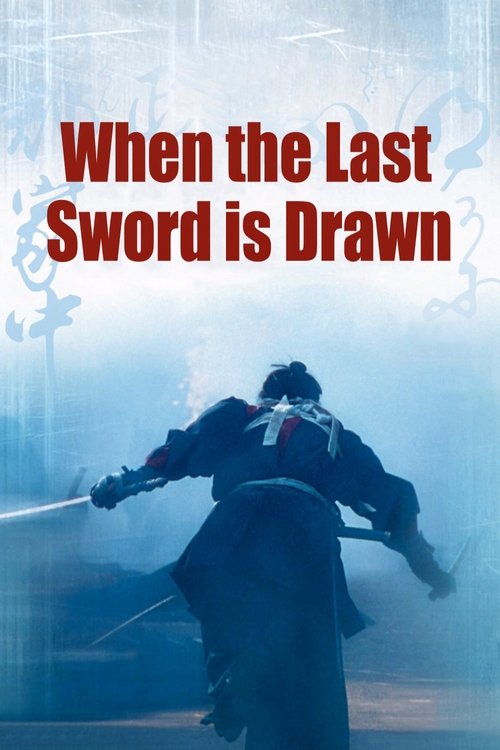
Yojiro Takita’s 2003 film ‘When the Last Sword Is Drawn’ presents a poignant portrait of Kanichiro Yoshimura, a samurai caught between his traditional values and the harsh economic realities of his time. Unable to adequately support his wife and children on the meagre wages offered by his small provincial clan, Yoshimura makes the difficult decision to leave his family behind and journey to the city in pursuit of better-paying work. This premise, seemingly straightforward, becomes a deeply moving exploration of sacrifice, honor, and the struggle to maintain one’s humanity in an increasingly modernizing Japan.
Upon its release, the film resonated strongly with audiences across multiple continents, earning recognition for its nuanced storytelling and compelling performances. Western audiences, in particular, found themselves captivated by Takita’s sensitive treatment of samurai cinema, which eschewed traditional action-driven narratives in favor of intimate character study. The film garnered critical acclaim and demonstrated that period dramas could transcend cultural boundaries by focusing on universal human experiences—the tension between duty and love, ambition and contentment. This reception established the film as a significant entry in early 2000s Japanese cinema, celebrated for its emotional intelligence and refusal to romanticize samurai culture.
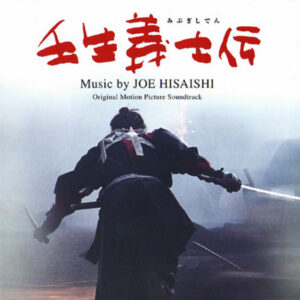
Yet what truly elevates ‘When the Last Sword Is Drawn’ into the realm of artistic achievement is Joe Hisaishi’s magnificent musical score. The renowned composer, celebrated for his collaborations with Studio Ghibli and his versatility across multiple genres, brings extraordinary depth to Takita’s narrative through his compositional choices. Rather than employing traditional Japanese instruments in an overtly authentic manner, Hisaishi crafts a score that merges Western orchestral sensibilities with subtly integrated Japanese musical elements, creating a sonic landscape that mirrors Yoshimura’s own cultural liminal space—torn between the old samurai world and modernizing Japan.
The score’s thematic material centers on several interconnected motifs that evolve throughout the film. Hisaishi employs a central melodic theme that captures both the stoic determination and underlying melancholy of Yoshimura’s journey. This melody, introduced early through restrained strings and woodwinds, gradually incorporates additional instrumental voices as the narrative unfolds, musically representing the accumulation of emotional weight and responsibility upon the protagonist’s shoulders.
What distinguishes Hisaishi’s approach is his masterful use of silence and space alongside musical utterance. Rather than saturating every scene with continuous music, he allows moments of quietude to punctuate the emotional landscape, giving viewers space to contemplate the characters’ internal struggles. When music does emerge, it carries considerable expressive power—delicate piano passages underscore moments of domestic tenderness, while fuller orchestrations accompany scenes of conflict and moral ambiguity.
The composer’s understanding of the film’s thematic concerns manifests in his orchestral color choices. Warm, earthy tones dominate scenes involving Yoshimura’s family, evoking a sense of home and belonging. As the protagonist ventures into the city and confronts his uncertain future, the orchestration becomes progressively more austere and complex, reflecting his psychological and emotional turbulence. This direct correlation between musical architecture and narrative development exemplifies Hisaishi’s sophisticated understanding of film scoring as a narrative art form in itself.
Hisaishi’s score ultimately transcends mere accompaniment, functioning as an emotional narrator that articulates what Yoshimura cannot express in words. For European audiences discovering this remarkable film, the universality of both Takita’s direction and Hisaishi’s music demonstrates the profound connection between artistic excellence and human truth—reminding us why great cinema, regardless of cultural origin, speaks to hearts everywhere.