
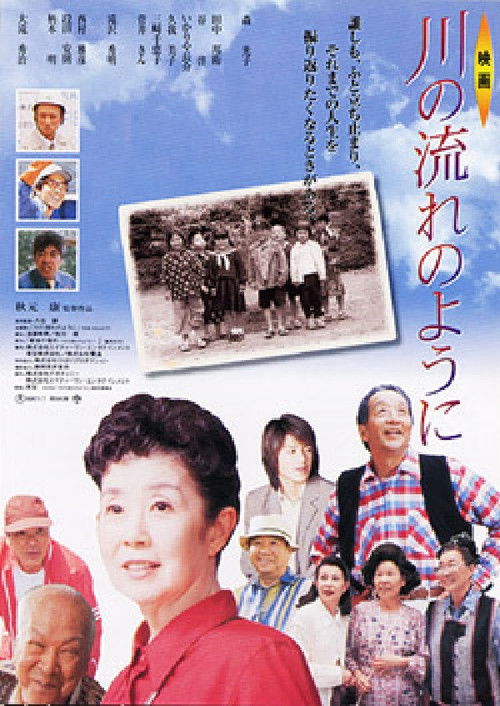
Yasushi Akimoto’s 2000 live-action film ‘As the River Flows’ represents a touching exploration of human connection and the passage of time, anchored by the tender cinematography of rural Japan. Though the film remained relatively modest in its theatrical release, it has gradually found appreciation among dedicated cinema enthusiasts, particularly those who recognize the profound contribution of its musical accompaniment. The narrative unfolds at a contemplative pace, allowing viewers to settle into the rhythms of everyday life and the quiet transformations that occur within families and communities.
While ‘As the River Flows’ did not achieve mainstream commercial success, the film has developed a devoted following among those who appreciate intimate character studies and atmospheric storytelling. Japanese critics recognized the film’s gentle authenticity, and film festivals across Asia acknowledged its sincere approach to depicting rural life. For European audiences discovering this gem through retrospective screenings and streaming availability, the film offers an accessible entry point into thoughtful Japanese cinema that eschews spectacle in favor of genuine emotional resonance.
What truly elevates ‘As the River Flows’ is the masterful musical score composed by Joe Hisaishi, whose work transforms the film into a deeply meditative experience. Hisaishi’s approach to the score is characteristically restrained yet profoundly moving, perfectly complementing Akimoto’s direction. Rather than imposing dramatic emotional cues, Hisaishi allows his music to breathe alongside the narrative, creating space for viewers to discover their own emotional connections to the story.
The compositional foundation of Hisaishi’s score draws inspiration from traditional Japanese musical sensibilities while incorporating subtle Western harmonic elements. This fusion creates a universal language that resonates across cultural boundaries, making the film particularly appealing to European listeners unfamiliar with Japanese cinema. The primary thematic material utilizes piano and strings, instruments that mirror the delicate, ephemeral nature of human relationships depicted on screen. These melodies possess a haunting quality—not melancholic, but rather contemplative, inviting reflection rather than despair.
Hisaishi’s orchestration demonstrates remarkable restraint throughout the film. Rather than employing full orchestral swells at emotional peaks, the composer strategically uses silence and minimal instrumentation to heighten poignancy. This technique allows viewers to absorb the visual storytelling without sonic distraction, creating an intimate atmosphere where every note carries significance. When the orchestra does swell, typically during moments of profound realization or connection between characters, the impact resonates deeply because it has been earned through careful compositional discipline.
The relationship between Hisaishi’s music and the film’s visual progression is particularly noteworthy. As the narrative follows the river’s journey through seasons and years, the score subtly shifts its emotional terrain. Themes recur with slight variations, mirroring how memories resurface and gain new meaning through life’s passage. Water imagery is sonically represented through flowing melodic lines that seem to drift and meander, much like the river itself.
For European fans of Joe Hisaishi’s work, ‘As the River Flows’ showcases the composer at his most subtle and sophisticated. Here, Hisaishi demonstrates that profound emotional communication requires not grandiosity, but rather genuine understanding of cinema’s contemplative potential. The score proves that his talents extend far beyond animated fantasy—this is chamber music for the soul, a reminder that beauty often flows most powerfully in quietude.