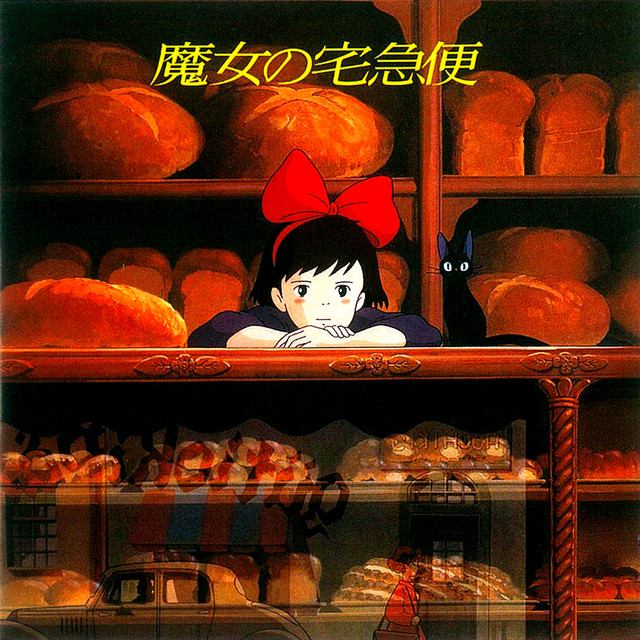
Album: 魔女の宅急便 イメージアルバム
In the vast catalog of Joe Hisaishi’s compositions for Studio Ghibli films, ‘Genki ni Naresou’ (It Seems I Can Be Cheerful) from the Kiki’s Delivery Service Image Album stands as a fascinating glimpse into the composer’s creative laboratory. This uplifting melody, written for Hayao Miyazaki’s beloved tale of a young witch finding her place in the world, reveals the intimate collaborative process between director and composer that would define their legendary partnership.
The track emerges from what Hisaishi describes as a ‘rough sketch’ approach to film composition. Unlike the fully orchestrated pieces that would grace the final soundtrack, ‘Genki ni Naresou’ exists in its raw, synthesizer-driven form—a musical seed waiting to bloom. This Image Album served as Hisaishi’s sonic sketchbook, where melodies could breathe freely without the constraints of precise scene timing or elaborate arrangements.
What makes this particular piece so compelling is how it embodies Hisaishi’s fundamental philosophy for Miyazaki’s films. ‘First, it must be something you can sing loudly,’ he once explained about his approach to Ghibli music. ‘Nothing cleverly complicated, but returning thoroughly to childlike innocence and creating something straightforward. And it must overflow with human love.’ ‘Genki ni Naresou’ exemplifies this ethos perfectly—its melody is immediately hummable, built around major key progressions that seem to lift the listener skyward.
The European Mediterranean influences that shaped this album are subtle but unmistakable in the track. While synthesizers provide the foundation, hints of accordion-like textures and folk-inspired melodic turns evoke the coastal European setting that inspired Kiki’s fictional world of Koriko. This wasn’t accidental geography—Hisaishi crafted these sounds while imagining ‘somewhere European, maybe around the Mediterranean,’ creating an audio postcard from a place that exists somewhere between reality and dreams.
What’s remarkable about the Image Album’s creation is how closely it aligned with the final film. Nearly every track found its way into specific scenes, with only two pieces ultimately unused. This near-perfect correspondence reveals the depth of communication between Miyazaki and Hisaishi during the conceptual phase. ‘Genki ni Naresou’ wasn’t just a random musical sketch—it was composed with clear narrative purpose, destined to underscore moments of hope and renewal in Kiki’s journey.
The instrumentation choices in this track foreshadow a crucial element in the final film score: the emphasis on wind instruments. Even in its synthesized form, ‘Genki ni Naresou’ incorporates breathy textures that would later manifest as ocarina, accordion, and woodwind sections in the complete soundtrack. These ‘breath equals wind’ instruments weren’t mere orchestral color—they represented the very essence of Kiki’s story. The wind that carries her broom, the air that fills the streets of Koriko, and most importantly, the life force within Kiki herself.
Listening to ‘Genki ni Naresou’ today, one can hear the DNA of Hisaishi’s mature style already forming. The melody moves in gentle, soaring arcs that mirror flight itself, while the harmonic progressions maintain an optimistic forward momentum. The piece sits comfortably in a bright major key, with a moderate tempo that suggests both movement and contemplation—perfect for a young witch learning to navigate both the skies and her own emotions.
The track’s title translates roughly to ‘It Seems I Can Be Cheerful’ or ‘I Think I Can Feel Better,’ capturing that delicate moment of emerging from sadness into hope. This emotional specificity demonstrates Hisaishi’s gift for translating complex feelings into simple, powerful melodies. The music doesn’t force joy upon the listener; instead, it suggests the possibility of happiness, like sunlight breaking through clouds.
In the context of Kiki’s narrative arc, ‘Genki ni Naresou’ represents those crucial moments when the young witch begins to rediscover her confidence after losing her powers. The melody itself seems to take tentative flight, much like Kiki’s hesitant attempts to reconnect with her magic. It’s music that understands vulnerability—not as weakness, but as the necessary precursor to growth.
This Image Album approach would become a template for future Ghibli collaborations, but ‘Genki ni Naresou’ captures something unique about that early creative partnership. Here was Hisaishi, still using primarily electronic instruments, creating musical worlds that would soon expand into full orchestral landscapes. The simplicity of these early sketches allows the pure melody to shine through, unadorned and immediate.
‘Genki ni Naresou’ reminds us that great film music often begins not with grand orchestral gestures, but with a simple melody that captures the heart of a character’s journey. In its modest synthesizer arrangement, this track contains all the hope, determination, and gentle magic that would make Kiki’s story soar.
- かあさんのホウキRead Review
- ナンパ通りRead Review
- 町の夜Read Review
- 元気になれそうNow Playing
- 渚のデイトRead Review
- 風の丘Read Review
- トンボさんRead Review
- リリーとジジRead Review
- 世界って広いわRead Review
- パン屋さんの窓Read Review
- 突風Read Review
- 木洩れ陽の路地Read Review