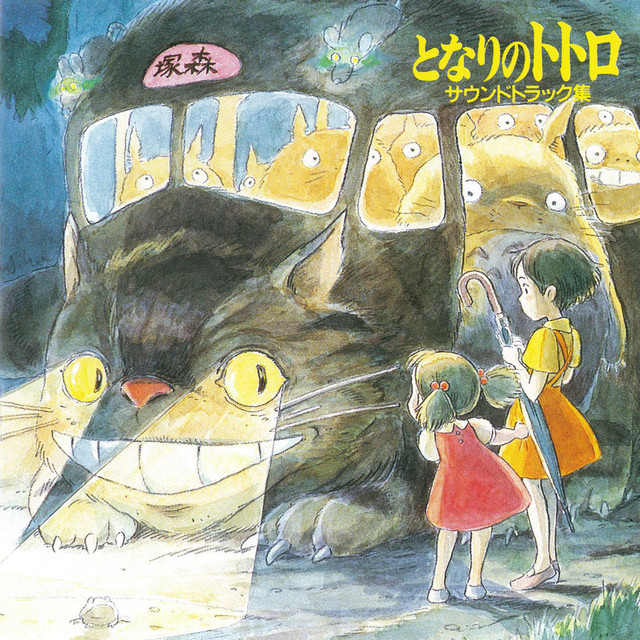
Album: となりのトトロ サウンドトラック集
Picture this: a renowned composer sits hunched over a tabla drum, recording himself playing ethnic percussion patterns that will later become part of an orchestral score for children. This isn’t some experimental fusion project—it’s Joe Hisaishi crafting the soundtrack for Studio Ghibli’s beloved “My Neighbor Totoro,” including the playfully spooky “Obakeyashiki!” (Ghost House).
The story behind this track reveals something fascinating about Hisaishi’s creative process and his relationship with director Hayao Miyazaki. For Totoro, Miyazaki took an unprecedented step—he personally led the music meetings for the first time, joking that co-director Isao Takahata was being “unfair” by usually handling these sessions. This shift in dynamics would prove crucial for shaping not just “Obakeyashiki!” but the entire sonic identity of the film.
Hisaishi faced a unique challenge with Totoro’s soundtrack. As he explained, writing purely orchestral music would have resulted in “just an ordinary children’s film.” Instead, he developed what became his signature approach: blending ethnic elements with traditional orchestration. “Obakeyashiki!” exemplifies this philosophy perfectly—its mysterious, slightly unsettling atmosphere comes from this very fusion of Western and Eastern musical traditions.
The track’s ethnic percussion elements weren’t sourced from a library or performed by specialists. In a move that speaks to his hands-on approach, Hisaishi recorded the tabla sounds himself, later sampling them into the composition. This personal touch adds an authenticity to “Obakeyashiki!” that you can hear in every rhythmic pulse—there’s something organic about the way those percussive elements breathe beneath the orchestral arrangements.
Hisaishi’s strategy for Totoro involved creating what he called a “back theme”—”Kaze no Toorimichi” (The Path of Wind)—which appears during the tree-growing sequences. But “Obakeyashiki!” represents another facet of his structural thinking. The piece needed to capture the mysterious, slightly frightening nature of the abandoned house where Satsuki and Mei first encounter the soot sprites, while still maintaining the film’s overall sense of wonder.
The composer’s minimal music influences shine through in “Obakeyashiki!” The track builds tension through repetitive motifs and gradually shifting harmonies rather than dramatic orchestral swells. This approach, combined with the ethnic percussion foundation, creates an atmosphere that’s both foreign and familiar—perfect for a house that exists somewhere between the mundane world and the magical realm of forest spirits.
An interesting production detail shaped the final sound of “Obakeyashiki!” and the entire soundtrack. Hisaishi fell ill during recording, which reduced the synthesizer elements he’d originally planned. The intended ratio was supposed to favor electronics, but instead the orchestra dominated at about sixty percent to synthesizer’s forty percent. For “Obakeyashiki!” this meant the ethnic percussion and minimal harmonies had to carry more weight in creating the supernatural atmosphere, supported by a fuller orchestral presence than initially conceived.
This accident of circumstance actually enhanced the track’s effectiveness. The stronger orchestral foundation gives “Obakeyashiki!” a substantial presence that pure electronic manipulation might have lacked, while the ethnic elements prevent it from becoming too precious or overly cute for its ghostly subject matter.
For Hisaishi, working with Miyazaki represents both opportunity and ordeal. He’s described these collaborations as his “most important work” but also as trials and training grounds where he discovers his own creative identity. “Obakeyashiki!” embodies this relationship—it’s a piece that pushed him to find new ways of balancing accessibility with sophistication, childlike wonder with genuine mystery.
The track typically unfolds in a moderate tempo around 100 BPM, allowing space for both the percussive patterns and the orchestral textures to breathe. The harmonic language draws from modal scales that give it an ancient, folkloric quality while remaining grounded in Western orchestral tradition. This careful balance makes “Obakeyashiki!” accessible to young audiences while offering enough complexity to engage adult listeners.
Listening to “Obakeyashiki!” today, you can hear all these creative decisions working together. The self-recorded tabla sounds provide an earthy foundation, the minimal music approach builds atmospheric tension, and the orchestral elements add emotional weight. It’s a perfect microcosm of Hisaishi’s broader philosophy: that children’s music doesn’t have to be simple, and that the most effective film scores often emerge from the tension between different musical traditions.
This three-and-a-half-minute cue demonstrates why Hisaishi’s work transcends typical film music. “Obakeyashiki!” isn’t just background sound—it’s a carefully crafted piece that enhances the narrative while standing on its own musical merits, proving that even the spookiest corners of childhood imagination deserve sophisticated artistic treatment.
- さんぽ-オープニング主題歌-Read Review
- 五月の村Read Review
- オバケやしき!Now Playing
- メイとすすわたりRead Review
- 夕暮れの風Read Review
- こわくないRead Review
- おみまいにいこうRead Review
- おかあさんRead Review
- 小さなオバケRead Review
- トトロRead Review
- 塚森の大樹Read Review
- まいごRead Review
- 風のとおり道(インストゥルメンタンル)Read Review
- ずぶぬれオバケRead Review
- 月夜の飛行Read Review
- メイがいないRead Review
- ねこバスRead Review
- よかったねRead Review
- となりのトトロ-エンディング主題歌-Read Review
- さんぽ(合唱つき)Read Review