
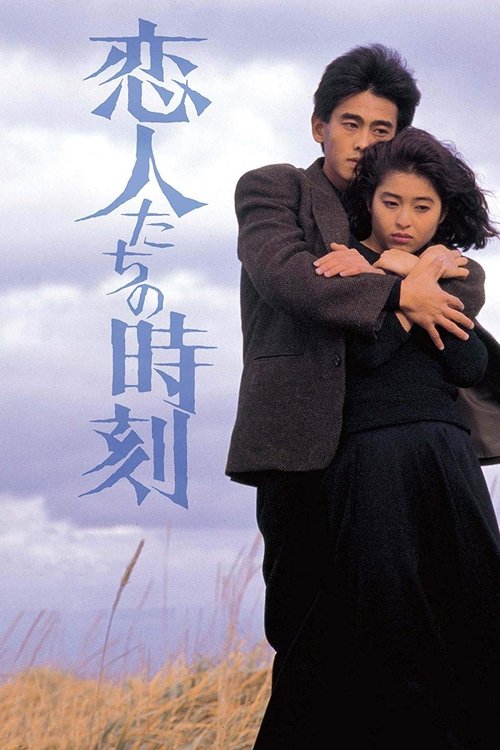
Released in 1987, ‘Lover’s Time’ directed by Shinichiro Sawai tells an intimate story of unexpected connection and mystery. The film follows a medical student whose life transforms when he heroically intervenes to prevent a violent assault on a beautiful young woman at the beach. What begins as a moment of chivalry blossoms into genuine affection, drawing him into the enigmatic world of his new love interest. As their relationship develops, the protagonist finds himself increasingly fascinated by the mysterious circumstances surrounding her life, leading him down a path of discovery that intertwines romance with darker, more complex emotional territory.
While ‘Lover’s Time’ remained relatively obscure outside Japan, never achieving the mainstream recognition of other 1980s romantic dramas, the film has cultivated a dedicated following among discerning cinema enthusiasts and Joe Hisaishi devotees who recognize its understated brilliance. The film’s contemplative approach to romance—rejecting melodramatic excess in favor of nuance and psychological depth—resonated with audiences who appreciated its mature sensibility. Within Japanese cinema circles, the film earned respect for its sophisticated screenplay and atmospheric direction, though it never reached blockbuster status. For fans discovering the film through its musical score, however, ‘Lover’s Time’ represents a crucial chapter in understanding Hisaishi’s artistic evolution during the late 1980s.
Joe Hisaishi’s score for ‘Lover’s Time’ stands as one of his most refined and emotionally sophisticated works, demonstrating the composer’s masterful ability to capture the delicate psychology of human connection. The music functions as both complement and counterpoint to the narrative, creating an intimate sonic landscape that mirrors the protagonist’s emotional journey. Hisaishi employs a restrained orchestral palette, featuring subtle string arrangements, gentle piano passages, and carefully placed woodwind voices that create an atmosphere of tender vulnerability mixed with underlying tension.
The composer’s thematic approach in ‘Lover’s Time’ showcases his gift for melody without sentimentality. The central love theme emerges gradually, first appearing as a hesitant piano motif that mirrors the protagonist’s uncertainty and growing affection. Rather than overwhelming the viewer with grand romantic gestures, Hisaishi allows this theme to develop organically, weaving through different instrumental combinations as the relationship deepens. The use of muted strings and sparse orchestration prevents the score from becoming cloying, instead evoking genuine warmth and authenticity.
What distinguishes Hisaishi’s work here is his compositional restraint—each musical phrase seems carefully considered, with silence and space holding equal weight to melody. When tension emerges surrounding the mysterious aspects of the woman’s life, Hisaishi subtly shifts the harmonic landscape, introducing minor key variations and slightly dissonant chord progressions that suggest psychological complexity beneath the surface romance. The score refuses easy answers, musically reflecting the film’s narrative ambiguity.
The interplay between the score and visual narrative demonstrates Hisaishi’s sophisticated understanding of cinema. During beach scenes, the music breathes with the same freedom as the ocean setting, while interior sequences adopt more introspective, chamber-like qualities. This dynamic relationship between musical texture and physical environment reveals Hisaishi’s meticulous attention to how sound shapes cinematic experience. The score transforms ‘Lover’s Time’ into a uniquely immersive experience, elevating the film’s modest narrative into something genuinely moving and memorable for listeners willing to embrace its quiet emotional power.