
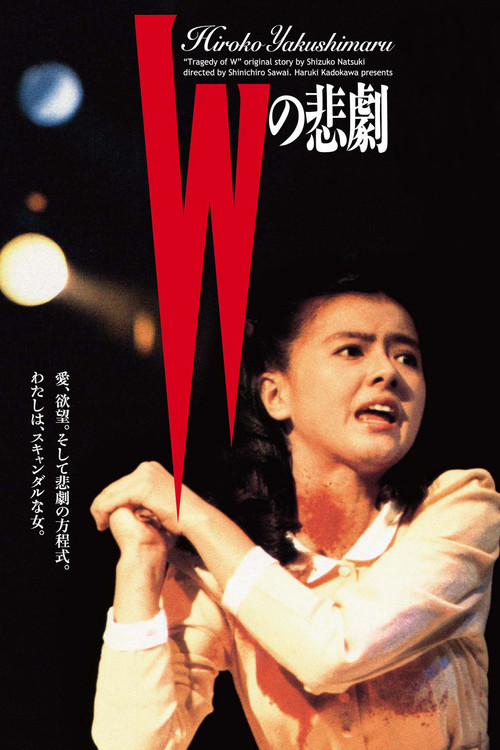
Shinichiro Sawai’s “The Tragedy of ‘W’” (1984) presents an intimate portrait of artistic ambition and personal sacrifice through the lens of a young theatre actress navigating the precarious demands of her career. The film captures the tension between professional aspirations and the emotional toll required to pursue them, creating a poignant exploration of what it means to dedicate oneself entirely to the arts. As the protagonist grapples with her uncertain future in theatre, viewers witness not merely a career drama, but a deeply human story about the price of passion and commitment.
Upon its release, the film garnered significant attention within Japanese cinema circles, though it remained relatively under-the-radar for Western audiences at the time. Critics appreciated Sawai’s nuanced direction and the film’s refusal to offer easy resolutions to its central conflicts. The narrative’s focus on the psychological and emotional dimensions of artistic struggle resonated with audiences who recognized in it a genuine, unglamorous portrait of performer life. While the film did not achieve mainstream commercial success, it established itself as a respected work within art cinema communities and demonstrated the potential for intimate character studies to explore broader themes about human ambition and sacrifice.
It is Joe Hisaishi’s magnificent score, however, that truly elevates “The Tragedy of ‘W’” into the realm of the extraordinary. Hisaishi, who would later become internationally celebrated for his collaborations with Hayao Miyazaki, brings to this film a compositional maturity that perfectly mirrors the emotional complexity of the protagonist’s journey. The score operates as a parallel narrative, expressing what words and images alone cannot convey about the character’s internal landscape.
Hisaishi’s approach to the material reveals his signature ability to blend classical sensibilities with contemporary sensibilities, creating music that feels both timeless and distinctly of its era. Rather than overwhelm the delicate scenes with orchestral grandeur, the composer employs a restrained palette, allowing space for the actors’ performances and the film’s visual storytelling to breathe. Piano features prominently throughout the score, its crystalline tones mirroring the clarity of the actress’s ambitions while simultaneously suggesting their fragility. The instrument becomes almost a character itself, expressing vulnerability, determination, and quiet resignation in turn.
The compositional architecture reveals Hisaishi’s understanding of the film’s thematic core. Recurring motifs develop and transform subtly across the runtime, much like the protagonist’s own evolution as she confronts the realities of her chosen path. Where the narrative might present ambiguity, the score provides emotional clarity, guiding audiences through the character’s interior struggles. The music swells at moments of triumph, not with bombast but with genuine, earned warmth. Conversely, during scenes of doubt and sacrifice, the orchestration becomes spare and contemplative, emphasizing isolation and introspection.
What makes Hisaishi’s contribution particularly remarkable is his compositional restraint. Rather than padding every scene with emotional underscoring, he allows silence and ambient soundscapes to carry equal weight. This judicious approach makes the moments when the full score does emerge all the more impactful. The music never patronizes the audience or explicitly tells them how to feel; instead, it invites emotional participation, trusting viewers to meet the film halfway.
“The Tragedy of ‘W’” stands as a testament to Joe Hisaishi’s early mastery of film scoring, demonstrating the tools and sensibilities that would define his legendary career. For fans seeking to understand his development as an artist, this film provides invaluable insight into a composer already operating at the height of his craft.