
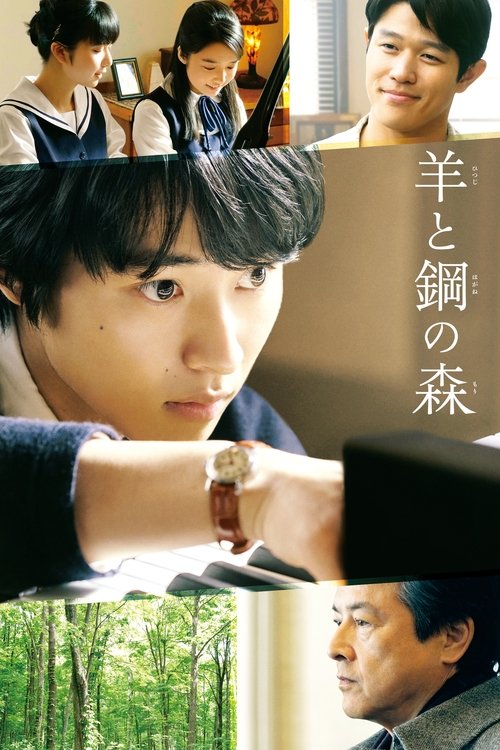
Kojiro Hashimoto’s 2018 film “The Forest of Wool and Steel” is a quiet meditation on craft, patience, and human connection set within the intimate world of piano tuning. The narrative follows Naoki Tomura, a high school student from rural Hokkaido who encounters Soichiro Itadori, a master piano tuner, and subsequently embarks on a journey to master this delicate profession. What could easily have been a mundane coming-of-age story transforms into something far more profound through Hashimoto’s sensitive direction and the presence of his collaborator, legendary composer Joe Hisaishi, whose score becomes as essential to the film as the pianos themselves.
Upon its release, “The Forest of Wool and Steel” found itself somewhat overshadowed by bigger-budget releases, yet it cultivated a devoted following among cinephiles who appreciate understated storytelling and meticulous craftsmanship. The film’s reception in European markets was particularly warm among those familiar with Joe Hisaishi’s work through Studio Ghibli collaborations, though the film offered something distinctly different from those beloved animations. The picture resonated especially with audiences who recognize the value in slow cinema and films that celebrate the beauty of specialized knowledge and human dedication. Critics praised Hashimoto’s ability to find profound meaning in technical expertise, treating piano tuning not as mere background detail but as a metaphor for life itself.
At the heart of this film lies Joe Hisaishi’s extraordinarily thoughtful score, a composition that serves as much more than accompaniment—it functions as a character in its own right. Hisaishi, renowned for his collaborations with Hayao Miyazaki and his distinctive blending of Western classical traditions with Japanese sensibility, crafted a score that mirrors the film’s central themes of precision, patience, and the hidden complexities beneath surface simplicity. The composer approached this project with the same meticulous attention that Tomura brings to piano tuning, understanding that the music needed to reflect the protagonist’s internal transformation.
Hisaishi’s compositional approach for “The Forest of Wool and Steel” emphasizes subtlety and restraint. Rather than dominating scenes with sweeping melodies, the score often employs minimalist techniques, allowing silence and space to become as meaningful as the notes themselves. This mirrors the philosophy of piano tuning itself—understanding what to remove is as important as knowing what to add. The music frequently features solo piano passages that complement the film’s visual focus on the mechanics and artistry of tuning, creating a recursive beauty where the soundtrack becomes a meditation on the very instrument that drives the narrative.
The relationship between Hisaishi’s music and Hashimoto’s visuals demonstrates masterful synchronicity. When Tomura first approaches a piano, the score swells with gentle wonder, capturing the awe of encountering genuine mastery. During sequences depicting the technical work of tuning, the music becomes more abstract and impressionistic, using sustained tones and delicate harmonic shifts that suggest the precision and care required. Hisaishi incorporates traditional Japanese instruments alongside Western classical elements, creating a tonal palette that reflects Japan’s unique position between tradition and modernity—a theme that resonates throughout the film as Tomura preserves classical craft in the contemporary world.
Ultimately, Hisaishi’s score for “The Forest of Wool and Steel” represents some of his most refined and introspective work, proving that his genius extends far beyond animation. The music elevates Hashimoto’s film into something transcendent, transforming a modest story about piano tuning into a profound exploration of human potential and the quiet joy of mastering one’s craft.