
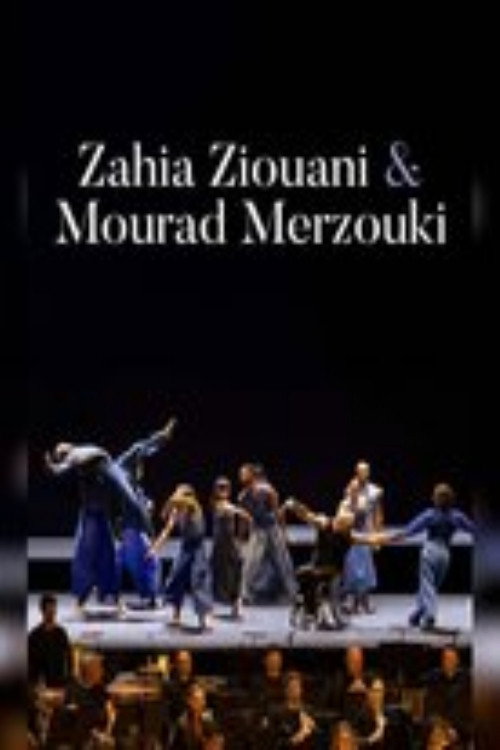
Mohamed Athamna’s 2024 documentary ‘Zahia Ziouani & Mourad Merzouki: Les Nouveaux Mondes’ presents an extraordinary fusion of artistic disciplines that celebrates the power of music and movement to unite cultures. The film follows conductor Zahia Ziouani and choreographer Mourad Merzouki as they collaborate on an ambitious humanist concert that weaves together classical music, contemporary dance, and world musical traditions into a cohesive artistic vision. This compelling narrative of creative vision and cross-cultural dialogue serves as the perfect canvas for Joe Hisaishi’s sublime compositional contribution.
The film has resonated deeply with European audiences and critics alike, earning significant recognition for its celebration of artistic innovation and cultural bridge-building. Both Ziouani and Merzouki are respected figures in European cultural circles—Ziouani for her groundbreaking work as the first woman conductor of the Orchestre Symphonique de l’Île-de-France, and Merzouki for his Angelin Preljocaj-influenced contemporary dance compositions. The documentary’s release sparked meaningful conversations about the importance of intercultural artistic expression in contemporary Europe, with viewers praising its optimistic message about art’s capacity to transcend geographical and cultural boundaries.
At the heart of this project lies Joe Hisaishi’s masterfully crafted score, which embodies the film’s philosophy of bringing worlds together. Hisaishi, the internationally renowned composer best known for his collaborations with Studio Ghibli, approaches this documentary with the same philosophical depth and emotional intelligence that characterizes his most celebrated works. His score functions not merely as accompaniment but as an active participant in the narrative, weaving between moments of intimate introspection and expansive celebration.
Hisaishi’s compositional approach demonstrates remarkable sensitivity to the film’s thematic concerns. The music reflects the meeting point between Eastern and Western musical sensibilities—a duality that has long fascinated the composer throughout his career. Rather than imposing a singular narrative voice, Hisaishi creates a flexible harmonic framework that accommodates the diverse musical traditions showcased within the documentary. His orchestrations shift seamlessly between lush romantic instrumentation, sparse contemporary minimalism, and rhythmic elements that echo world music traditions, mirroring the visual and choreographic eclecticism on screen.
The score’s relationship to the visuals demonstrates Hisaishi’s profound understanding of visual-musical synchronicity. During sequences showcasing Merzouki’s dancers, the music provides both structural foundation and expressive counterpoint, allowing movement to breathe while providing emotional context. In moments featuring orchestral performance, Hisaishi’s writing captures the transcendent joy of live musical creation with remarkable authenticity. The composer employs recurring melodic motifs that develop and evolve throughout the film, creating a sense of artistic growth and transformation that parallels the conductors’ and choreographer’s own journey.
What particularly distinguishes Hisaishi’s contribution is his commitment to genuinely humanist values that align perfectly with the film’s core message. The score never condescends to any cultural tradition; instead, it treats each musical voice with equal dignity and reverence. Hisaishi’s orchestrations honor both the precision of classical composition and the spontaneous energy of world music traditions, refusing artificial hierarchies between them.
For European audiences discovering or deepening their appreciation of Joe Hisaishi’s work, ‘Les Nouveaux Mondes’ offers an illuminating demonstration of his artistry beyond animation. This documentary score reaffirms why Hisaishi remains one of contemporary music’s most eloquent voices—a composer whose music speaks to our shared humanity and infinite creative possibilities.