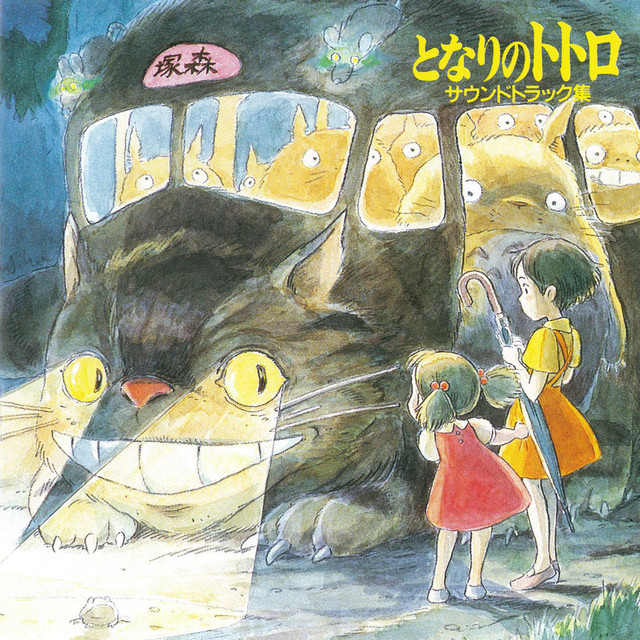
Album: となりのトトロ サウンドトラック集
In the rain-drenched forests of Studio Ghibli’s imagination, even the spirits need shelter. “Zubunure Obake” (Soaking Wet Ghost) from the My Neighbor Totoro soundtrack represents one of Joe Hisaishi’s most intriguing compositional challenges: how do you score the supernatural without overwhelming the delicate world of childhood wonder?
The track emerges from a fascinating creative dilemma that Hisaishi faced while composing for Hayao Miyazaki’s 1988 film. Unlike the director’s previous work, Totoro presented a narrative built around everyday moments rather than epic adventures. This shift demanded an entirely different musical approach, one that would complement rather than compete with the gentle storytelling.
“If I wrote ordinary orchestral music, it would just become a typical children’s film,” Hisaishi explained when discussing his compositional strategy. This concern led him to develop what he called a “dual structure” – balancing ethnic elements with traditional orchestral arrangements. “Zubunure Obake” exemplifies this philosophy perfectly, featuring a haunting melody in D minor that floats above percussion patterns inspired by Indian tabla rhythms.
What makes this track particularly special is Hisaishi’s hands-on approach to creating its ethnic textures. Rather than relying on studio musicians or samples, he personally performed the tabla parts that form the rhythmic backbone of the piece. This intimate involvement reflects his belief that authentic emotion can only emerge from genuine musical experience. The result is a composition that feels both otherworldly and deeply rooted in human expression.
The challenge of scoring Totoro’s supernatural elements without creating jarring contrasts pushed Hisaishi toward minimalist techniques. “Zubunure Obake” unfolds through subtle repetitions and gradual melodic variations, allowing listeners to sink into its mysterious atmosphere rather than being startled by dramatic shifts. The ghost theme emerges slowly, like mist forming in a forest clearing, building tension through restraint rather than bombast.
This compositional restraint stemmed from Hisaishi’s recognition that strong, dramatic music would feel disconnected from Totoro’s gentle visual world. “With powerful music, it felt like it would drift away from the screen,” he noted. Instead, “Zubunure Obake” creates an musical environment that enhances the film’s sense of wonder without overshadowing it. The track’s modal harmonies and circular melodic patterns mirror the cyclical nature of the seasons and the timeless quality of childhood imagination.
The decision to incorporate ethnic elements wasn’t merely aesthetic – it served a crucial narrative function. By blending minimalist techniques with non-Western percussion and modal scales, Hisaishi created a musical language that exists outside conventional Western orchestration. This approach prevents the soundtrack from falling into what he feared would become “the world of children’s songs” – too simple and predictable for the complex emotions the film explores.
“Zubunure Obake” also demonstrates Hisaishi’s understanding of how music functions differently in animated versus live-action films. Animation allows composers greater freedom to experiment with unconventional sounds because the visual world is already fantastical. The track’s unusual timbres and ethnic percussion don’t feel out of place when accompanying hand-drawn spirits and magical creatures.
The composition’s structure reflects Hisaishi’s broader philosophy about supporting rather than leading the narrative. Unlike his main themes “Sanpo” (Walking) and “Totoro,” which carry obvious melodic hooks, “Zubunure Obake” works more atmospherically. Its haunting minor-key melody appears and disappears like the ghosts it represents, never demanding attention but always enriching the emotional texture of scenes.
This subtlety required incredible discipline from a composer known for his memorable melodies. Hisaishi had to resist the temptation to write music that would stand alone as concert pieces, instead crafting compositions that achieve their full meaning only in context with Miyazaki’s visuals. “Zubunure Obake” succeeds because it trusts listeners to find beauty in suggestion rather than statement.
The track’s influence extends beyond its original context, demonstrating how film composers can expand their harmonic and rhythmic vocabularies by embracing non-Western musical traditions. Hisaishi’s willingness to personally perform unfamiliar instruments shows a commitment to authenticity that elevates the entire soundtrack.
Years later, “Zubunure Obake” remains compelling because it captures something essential about encountering the unknown. Like the forest spirits it represents, the music exists in the spaces between the familiar and the mysterious, creating a sonic environment where magic feels natural rather than forced. In achieving this balance, Hisaishi created not just effective film music, but a new template for how composers might approach the supernatural in cinema.
- さんぽ-オープニング主題歌-Read Review
- 五月の村Read Review
- オバケやしき!Read Review
- メイとすすわたりRead Review
- 夕暮れの風Read Review
- こわくないRead Review
- おみまいにいこうRead Review
- おかあさんRead Review
- 小さなオバケRead Review
- トトロRead Review
- 塚森の大樹Read Review
- まいごRead Review
- 風のとおり道(インストゥルメンタンル)Read Review
- ずぶぬれオバケNow Playing
- 月夜の飛行Read Review
- メイがいないRead Review
- ねこバスRead Review
- よかったねRead Review
- となりのトトロ-エンディング主題歌-Read Review
- さんぽ(合唱つき)Read Review