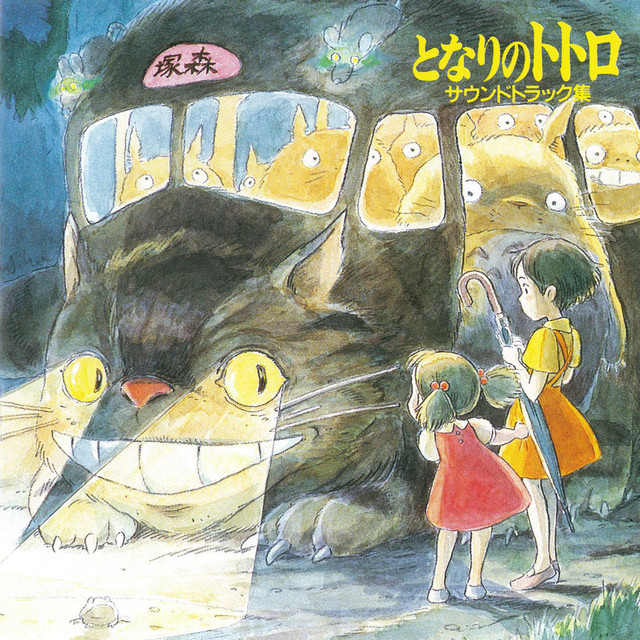
Album: となりのトトロ サウンドトラック集
Sometimes the most powerful musical moments in cinema come from what composers call their ‘hidden themes’ – those secondary melodies that weren’t meant to steal the spotlight but end up defining entire films. Joe Hisaishi’s ‘Kaze no Toorimichi’ (The Path of the Wind) from My Neighbor Totoro represents exactly this phenomenon, a piece the composer himself dubbed his ‘ura theme’ or ‘hidden theme’ that would become as emotionally significant as any main title.
Hisaishi originally created this instrumental piece not as a centerpiece, but as atmospheric support for the film’s numerous scenes featuring trees and forest landscapes. Yet something about its gentle, contemplative melody struck audiences so deeply that it evolved into what many consider the film’s second theme song. The composer later reflected on how this unexpected prominence led him to remix the original version from the image song collection for inclusion in the official soundtrack.
The creative philosophy behind ‘Kaze no Toorimichi’ reveals Hisaishi’s sophisticated approach to scoring animated films. Faced with the challenge of creating music for a story rich in daily life sequences but light on dramatic plot points, he made a crucial decision that would define the entire Totoro soundtrack. Rather than rely solely on traditional orchestral arrangements, which he felt would reduce the film to ‘an ordinary children’s movie,’ Hisaishi deliberately infused the score with ethnic elements and minimalist musical techniques.
This dual approach – what Hisaishi describes as using ‘both ethnic elements and regular orchestral pieces’ – had been his consistent method since working on Nausicaä of the Valley of the Wind. For Totoro, this meant giving the main themes like ‘Sanpo’ and the title song their prominent positions, while allowing ‘Kaze no Toorimichi’ to work its magic in the quieter, more contemplative moments.
The instrumentation of ‘Kaze no Toorimichi’ perfectly embodies this ethnic-orchestral fusion. Built around a gentle melody in D major that moves at a contemplative tempo, the piece features traditional Western strings and woodwinds layered with distinctly non-Western percussion elements. Most notably, Hisaishi himself performed the tabla – the Indian hand drums that provide the piece’s subtle rhythmic foundation. This personal touch, with the composer literally putting his hands to the ethnic instruments, demonstrates his commitment to authenticity in bridging musical cultures.
Hisaishi’s decision to personally perform the tabla parts wasn’t merely practical – it reflected his deeper understanding of how different musical traditions could serve the emotional needs of Miyazaki’s storytelling. The gentle, cyclical nature of the tabla rhythm mirrors the film’s own cyclical structure, where seasons change and children grow, but the essential magic of childhood wonder remains constant.
The composer’s approach to Totoro’s music also solved a fundamental problem he identified in scoring films heavy on daily life rather than dramatic action. Initially, he had planned to create an image album filled with songs rather than instrumental pieces, believing that vocal music would better capture the essence of routine, everyday scenes. He reasoned that instrumental music alone might struggle to convey the specific emotional textures of ordinary moments – a child walking to school, sisters playing in their yard, a family settling into a new home.
Yet ‘Kaze no Toorimichi’ proves how wrong this initial instinct could have been. As an instrumental piece, it captures something that words might have made too specific: the universal feeling of wind moving through leaves, of quiet moments in nature that feel both peaceful and mysteriously alive. The absence of lyrics allows listeners to project their own memories and emotions onto the music.
The piece’s role in accompanying the film’s tree and forest scenes wasn’t accidental. Hisaishi understood that Miyazaki’s environmental themes required music that could suggest both the ancient wisdom of nature and its immediate, sensory presence. The ethnic percussion elements evoke something primal and timeless, while the orchestral arrangement provides the emotional warmth that makes these natural scenes feel welcoming rather than alien.
What makes ‘Kaze no Toorimichi’ so effective is how it embodies Hisaishi’s broader philosophy about film music: that the most memorable themes often emerge not from deliberate attempts at creating ‘big moments,’ but from careful attention to the smaller, more intimate scenes that actually define our emotional connection to characters and stories.
Today, decades after Totoro’s release, ‘Kaze no Toorimichi’ stands as proof that hidden themes can become the most beloved. It reminds us that in both music and life, sometimes the most profound beauty comes not from what demands our attention, but from what quietly earns it.
- さんぽ-オープニング主題歌-Read Review
- 五月の村Read Review
- オバケやしき!Read Review
- メイとすすわたりRead Review
- 夕暮れの風Read Review
- こわくないRead Review
- おみまいにいこうRead Review
- おかあさんRead Review
- 小さなオバケRead Review
- トトロRead Review
- 塚森の大樹Read Review
- まいごRead Review
- 風のとおり道(インストゥルメンタンル)Now Playing
- ずぶぬれオバケRead Review
- 月夜の飛行Read Review
- メイがいないRead Review
- ねこバスRead Review
- よかったねRead Review
- となりのトトロ-エンディング主題歌-Read Review
- さんぽ(合唱つき)Read Review