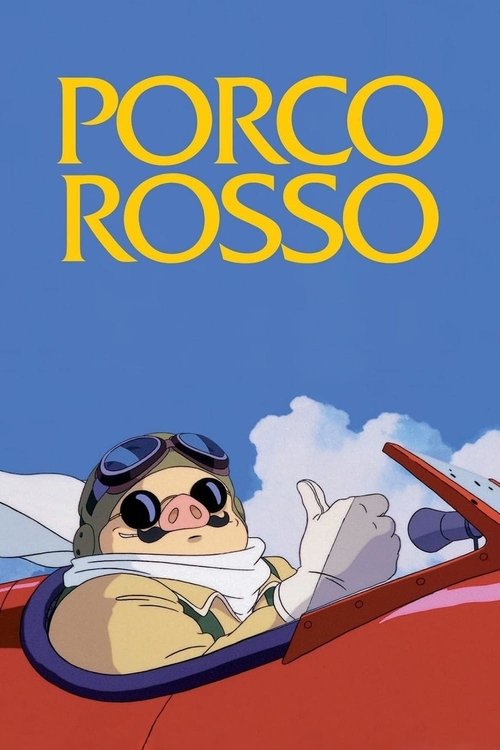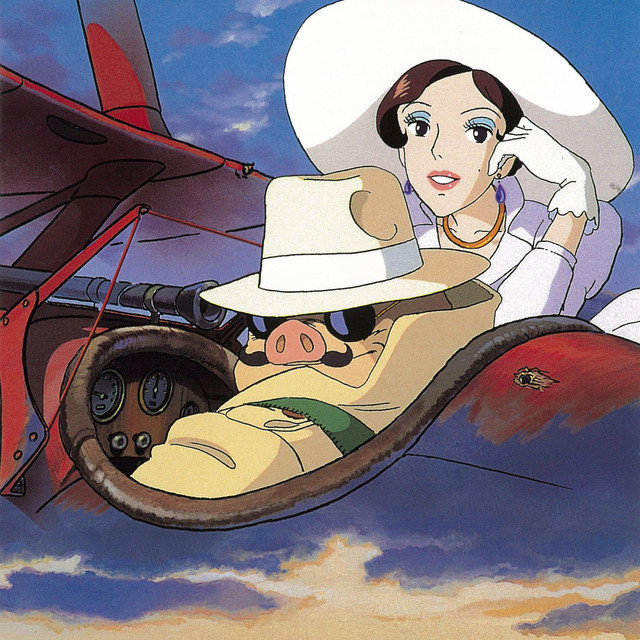
Album: 紅の豚 サウンドトラック
Sometimes the universe aligns in the most unexpected ways. In 1992, Joe Hisaishi was deep into composing his solo album ‘My Lost City’, a jazz-infused exploration of 1920s America inspired by F. Scott Fitzgerald’s literary world. Meanwhile, across the studio, Hayao Miyazaki was developing ‘Porco Rosso’, setting his latest animated adventure in the very same decade. When their paths crossed, it felt nothing short of fateful.
‘Love at First Sight in the Wasteland’ (Kouya no Hitomebore) emerges from this serendipitous collision of artistic visions. The track serves as more than background music—it’s a window into how two creators discovered they were inhabiting the same imaginative space, breathing life into the Jazz Age through different mediums.
The song first appears in the film as diegetic music, played on a saloon piano in the smoky atmosphere of an Adriatic bar. This choice wasn’t accidental. The 1920s represented the height of the Jazz Age, when piano jazz dominated nightclub culture across Europe and America. Hisaishi’s decision to express the romantic tension between Marco and Gina through jazz piano felt both historically authentic and emotionally resonant.
Musically, the piece unfolds in a relaxed swing tempo, built around a simple but effective chord progression in B-flat major. The melody carries that characteristic jazz sensuality—playful yet yearning, sophisticated yet accessible. Hisaishi employs subtle blue notes and syncopated rhythms that capture the era’s musical language while maintaining his own compositional voice. The piano arrangement deliberately evokes the intimate scale of period saloon performances, where a single musician could fill a room with romance and melancholy.
What makes this track particularly fascinating is its genesis in creative synchronicity. When Hisaishi presented his completed ‘My Lost City’ album to Miyazaki, the director’s response was immediate: ‘I want all of those songs, all of them for Porco Rosso.’ This wasn’t mere enthusiasm—it was recognition that both artists had been channeling the same zeitgeist.
The collaboration revealed something profound about how artists connect across disciplines. Miyazaki had provided Hisaishi with six poems as creative inspiration: ‘Flying Boat Pilot’s Tango’, ‘Ascent’, ‘Twilight Adriatic Sea’, ‘Night Flight’, ‘Secret Garden’, and ‘Merry-Go-Round’. These verses served as emotional blueprints, helping translate cinematic imagery into musical narrative. ‘Love at First Sight in the Wasteland’ embodies this translation process, capturing the romantic longing inherent in Miyazaki’s poetic vision.
The track demonstrates how Hisaishi approached period authenticity. Rather than creating a museum piece, he absorbed jazz’s essential spirit—its freedom, its emotional directness, its ability to suggest rather than state. The melody line moves with the casual confidence of a seasoned performer, while the harmonic progressions nod to standards without copying them outright.
This approach reflects a deeper philosophy in Hisaishi’s work: historical consciousness paired with contemporary relevance. The music needed to serve 1990s audiences while honoring 1920s aesthetics. ‘Love at First Sight in the Wasteland’ achieves this balance through its understated sophistication, avoiding both pastiche and anachronism.
The song’s role within the broader ‘Porco Rosso’ soundtrack highlights two elements that distinguished this score from Hisaishi’s previous Studio Ghibli work: jazz as a musical language and the integration of his solo album material. These innovations prevented the film from becoming merely an aviation adventure, adding layers of romantic complexity and historical texture.
Listening to ‘Love at First Sight in the Wasteland’ today, one hears more than period recreation. The track captures that moment when two creative minds discovered they were exploring the same emotional territory through different artistic paths. It’s music born from artistic destiny—the kind of happy accident that feels inevitable only in retrospect.
The song remains a perfect encapsulation of Hisaishi’s ability to find universal emotions within specific historical moments. In its gentle swing and romantic melody, ‘Love at First Sight in the Wasteland’ doesn’t just evoke the 1920s—it reveals how love, longing, and loss transcend any single era, speaking as clearly to contemporary listeners as they did to those original Jazz Age dreamers.
- 時代の風-人が人でいられた時-Read Review
- MAMMAIUTORead Review
- Addio!Read Review
- 帰らざる日々Read Review
- セピア色の写真Read Review
- セリビア行進曲Read Review
- Flying boatmenRead Review
- Doom-雲の罠-Read Review
- Porco e BellaRead Review
- Fio-SeventeenRead Review
- ピッコロの女たちRead Review
- FriendRead Review
- Partner shipRead Review
- アドリアの海へRead Review
- 遠き時代を求めてRead Review
- 荒野の一目惚れNow Playing
- 夏の終わりにRead Review
- 失われた魂-LOST SPIRIT-Read Review
- Dog fightRead Review
- Porco e Bella-Ending-Read Review