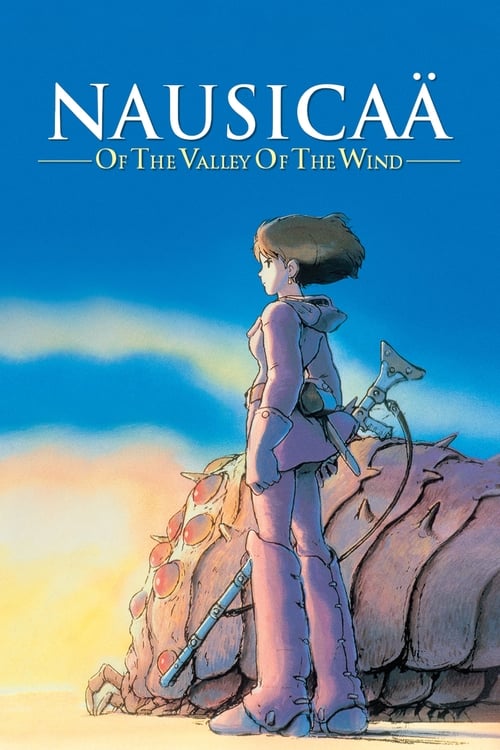
Album: 風の谷のナウシカ イメージアルバム 鳥の人…
When Joe Hisaishi sat down to compose “Kaze no Densetsu” (Legend of the Wind), the main theme for Nausicaä of the Valley of the Wind, he had nothing but fifteen cryptic keywords scribbled on paper by director Hayao Miyazaki. Words like “Sea of Decay” and “Mehve” – abstract concepts that would challenge any composer. Yet within thirty minutes, one of anime’s most beloved themes was born.
This remarkable speed wasn’t born from carelessness, but from Hisaishi’s unconventional creative process. Unlike composers who labor over melodies in isolation, Hisaishi thrived on spontaneity. He would write music on the eve of studio sessions or between recording takes, channeling immediate inspiration rather than prolonged deliberation. “I’ve never struggled with composition,” he once remarked, a statement that might sound arrogant from anyone else but rings true when you hear the effortless flow of “Kaze no Densetsu.”
The theme itself reflects Hisaishi’s deep understanding of musical memory. He deliberately crafted the melody to evoke Irish and Scottish folk songs, those “simple, somehow nostalgic” tunes that Japanese audiences unconsciously recognize through childhood exposure to Ministry of Education songs. The result is a melody in D major that feels both exotic and familiar, its pentatonic qualities echoing ancient Celtic modes while remaining distinctly Japanese in its emotional restraint.
What makes “Kaze no Densetsu” particularly fascinating is how it embodies Hisaishi’s revolutionary approach to film scoring. Rather than following Hollywood’s tradition of underlining emotions, Hisaishi chose to score situations. As he explained, the music enters through Nausicaä’s eyes, not her heart – it reflects what she sees and experiences, not what she feels about it. This philosophical shift transforms the listening experience entirely. When the theme swells during aerial sequences, we’re not hearing Nausicaä’s joy at flying; we’re experiencing the wind itself, the vastness of the toxic jungle, the mechanical poetry of her glider cutting through poisoned air.
The creation of “Kaze no Densetsu” also marked the beginning of one of animation’s most important creative partnerships. Initially, Hisaishi was only hired for the image album – a collection of atmospheric pieces designed to inspire the animators. But Miyazaki found himself so captivated by these compositions that he insisted Hisaishi score the actual film. Producer Isao Takahata agreed, noting that they needed “someone with classical training” to handle their unusually specific musical demands.
Those demands were indeed unusual. Hisaishi discovered that both Miyazaki and Takahata possessed “abnormally good ears” and an appetite for detail that bordered on obsessive. Their musical discussions stretched beyond ten hours per session, with Takahata capable of detecting subtle influences – once noting that the latter half of the “Sea of Decay” theme carried hints of Debussy. For Hisaishi, accustomed to more straightforward directorial relationships, this microscopic attention to musical detail was “unlike anything I’d experienced before.”
This exhaustive collaborative process paid dividends in “Kaze no Densetsu,” where every instrumental choice serves the narrative. The theme opens with solo flute – ancient, breathy, organic – before strings enter to suggest both the wind’s power and humanity’s fragile place within it. When the full orchestra arrives, it doesn’t overwhelm but rather creates space, echoing the vast landscapes that define Nausicaä’s world.
The song’s structure mirrors the film’s themes of balance and coexistence. Its A-B-A form provides stability while allowing for exploration, much like Nausicaä herself – rooted in tradition yet open to discovery. The melody’s intervals are carefully chosen to avoid Western dramatic clichés, instead drawing from modal traditions that suggest timelessness rather than urgency.
Listening to “Kaze no Densetsu” today, decades after its creation, what strikes you isn’t its technical sophistication but its emotional honesty. Hisaishi’s thirty-minute composition session captured something essential about human resilience in the face of environmental catastrophe – a theme that feels more relevant now than ever. The music doesn’t promise easy answers or heroic victories. Instead, it offers something more valuable: the suggestion that beauty and hope can coexist with uncertainty and loss.
Perhaps that’s the real magic of “Kaze no Densetsu” – its ability to transform fifteen abstract keywords into a musical statement about our relationship with the natural world. In just thirty minutes, Joe Hisaishi created more than a film theme; he composed a meditation on survival, wonder, and the winds of change that shape our world.
- 風の伝説Now Playing
- はるかな地へ…(~ナウシカのテーマ~)Read Review
- メーヴェRead Review
- 巨神兵~トルメキア軍~クシャナ殿下Read Review
- 腐海Read Review
- 王蟲Read Review
- 土鬼軍の逆襲Read Review
- 戦闘Read Review
- 谷への道Read Review
- 遠い日々(~ナウシカのテーマ~)Read Review
- 鳥の人(~ナウシカのテーマ~)Read Review