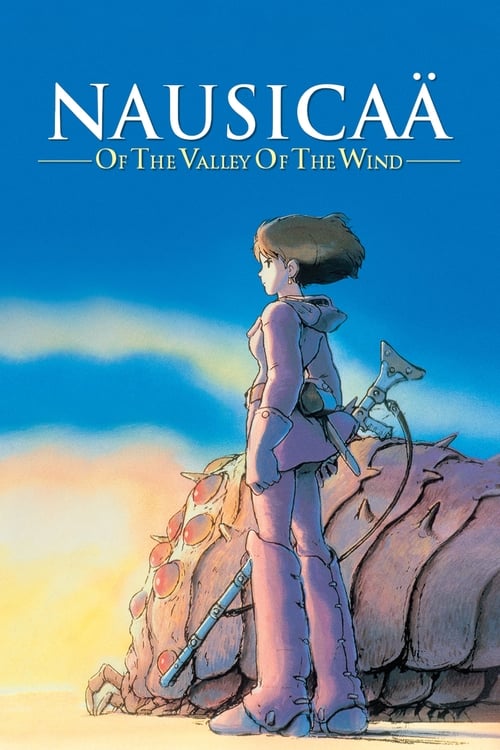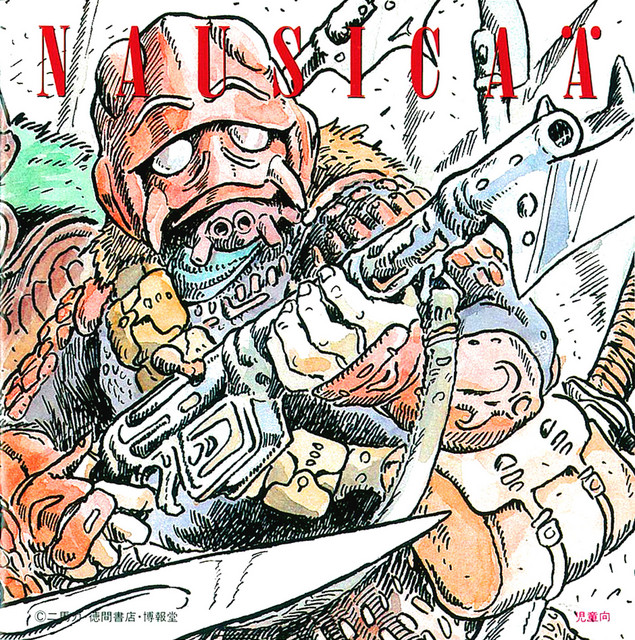
Album: 風の谷のナウシカ イメージアルバム 鳥の人…
What if film music didn’t chase emotions, but instead painted the world through a character’s eyes? This radical question lies at the heart of Joe Hisaishi’s groundbreaking work on Nausicaä of the Valley of the Wind, where pieces like ‘Giant Warriors – Tolmekian Army – Princess Kushana’ from the Image Album ‘Bird People’ demonstrate a completely different philosophy of film scoring.
The story of how Hisaishi came to define Studio Ghibli’s sonic identity began with a misunderstanding. Initially hired only for the image album – a collection of music to inspire animators during production – Hisaishi never expected his work to reach the final film. But Hayao Miyazaki had other plans. As he listened to Hisaishi’s compositions while drawing, the music became inseparable from his vision of Nausicaä’s world.
Hisaishi’s approach to ‘Giant Warriors – Tolmekian Army – Princess Kushana’ exemplifies his revolutionary scoring philosophy. Rather than underscoring the characters’ emotions during battle scenes, the music captures what Nausicaä herself perceives – the mechanical precision of the Tolmekian military machine, the imposing presence of their weapons, the cold authority of Princess Kushana. The composition unfolds in measured, martial rhythms that mirror not fear or excitement, but the calculated movements of an advancing army as seen through an observer’s eyes.
This situational rather than emotional approach emerged from marathon creative sessions that pushed both composer and directors to their limits. Miyazaki and his colleague Isao Takahata proved to have what Hisaishi called ‘abnormally good ears.’ Their musical discussions stretched beyond ten hours regularly, diving into minutiae that left the composer stunned. When Takahata casually mentioned that the latter half of ‘The Toxic Forest’ melody carried Debussy-like qualities, Hisaishi realized he was working with directors who understood music at a level few filmmakers ever achieve.
These intense collaborations shaped how pieces like ‘Giant Warriors – Tolmekian Army – Princess Kushana’ function within the broader narrative. The track operates in B minor, its steady 4/4 time signature creating an inexorable forward momentum that mirrors military precision. Brass sections dominate the arrangement, but they’re deployed not for heroic fanfare but as mechanical expressions of power – cold, efficient, threatening. This reflects Hisaishi’s commitment to scoring the situation rather than the drama.
The composer’s background made these demanding sessions possible. Takahata specifically chose Hisaishi partly because ‘you need someone with classical training to handle complex musical directions.’ This classical foundation allowed Hisaishi to understand when the directors requested specific textural changes or referenced particular compositional techniques. His first impression of Miyazaki – a man with ‘simple, handmade humanity’ – masked the director’s sophisticated musical instincts.
Hisaishi’s Celtic influences, drawn from Irish and Scottish folk traditions, might seem absent from a militaristic piece like ‘Giant Warriors – Tolmekian Army – Princess Kushana,’ but they inform his overall approach to melody and emotional accessibility. Even in depicting the Tolmekian war machine, Hisaishi maintains melodic lines that feel familiar to Japanese audiences raised on Western-influenced school songs. This creates an unsettling contrast – familiar musical language describing unfamiliar mechanized warfare.
The image album format gave Hisaishi unusual creative freedom. Without needing to match specific scene timings, ‘Giant Warriors – Tolmekian Army – Princess Kushana’ could develop its themes at natural musical pace rather than being cut to fit action sequences. The piece builds gradually, introducing motifs that would later appear throughout the film score, establishing musical DNA that would define not just Nausicaä but the entire Ghibli sound.
This philosophy of situational scoring – music that describes what characters perceive rather than what they feel – would become Hisaishi’s signature across decades of Ghibli collaborations. In ‘Giant Warriors – Tolmekian Army – Princess Kushana,’ we hear early evidence of this approach: music that functions as environmental storytelling rather than emotional manipulation.
The piece stands as evidence that film music can serve narrative in ways beyond traditional emotional cueing. By focusing on Nausicaä’s perceptions rather than her feelings, Hisaishi created a more immersive musical world – one where audiences experience discovery alongside the protagonist rather than being told how to feel about what they’re seeing.
This revolutionary approach, born from those exhausting creative sessions and refined through Hisaishi’s classical training and folk sensibilities, transformed not just how we hear Ghibli films, but how we think about the relationship between music and visual storytelling entirely.
- 風の伝説Read Review
- はるかな地へ…(~ナウシカのテーマ~)Read Review
- メーヴェRead Review
- 巨神兵~トルメキア軍~クシャナ殿下Now Playing
- 腐海Read Review
- 王蟲Read Review
- 土鬼軍の逆襲Read Review
- 戦闘Read Review
- 谷への道Read Review
- 遠い日々(~ナウシカのテーマ~)Read Review
- 鳥の人(~ナウシカのテーマ~)Read Review