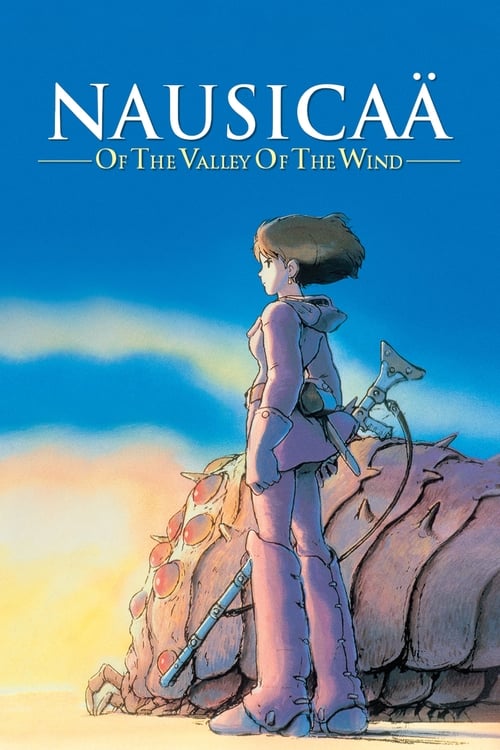
Album: 風の谷のナウシカ イメージアルバム 鳥の人…
When Joe Hisaishi composed “Path to the Valley” (Tani e no Michi) for the Nausicaä of the Valley of the Wind image album “Bird Person,” he was unknowingly setting the foundation for one of cinema’s most revolutionary approaches to film music. This seemingly gentle composition, with its Celtic-inspired melodies and pastoral atmosphere, would become the blueprint for a musical philosophy that challenged every convention of movie scoring.
The story begins with an unusual arrangement. Originally, Hisaishi was hired only to create the image album—a collection of songs meant to inspire Hayao Miyazaki during the film’s production phase. “Path to the Valley” emerged from this creative space, embodying the windswept landscapes and ecological themes that would define Nausicaä’s world. Built around a simple, folk-inspired melody in a major key with gentle 4/4 timing, the piece features acoustic guitar, strings, and woodwinds that seem to breathe with the natural world itself.
What makes this composition extraordinary isn’t just its beauty, but what it represents: Hisaishi’s radical departure from conventional film scoring. As he later explained, his approach differed fundamentally from typical movie music. Instead of underlining emotional peaks and valleys, he chose to score situations—the environments, the landscapes, the very air that Nausicaä breathes. “Path to the Valley” exemplifies this philosophy perfectly, painting not the heroine’s feelings but the world she inhabits.
This situational approach to scoring was born from Hisaishi’s deep collaboration with both Miyazaki and producer Isao Takahata. Their working relationship was unlike anything the composer had experienced. These weren’t casual creative meetings—they were musical marathons lasting over ten hours each session. Takahata’s ear was so refined that he could identify subtle Debussy influences in the latter half of compositions. For Hisaishi, accustomed to working with directors who left musical decisions to professionals, this level of detailed discussion was initially overwhelming.
Yet from this intensity came innovation. “Path to the Valley” and its companion pieces on the image album showcased Hisaishi’s conscious decision to root Nausicaä’s musical world in Celtic folk traditions. He deliberately drew inspiration from Irish and Scottish melodies, seeking what he called “simple, somehow nostalgic feelings.” This wasn’t cultural appropriation but rather a recognition of something deeper—the way these folk melodies had already embedded themselves in Japanese consciousness through educational songs and cultural exchange.
The genius of this choice becomes clear when listening to “Path to the Valley.” Its melody feels both foreign and familiar, ancient yet fresh. The composition taps into a musical language that transcends cultural boundaries while remaining deeply rooted in tradition. This approach would become Hisaishi’s signature, influencing everything from Princess Mononoke to Spirited Away.
Miyazaki was so moved by the image album that he insisted Hisaishi score the actual film. This decision proved pivotal not just for their careers but for film music itself. Takahata’s reasoning was pragmatic yet profound: they needed someone with classical training who could understand and execute complex musical instructions. But what they discovered was something more valuable—a composer who could see through their characters’ eyes.
This visual approach to composition is evident throughout “Path to the Valley.” Rather than manipulating listeners’ emotions directly, the music creates space for audiences to experience the world alongside Nausicaä. The gentle acoustic textures don’t tell us how to feel about the toxic jungle or the warring kingdoms; instead, they transport us into a landscape where such wonders and horrors can coexist.
Hisaishi’s first impression of Miyazaki was of someone possessing “simple, handmade humanity”—a quality that permeates “Path to the Valley” and the entire Nausicaä score. There’s nothing artificial or manipulative about these compositions. They grow organically from their narrative soil, much like the plants in Nausicaä’s garden.
Decades later, “Path to the Valley” remains a perfect introduction to Hisaishi’s revolutionary approach to film music. It demonstrates how scoring situations rather than emotions can create deeper, more lasting connections with audiences. By looking through Nausicaä’s eyes rather than simply soundtracking her journey, Hisaishi discovered a new language for cinematic storytelling—one where music becomes environment, emotion becomes atmosphere, and the boundary between score and story dissolves completely.
This small piece from an image album thus represents something much larger: the birth of a musical philosophy that would reshape how we think about the relationship between sound and vision in cinema.
- 風の伝説Read Review
- はるかな地へ…(~ナウシカのテーマ~)Read Review
- メーヴェRead Review
- 巨神兵~トルメキア軍~クシャナ殿下Read Review
- 腐海Read Review
- 王蟲Read Review
- 土鬼軍の逆襲Read Review
- 戦闘Read Review
- 谷への道Now Playing
- 遠い日々(~ナウシカのテーマ~)Read Review
- 鳥の人(~ナウシカのテーマ~)Read Review