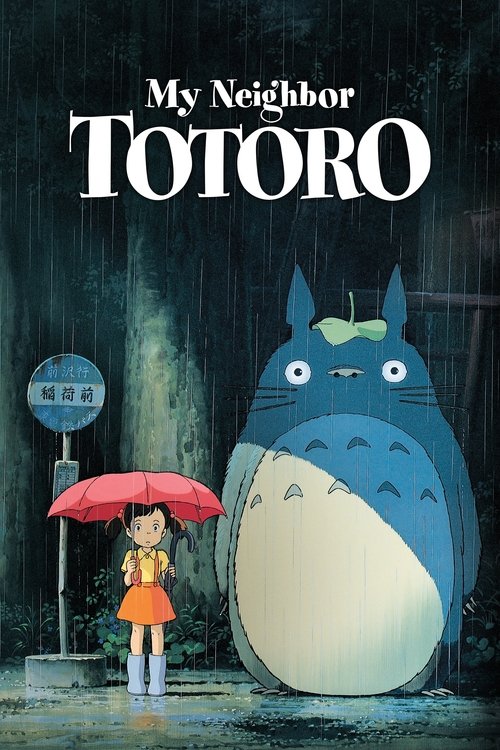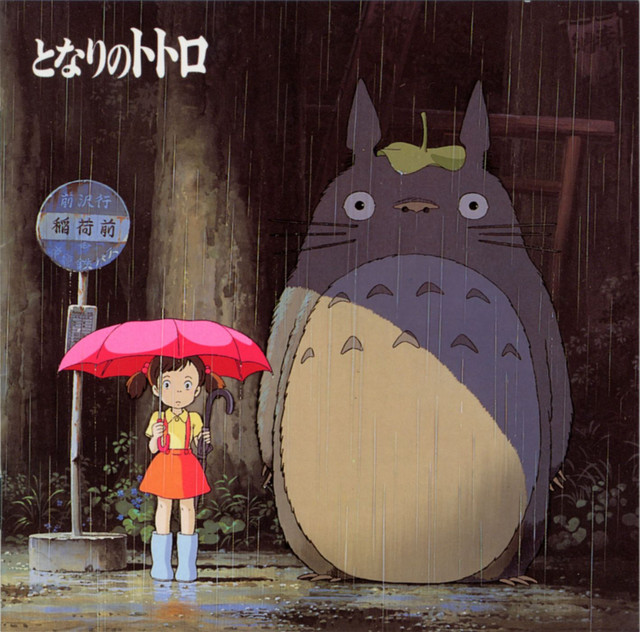
Album: となりのトトロ イメージ・ソング集
When Studio Ghibli’s ‘My Neighbor Totoro’ premiered in 1988, audiences experienced a musical landscape that felt both intimate and expansive, perfectly capturing the wonder of childhood discovery. What many don’t realize is that this sonic foundation existed before a single frame was animated, emerging from one of the most unconventional approaches in film music history.
The genesis of ‘Kaze no Toorimichi’ (Path of the Wind) and the entire Totoro musical universe began with an ambitious experiment: creating a complete vocal album before the soundtrack itself. When director Hayao Miyazaki expressed his desire to emphasize songs in the film, composer Joe Hisaishi proposed something unprecedented – ‘Let’s create an image album of all vocal songs.’ This wasn’t just unusual; it was revolutionary in Japanese animation.
Hisaishi’s reasoning revealed a deep understanding of storytelling through music. ‘Since there were many everyday sequences, I thought songs would create clearer images of those scenes than instrumental pieces,’ he explained. The challenge was substantial – Totoro’s narrative deliberately avoided dramatic peaks in favor of quiet, observational moments. This structural choice, while artistically bold, created what Hisaishi called his greatest concern: ‘The story was weak in places, so I struggled most with how to reinforce and support it.’
‘Kaze no Toorimichi’ exemplifies this philosophy perfectly. Set in a gentle 4/4 time signature with a pastoral quality reminiscent of folk melodies, the song creates emotional depth through simplicity rather than complexity. Its flowing melodic lines mirror the countryside winds that play such a vital role in the film, establishing an organic connection between the natural world and the characters’ inner lives.
The collaboration extended beyond Hisaishi’s usual partnerships. Miyazaki, deeply moved by reading ‘Iya Iya En’ by children’s author Nakazawa Rieko, insisted on bringing her aboard as lyricist. This wasn’t a casual choice – Miyazaki described the book as a ‘scales falling from my eyes’ experience that transformed his perspective on children’s literature. Nakazawa crafted ten poems specifically for the project, which were eventually refined into six complete songs through intensive discussions between the creative team.
The creative process revealed fascinating insights into artistic decision-making. When Hisaishi recorded rough vocal demos for review, Miyazaki was struck by the quality of the composer’s voice and encouraged him to perform one track himself. This spontaneous moment led to Hisaishi’s vocal performance on ‘Chiisa na Shashin’ (A Small Photograph), demonstrating how collaborative environments can yield unexpected artistic gifts.
Perhaps most remarkably, Hisaishi was simultaneously working on completely opposing musical territory. While crafting Totoro’s innocent pastoral world, he was also composing for ‘Gakugeki ANZUCHI,’ a dark theatrical production starring Sawada Kenji and Yakusho Koji. ‘On one hand, there was this frightening demonic world, and on the other, this pure innocent world. Working on both simultaneously nearly drove me crazy,’ Hisaishi later reflected.
This creative juggling act illuminates something profound about artistic process – how contrasts can actually sharpen focus. The darkness of ANZUCHI may have made Totoro’s light feel even more precious, while the film’s gentleness provided refuge from theatrical intensity. ‘Kaze no Toorimichi’ emerged from this creative tension, carrying both the peace of rural landscapes and the emotional complexity of an artist navigating vastly different artistic territories.
The song’s arrangement reflects this layered approach. Beginning with simple acoustic elements – guitar, light percussion, and winds – it gradually incorporates orchestral colors that suggest both intimacy and grandeur. This mirrors the film’s ability to find universal themes within specific, local experiences.
What makes this approach so significant is how it reversed traditional film scoring methodology. Instead of responding to completed visuals, Hisaishi was creating musical blueprints that would guide the animation process. ‘Kaze no Toorimichi’ and its companion pieces became reference points for pacing, emotional tone, and atmospheric detail throughout production.
The success of this experiment extends far beyond Totoro itself. By prioritizing songs over instrumental scoring in the early stages, Hisaishi established a template for how music could serve as narrative foundation rather than mere accompaniment. The image album became a songbook first, a soundtrack second – a distinction that fundamentally altered how audiences would experience Studio Ghibli’s musical landscapes.
Today, ‘Kaze no Toorimichi’ stands as evidence of what becomes possible when composers are invited into the storytelling process from the very beginning. It’s not just a beautiful song; it’s proof that sometimes the most innovative approaches emerge from the simplest questions: What if the music came first? What if songs could build worlds before cameras started rolling? In Hisaishi’s hands, these questions became doorways to entirely new creative possibilities.
- となりのトトロRead Review
- 風のとおり道Now Playing
- さんぽRead Review
- まいごRead Review
- すすわたりRead Review
- ねこバスRead Review
- ふしぎしりとりうたRead Review
- おかあさんRead Review
- 小さな写真Read Review
- ドンドコまつりRead Review
- 風のとおり道(インストゥルメンタル)Read Review