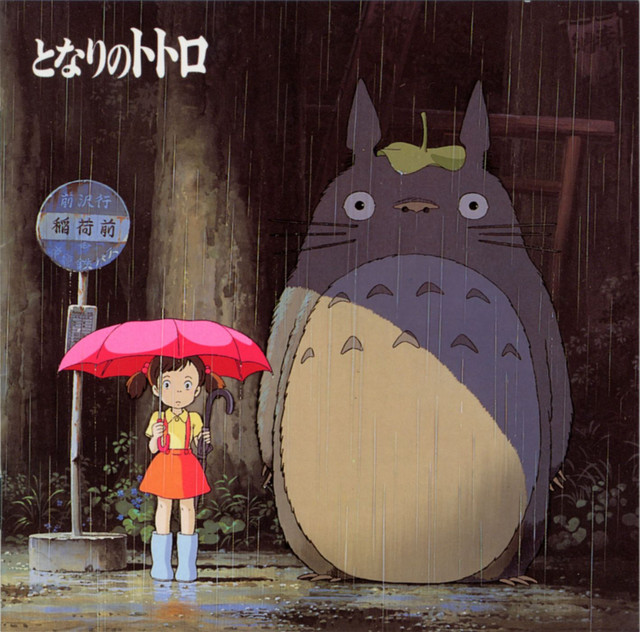
Album: となりのトトロ イメージ・ソング集
What happens when a film composer abandons traditional scoring methods and creates an entire album of songs before a single frame is animated? Joe Hisaishi’s work on ‘My Neighbor Totoro’ provides a fascinating answer, revealing a creative process that turned conventional soundtrack production on its head.
In 1987, when Hayao Miyazaki approached Hisaishi about the music for his upcoming forest fantasy, the director made an unusual request: he wanted to emphasize songs. Most composers would have nodded politely and begun sketching instrumental themes. Instead, Hisaishi proposed something unprecedented – creating a complete vocal album before touching the film score.
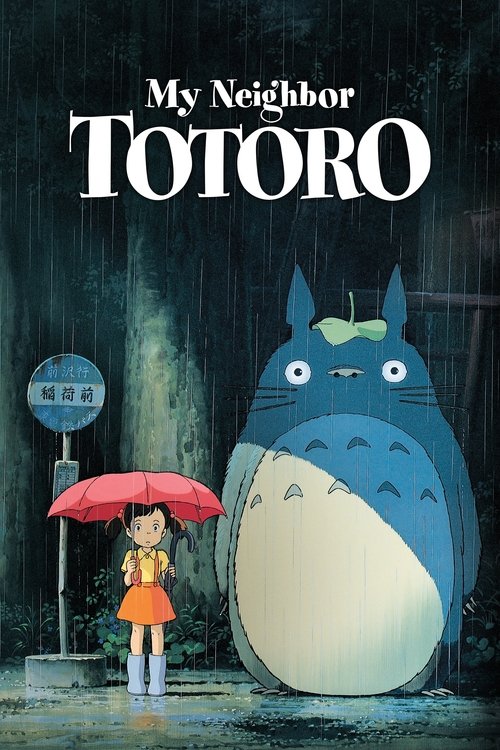
‘Let’s make an image album of all vocal songs,’ Hisaishi suggested, launching what would become one of the most innovative soundtrack projects in Japanese cinema. The resulting ‘My Neighbor Totoro Image Song Collection’ featured ten original vocal pieces, including the enchanting title track that would later become synonymous with childhood wonder worldwide.
The collaborative spirit extended beyond the composer-director relationship. Miyazaki, deeply moved by reading Rieko Nakagawa’s children’s book ‘Iyaiya-en,’ insisted that she write the lyrics. Nakagawa crafted ten poems, which through extensive discussions were refined into six songs that captured the essence of childhood magic and natural beauty.
Hisaishi’s creative process during this period bordered on the schizophrenic. While crafting the innocent, pastoral world of Totoro, he simultaneously composed music for ‘Gakugeki ANZUCHI,’ a dark theatrical production featuring demonic themes. ‘On one hand, there was this frightening world of demons, and on the other, this pure world – working on both simultaneously nearly drove me crazy,’ Hisaishi later reflected.
This creative tension perhaps enriched the Totoro material, as the title song demonstrates. Written in a gentle 4/4 time signature, the melody floats effortlessly between major and minor tonalities, creating that distinctive Hisaishi quality of joy tinged with melancholy. The arrangement features a prominent piano line supported by strings and woodwinds, with Hisaishi’s characteristic use of suspended chords creating moments of harmonic uncertainty that resolve into warm consonance.
The recording process itself revealed Miyazaki’s growing confidence as a creative leader. For the first time in his career, the director took charge of music meetings, a responsibility he had previously left to producer Isao Takahata. ‘Takahata is being sneaky,’ Miyazaki joked as he guided discussions about orchestral arrangements and instrumental balance.
Fate intervened during the recording sessions when Hisaishi fell ill, affecting the planned instrumentation. Originally conceived with more synthesizer elements, the final mix shifted to favor acoustic instruments – roughly 60 percent orchestra to 40 percent synthesizer. This unplanned change created a warmer, more organic sound that perfectly complemented the film’s themes of nature and childhood innocence.
Perhaps the most charming anecdote involves Hisaishi’s unexpected vocal performance on ‘Small Photograph.’ When reviewing demo recordings, Miyazaki was struck by the composer’s singing voice on the work tapes. His enthusiastic encouragement led to Hisaishi’s rare vocal appearance on the album, adding another layer of personal investment to the project.
The title track ‘My Neighbor Totoro’ exemplifies how this unconventional approach succeeded. Rather than being written to match specific scenes, the song was created as a standalone piece that captured the emotional essence of Miyazaki’s vision. Its simple, memorable melody and warm harmonic progression made it instantly accessible to children while maintaining the sophisticated musical architecture that appeals to adult listeners.
This songs-first methodology challenged traditional film music conventions but proved remarkably effective. By establishing the musical language through complete songs rather than fragmentary themes, Hisaishi created a more cohesive and emotionally direct connection with audiences. The vocal arrangements provided clear melodic and harmonic frameworks that could be adapted and developed throughout the subsequent instrumental score.
The success of this approach extended far beyond the original film. The title song has become a cultural phenomenon, performed by countless artists and serving as an introduction to Japanese cinema for international audiences. Its enduring popularity demonstrates how Hisaishi’s willingness to experiment with unconventional creative processes yielded extraordinary results.
Looking back, Hisaishi’s work on ‘My Neighbor Totoro’ represents more than innovative film scoring – it embodies a philosophy of musical storytelling that prioritizes emotional truth over technical convention. By starting with songs rather than instrumental sketches, he created music that speaks directly to the heart, proving that sometimes the most radical approach is simply to let the music sing first and worry about the rest later.
- となりのトトロNow Playing
- 風のとおり道Read Review
- さんぽRead Review
- まいごRead Review
- すすわたりRead Review
- ねこバスRead Review
- ふしぎしりとりうたRead Review
- おかあさんRead Review
- 小さな写真Read Review
- ドンドコまつりRead Review
- 風のとおり道(インストゥルメンタル)Read Review