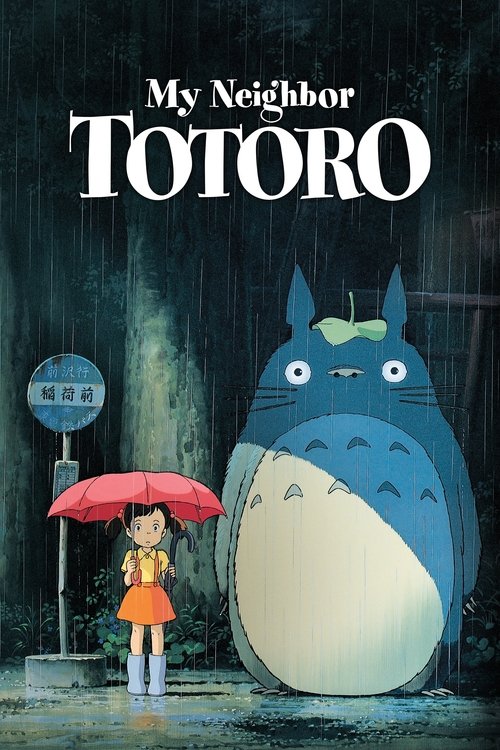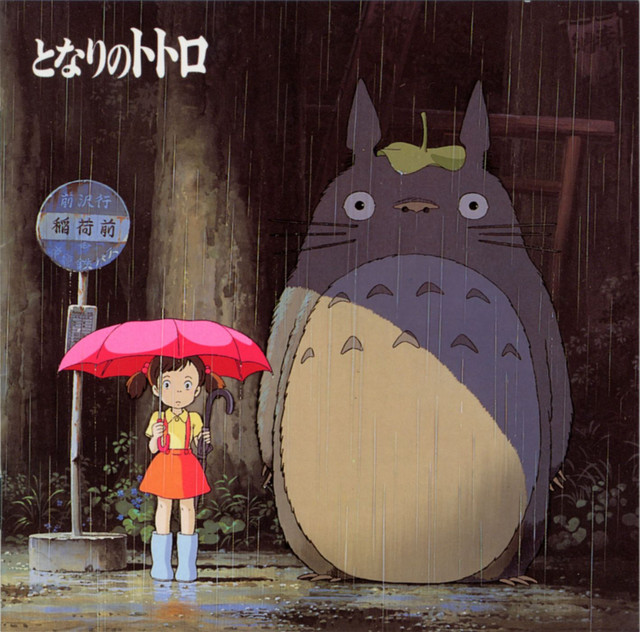
Album: となりのトトロ イメージ・ソング集
What happens when one of Japan’s most celebrated film composers abandons his orchestral comfort zone to create an entire album of songs? The answer lies in a groundbreaking 1987 project that would forever change how animated films approach musical storytelling.
Joe Hisaishi’s “My Neighbor Totoro Image Song Collection” emerged from an unusual creative challenge. When director Hayao Miyazaki expressed his desire to emphasize songs in the upcoming Totoro film, Hisaishi responded with an unprecedented proposal: “Let’s create an image album consisting entirely of vocal songs.” This bold decision led to the creation of ten original compositions, including the delightfully spirited “Don Doko Festival” (ドンドコまつり), before any traditional soundtrack work began.
The choice to prioritize vocals over instrumental pieces wasn’t arbitrary. Hisaishi recognized that Totoro’s narrative structure presented unique challenges. Unlike action-heavy animated films, Totoro consists largely of everyday moments – children playing, families moving house, quiet countryside scenes. “Daily sequences are numerous,” Hisaishi explained, “so I thought songs would create clearer images of those scenes than instrumental pieces would.” This philosophy transforms “Don Doko Festival” from mere background music into a storytelling device that captures the innocent exuberance of childhood celebration.
The festival song itself embodies this approach perfectly. Set in a major key with a bouncing 4/4 rhythm that mimics children’s excited dancing, the track features traditional Japanese percussion elements alongside Western orchestration. The “don doko” onomatopoeia in the title refers to the sound of taiko drums, creating an immediate connection between the musical arrangement and the festival atmosphere it depicts. This sonic painting technique allows listeners to visualize the scene without seeing a single frame of animation.
Behind this musical innovation stood an unlikely collaboration. Miyazaki, deeply influenced by children’s author Nakazawa Rieko after reading her book “The Reluctant Dragon,” insisted on bringing her aboard as lyricist. Nakazawa crafted ten poems specifically for the project, though only six ultimately made it into the final collection after extensive discussions. This collaborative process ensured that each song, including “Don Doko Festival,” carried authentic childlike wonder rather than adult interpretations of childhood.
The creative process wasn’t without its complications. While developing these gentle, innocent songs, Hisaishi simultaneously composed music for “ANZUCHI,” a dark theatrical production starring Kenji Sawada and Koji Yakusho. “On one hand, there was this frightening demonic world,” Hisaishi recalled. “Working on that pure world and this simultaneously nearly drove me crazy.” This creative schizophrenia perhaps contributed to the remarkable emotional clarity found in songs like “Don Doko Festival” – the stark contrast forced Hisaishi to distill childhood joy to its purest essence.
The album’s vocal-first approach also led to unexpected discoveries. When Miyazaki heard Hisaishi’s rough vocal demos, he was struck by the composer’s untrained but sincere singing voice. This led to Hisaishi performing “Small Photograph” himself on the final album, demonstrating how the project’s experimental nature opened doors to new artistic territories.
“Don Doko Festival” exemplifies Hisaishi’s belief that songs could strengthen the film’s storytelling where pure orchestration might fall short. The track doesn’t simply accompany a festival scene; it becomes the festival itself, inviting listeners into a world where community celebration feels tangible and immediate. The layered percussion builds excitement while maintaining the gentle, accessible quality that defines Totoro’s universe.
This innovative approach to film music composition would influence countless subsequent projects. By treating songs as narrative tools rather than decorative elements, Hisaishi demonstrated that vocals could enhance rather than distract from cinematic storytelling. The success of “Don Doko Festival” and its companion pieces proved that audiences hungered for music that invited participation rather than passive appreciation.
The legacy of this experimental album extends far beyond its original purpose. While created as preparation for the film’s soundtrack, these songs became beloved in their own right, with “Don Doko Festival” remaining a favorite among fans who appreciate its infectious celebration of simple pleasures. The track’s enduring popularity validates Hisaishi’s intuition that sometimes the most profound musical statements come not from complex orchestrations, but from the universal language of song.
In retrospectively examining “Don Doko Festival” within this revolutionary collection, we see more than just a cheerful children’s song. We witness a composer brave enough to abandon his proven formula, trusting that authentic emotion expressed through human voice could achieve what even the most sophisticated instrumental arrangement might miss – the pure, unfiltered joy of being alive.
- となりのトトロRead Review
- 風のとおり道Read Review
- さんぽRead Review
- まいごRead Review
- すすわたりRead Review
- ねこバスRead Review
- ふしぎしりとりうたRead Review
- おかあさんRead Review
- 小さな写真Read Review
- ドンドコまつりNow Playing
- 風のとおり道(インストゥルメンタル)Read Review