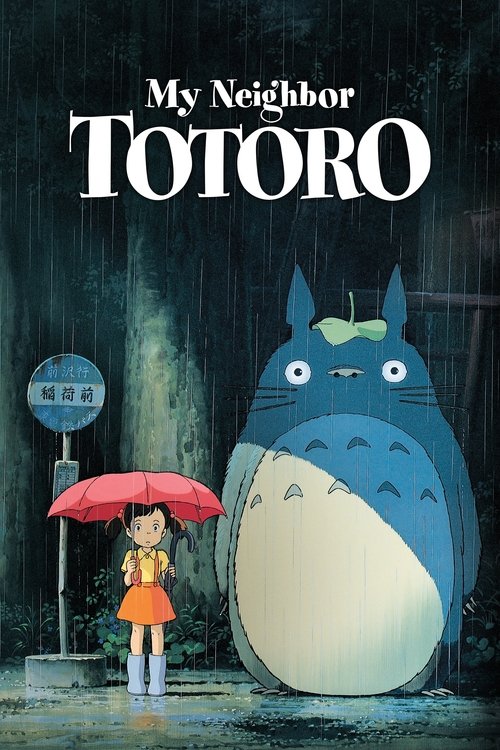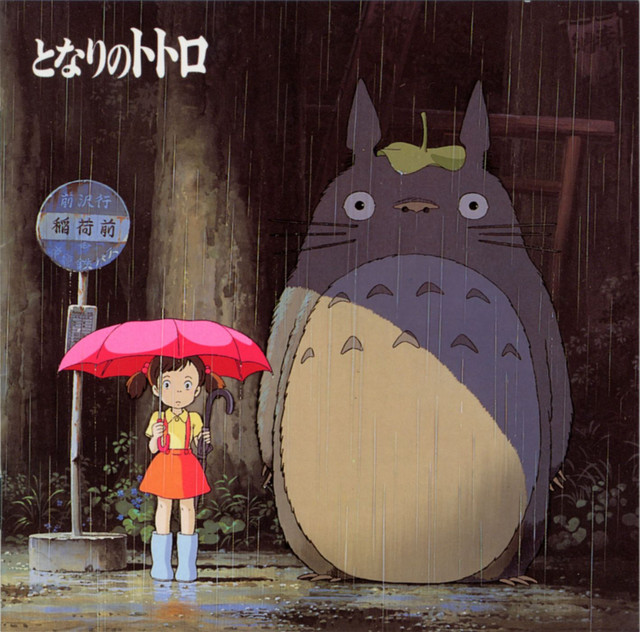
Album: となりのトトロ イメージ・ソング集
Picture this: Joe Hisaishi is simultaneously composing music for a whimsical children’s film about forest spirits and a dark theatrical production featuring demons and supernatural terror. Most composers would lose their minds juggling such dramatically opposed projects, and Hisaishi admits he nearly did. Yet from this creative chaos emerged ‘Sanpo’ (The Walk), one of animation’s most cherished opening themes.
The story of ‘Sanpo’ begins with an unprecedented experiment that would reshape how animated films approached their musical identity. When Hayao Miyazaki expressed his desire to prioritize songs in his upcoming film about two sisters and their encounter with magical forest creatures, Hisaishi responded with a bold proposal: create an entire image album of vocal tracks before touching the soundtrack. This radical approach—ten songs written before a single scene was scored—was unheard of in animation production.
The resulting ‘My Neighbor Totoro Image Song Collection’ became something entirely unique: a song collection that would breathe life into characters before audiences even met them. ‘Sanpo,’ positioned as the opening track, needed to capture the innocent wonder of childhood exploration while establishing the film’s gentle, optimistic tone.
Miyazaki’s vision for the album’s lyrics led him to an unexpected collaborator. Having been profoundly moved by Rieko Nakagawa’s children’s book ‘The Reluctant Dragon,’ he insisted she write the poetry for their musical venture. Nakagawa crafted ten poems, which through careful discussion were refined into six songs that would define the emotional landscape of Totoro’s world.
‘Sanpo’ originally featured a simple arrangement—just taiko drums and cymbals introducing the melody. The track embodied the straightforward joy of a childhood walk, its steady rhythm matching the pace of small feet exploring countryside paths. Written in a comfortable key that allows young voices to soar without strain, the song’s structure mirrors the natural cadence of walking: steady verses building to a lifting chorus that feels like skipping.
Then came the moment that transformed everything. When the revised version arrived featuring bagpipes in the introduction, Miyazaki’s reaction was instantaneous. The Celtic wind instrument, with its pastoral associations and haunting beauty, perfectly captured something indefinable about the film’s connection between human and natural worlds. The bagpipes didn’t just add texture—they added soul, creating an opening that felt both ancient and timeless.
This creative breakthrough exemplifies Hisaishi’s collaborative approach to composition. Rather than viewing directors’ suggestions as interference, he embraces them as creative catalysts. The bagpipe addition wasn’t just Miyazaki’s preference—it was the missing piece that completed Hisaishi’s musical puzzle.
During this period, Hisaishi was leading a double artistic life that would have fractured lesser creators. While crafting the pure, innocent world of Totoro during the day, his evenings were consumed by ‘Musical Drama ANZUCHI,’ a theatrical production starring Kenji Sawada and Koji Yakusho that delved into dark, supernatural themes. ‘One was this pure, innocent world, the other was a frightening demonic realm,’ Hisaishi recalled. ‘Working on both simultaneously nearly drove me to madness.’
Yet this creative tension may have been exactly what ‘Sanpo’ needed. The contrast between projects likely sharpened Hisaishi’s appreciation for the song’s simplicity and joy. After spending hours immersed in theatrical darkness, returning to compose music about sisters discovering wonder in everyday walks must have felt like surfacing for air.
The image album process also revealed unexpected talents within the creative team. When Miyazaki heard Hisaishi singing on reference tracks, he was struck by the composer’s vocal quality and encouraged him to perform ‘Small Photograph’ himself. This moment illustrates the organic, discovery-based approach that defined the entire project—creative boundaries were fluid, with collaborators stepping outside their expected roles.
‘Sanpo’ succeeds because it captures something universal about childhood curiosity. The song doesn’t just accompany the film’s opening—it embodies the spirit of exploration that drives the entire narrative. Its infectious melody suggests that adventure exists in the most mundane activities, that wonder can be found simply by paying attention to the world around us.
The track’s enduring popularity stems from this authentic simplicity. In an era of increasingly complex animated productions, ‘Sanpo’ reminds us that sometimes the most profound artistic statements come from the gentlest expressions. It’s a song that trusts its audience to find magic in ordinary moments—a philosophy that defined both Miyazaki’s filmmaking and Hisaishi’s musical approach.
Looking back, the chaotic creative process that birthed ‘Sanpo’ reveals something essential about artistic collaboration. The best creative partnerships don’t eliminate creative tension—they channel it productively. Hisaishi’s willingness to work within Miyazaki’s unconventional framework, while simultaneously managing his theatrical obligations, created the perfect conditions for inspiration to strike. Sometimes creative magic requires a little creative madness.
- となりのトトロRead Review
- 風のとおり道Read Review
- さんぽNow Playing
- まいごRead Review
- すすわたりRead Review
- ねこバスRead Review
- ふしぎしりとりうたRead Review
- おかあさんRead Review
- 小さな写真Read Review
- ドンドコまつりRead Review
- 風のとおり道(インストゥルメンタル)Read Review