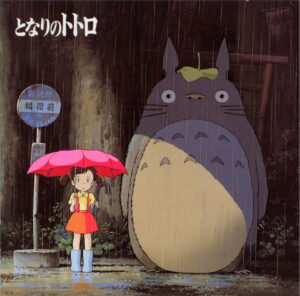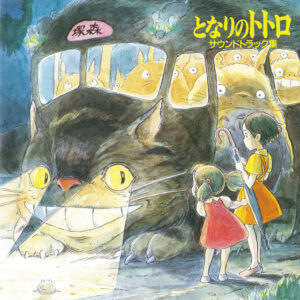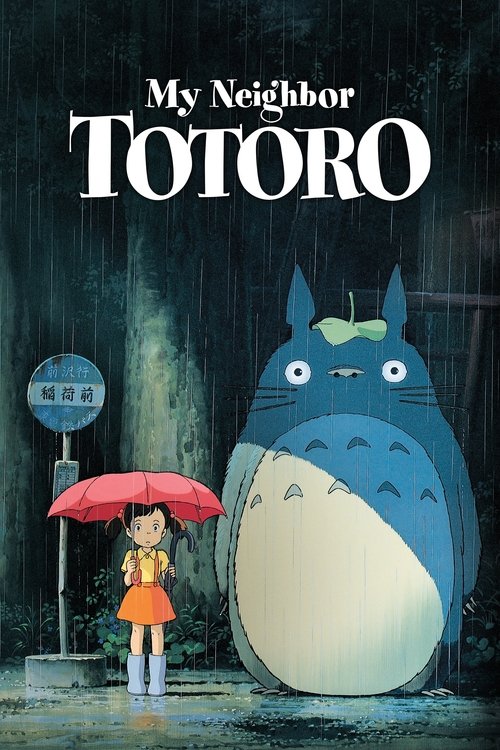
Hayao Miyazaki’s “My Neighbor Totoro” stands as one of cinema’s most enchanting works, a film that captures the essence of childhood wonder and the mysterious beauty of nature. Released in 1988, this animated gem tells the story of two sisters who move to the countryside with their father to be closer to their hospitalized mother. What begins as an ordinary relocation transforms into an extraordinary adventure when the girls discover that the surrounding forest is inhabited by Totoros—gentle, magical spirits whose presence brings both comfort and mystery to their new home. When the youngest sister disappears, her older sibling must call upon these forest spirits to help find her, embarking on a journey that blends the magical with the deeply personal.
The film’s influence on global cinema and popular culture cannot be overstated. While initially a modest commercial success in Japan, “My Neighbor Totoro” has grown into a beloved classic that transcends cultural and generational boundaries. The iconic image of the forest spirit itself has become synonymous with Studio Ghibli and Japanese animation worldwide. European audiences have embraced the film’s universal themes of family, loss, and wonder, making it a staple of animation festivals and retrospectives across the continent. The film’s gentle approach to serious subjects—such as parental absence and childhood anxiety—resonates deeply with viewers of all ages, establishing it as far more than a children’s film.
Yet for many devoted fans, the true soul of “My Neighbor Totoro” lies in Joe Hisaishi’s extraordinary musical score. Hisaishi, who would become Miyazaki’s most frequent and celebrated composer, crafted a soundtrack that is nothing short of transformative. His approach to the score mirrors the film’s own philosophy: simplicity combined with profound emotional depth. The main theme, with its gentle piano melody and warm orchestration, immediately establishes the film’s tone of innocent wonder. Hisaishi employs a masterful blend of traditional Japanese musical elements and Western orchestral sensibilities, creating something that feels both timeless and utterly unique.
What makes Hisaishi’s work particularly remarkable is how intimately the music mirrors the film’s visual narrative. When the Totoros first appear, Hisaishi’s composition swells with magic and mystery, yet remains fundamentally gentle and unthreatening—perfectly capturing Miyazaki’s vision of spirits that are wondrous rather than frightening. The composer uses recurring motifs throughout the score, each associated with different emotional moments and locations. The countryside itself receives musical representation through flowing, pastoral themes that evoke both tranquility and subtle melancholy.
Hisaishi demonstrates sophisticated compositional technique, layering multiple melodic and harmonic ideas to create emotional complexity beneath the surface simplicity. For instance, scenes depicting the girls’ mother’s illness are accompanied by music that acknowledges sadness without ever becoming heavy-handed. The score respects the audience’s intelligence, trusting that subtle musical suggestion is far more powerful than overt emotional manipulation. His orchestration choices—favoring warm woodwinds, delicate strings, and occasional use of traditional Japanese instruments—create an intimate sound world that draws listeners directly into the sisters’ emotional experience.
Ultimately, Hisaishi’s “My Neighbor Totoro” score achieves what only the greatest film music accomplishes: it becomes inseparable from the film itself, enhancing every frame while never drawing attention away from the story. For European audiences discovering this masterpiece, the music serves as a perfect gateway into both Miyazaki’s artistic vision and the profound possibilities of animated cinema.