
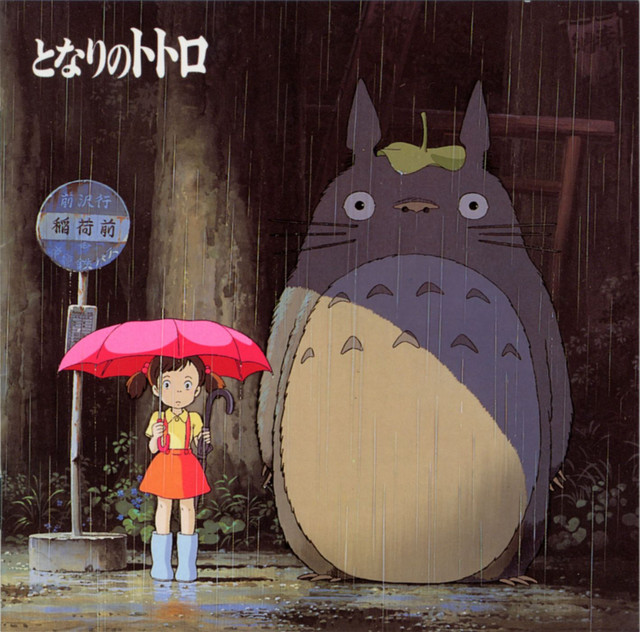
Album: となりのトトロ イメージ・ソング集
In 1988, Joe Hisaishi found himself caught between two worlds—literally. While crafting music for Hayao Miyazaki’s gentle tale of forest spirits and childhood wonder, he was simultaneously composing for ‘Rakugeki ANZUCHI,’ a dark theatrical production featuring demons and otherworldly horror. ‘On one side, this frightening demonic world. On the other, that pure innocent world. Working on both simultaneously, I thought I might go a bit crazy,’ Hisaishi later reflected. This creative juggling act speaks to the unique challenge he faced when approaching the Totoro Image Song Collection—an album that would fundamentally challenge how animated films approached their musical storytelling.
The genesis of this unusual project began with a simple request from Miyazaki: he wanted to emphasize songs in the film. Most directors might have settled for a few memorable vocal tracks scattered throughout the score, but Hisaishi’s response was characteristically bold. ‘Let’s create an entire image album of vocal songs,’ he proposed. What followed was an unprecedented experiment—ten complete songs written before a single frame of animation was produced, each designed to capture the essence of scenes that existed only in Miyazaki’s imagination.
This reversed approach to film scoring represented more than just an interesting creative exercise. For Hisaishi, it was a philosophical statement about the nature of storytelling in animation. He believed that because Totoro contained many everyday, slice-of-life sequences rather than dramatic action scenes, vocal songs would provide clearer emotional signposts than purely instrumental pieces. ‘The story is quite weak in terms of conventional narrative structure,’ he explained, ‘so the question became how to strengthen and supplement those quieter moments.’
The challenge of finding the right voice for these songs led to one of the project’s most inspired collaborations. Miyazaki had been deeply moved by reading ‘Iya Iya En’ by children’s author Nakatani Rieko, describing the experience as having ‘scales fall from my eyes.’ At his insistence, Nakatani was brought in to write lyrics for the songs. She crafted ten poems, which through extensive discussion and refinement were eventually distilled into six vocal pieces for the album.
One track that exemplifies this collaborative spirit is ‘Sanpo’ (A Walk), which captures the simple joy of two sisters exploring their new countryside home. The song’s bouncing melody and playful lyrics perfectly embody the film’s celebration of childhood curiosity and wonder. Rather than describing specific plot points, it creates an emotional landscape that would later be filled in by Miyazaki’s animation. This approach allowed the music to serve as an emotional foundation rather than mere accompaniment.
Perhaps the most personal moment on the album comes with ‘Chiisana Shashin’ (Small Photograph), where Hisaishi himself takes the microphone. This wasn’t initially planned—Hisaishi had simply been singing on a demo tape when Miyazaki heard it and was struck by the composer’s vocal quality. Encouraged by the director, Hisaishi decided to perform the song himself, creating an intimate moment that reveals a different side of his artistry. The track’s gentle, contemplative mood provides a counterpoint to the album’s more exuberant songs, showing how the collection was designed to capture the full emotional spectrum of childhood experience.
The album’s structure reflects Hisaishi’s deep understanding of how children experience the world—not through linear narrative progression, but through a series of emotional states and discoveries. ‘Susuwatari’ evokes the mysterious soot sprites with playful percussion and whispered vocals, while ‘Nekobus’ captures the magical impossibility of the cat bus with its swirling, transportation-like rhythms. These aren’t songs that simply describe what happens on screen; they’re musical embodiments of feeling and atmosphere.
What makes the Totoro Image Song Collection particularly remarkable is how it established a new template for animated film music. By creating songs first and animation second, Hisaishi and Miyazaki were essentially arguing that music could be the primary storytelling medium, with visuals serving to illustrate the emotional journey already established in song. This reversed hierarchy challenged the conventional wisdom that film music should always serve the image.
The inclusion of an instrumental version of ‘Kaze no Toori Michi’ (The Path of the Wind) as the album’s final track provides a fascinating glimpse into how these pieces might have worked as traditional film score. Stripped of its vocals, the melody reveals different qualities—more ethereal and mysterious, but perhaps less immediately accessible to young listeners. The comparison highlights why Hisaishi felt vocals were essential for this particular project.
Looking back, the Totoro Image Song Collection stands as a bold experiment that succeeded beyond anyone’s expectations. The songs didn’t just support Miyazaki’s film—they became part of Japanese cultural DNA, instantly recognizable to multiple generations. Children who grew up with these songs now share them with their own families, creating a musical legacy that extends far beyond the boundaries of cinema.
The album’s success validated Hisaishi’s belief that film music could be more than mere accompaniment. By treating songs as equal partners in storytelling rather than subordinate elements, he created a work that functions both as a children’s album and as a sophisticated piece of musical narrative. The fact that he was simultaneously composing demonic theatrical music only adds to the achievement—somehow, amidst creative chaos, he managed to capture the pure essence of childhood wonder.
Today, as film composers continue to grapple with how to create memorable musical moments in an increasingly visual medium, the Totoro Image Song Collection offers a compelling alternative model. It suggests that sometimes the most powerful approach is to let the music lead, trusting that strong songs will find their perfect visual partners. In Hisaishi’s hands, this unconventional approach didn’t just work—it created something magical.
- となりのトトロRead Review
- 風のとおり道Read Review
- さんぽRead Review
- まいごRead Review
- すすわたりRead Review
- ねこバスRead Review
- ふしぎしりとりうたRead Review
- おかあさんRead Review
- 小さな写真Read Review
- ドンドコまつりRead Review
- 風のとおり道(インストゥルメンタル)Read Review
Sources
- My Neighbor Totoro Image Song Collection – Liner Notes
- My Neighbor Totoro Soundtrack – LP Liner Notes
- My Neighbor Totoro Soundtrack – Liner Notes