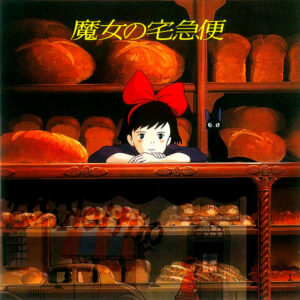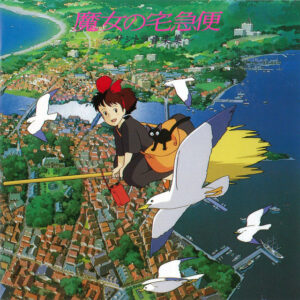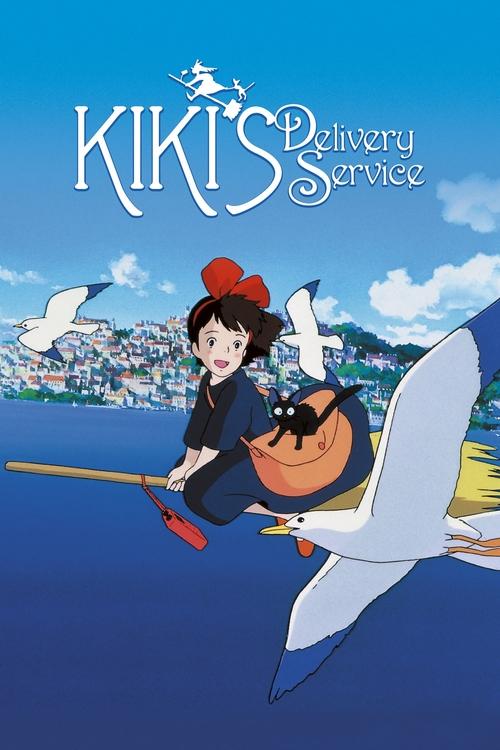
Hayao Miyazaki’s ‘Kiki’s Delivery Service’ (1989) tells the deceptively simple story of a young witch embarking on her mandatory year of independent living. Upon arriving in a sprawling, unfamiliar coastal city, Kiki must navigate the challenges of fitting into a new community while establishing herself financially through an unconventional air courier service. What begins as a tale of adolescent self-discovery evolves into a touching meditation on belonging, perseverance, and the courage required to forge one’s own path in an indifferent world.
The film’s release marked a pivotal moment for Studio Ghibli, becoming their most commercially successful project at that time and establishing the studio as a powerhouse in international animation. European audiences, in particular, embraced the film’s accessible charm and timeless themes. The movie’s success transcended cultural boundaries, resonating with viewers who saw in Kiki’s struggles a universal coming-of-age narrative. The film’s popularity has only deepened over decades, cementing its status as a beloved classic that continues to introduce new generations to the magic of Studio Ghibli’s storytelling.
Yet beneath the film’s visual splendour lies an equally crucial component of its enchantment: Joe Hisaishi’s remarkable musical score. The composer’s work in ‘Kiki’s Delivery Service’ represents a masterclass in how orchestral music can amplify emotional resonance while maintaining narrative clarity. Hisaishi approached the score with a compositional philosophy that embraced both European romanticism and Japanese sensibility, creating something entirely unique that perfectly complements Miyazaki’s visual language.
The film’s main theme is instantly recognisable—a buoyant, optimistic melody that captures Kiki’s youthful spirit and adventurous nature. Performed primarily on piano with delicate orchestral accompaniment, this theme becomes the emotional anchor of the entire film, returning at key moments to remind us of Kiki’s innate resilience even as she faces doubt and loneliness. Hisaishi’s genius lies in his ability to vary this theme subtly, allowing it to mature and deepen as Kiki herself develops throughout the narrative.
What distinguishes Hisaishi’s approach is his restraint. Rather than overwhelming scenes with orchestral bombast, he employs sparse, carefully chosen instrumentation that mirrors the film’s intimate character moments. When Kiki feels isolated in her new city, the music becomes quieter, more introspective, often featuring solo strings that evoke vulnerability and longing. Conversely, the exhilarating sequences of Kiki flying through the sky are accompanied by soaring, triumphant orchestrations that capture the pure joy of freedom and movement.
The composer demonstrates particular sensitivity in scoring scenes of human connection. The friendship between Kiki and her new companions—particularly the young artist Osono and her eccentric neighbour Jiji—is underscored with warm, gentle melodies that emphasise emotional intimacy over dramatic tension. These moments showcase Hisaishi’s understanding that sometimes the most powerful music is that which quietly validates human experience.
Furthermore, Hisaishi’s orchestrations reveal a sophisticated understanding of colour and texture. He employs various instrumental combinations—pizzicato strings, woodwind flourishes, gentle piano passages—to create distinct moods that guide viewers through Kiki’s emotional journey. The score never calls excessive attention to itself; instead, it breathes alongside the animation, enhancing without overwhelming.
In essence, Joe Hisaishi’s score for ‘Kiki’s Delivery Service’ exemplifies why his collaborations with Miyazaki have become legendary. The music doesn’t simply accompany the film; it is integral to its magic, transforming a charming story into an unforgettable cinematic experience that continues to touch hearts across Europe and beyond.